




Season 1 – Episode 1 – How AI Is Transforming IRBs and Human Research Protections
Discusses the risks and benefits that AI presents for IRBs, research institutions, and compliance professionals.
Podcast Chapters
Click to expand/collapse
To easily navigate through our podcast, explore the chapter timestamps, allowing you to jump to specific segments and enjoy the parts you’re most interested in.
- 00:00 Welcome and Guest Intro
- 01:39 What AI Really Means
- 03:11 AI Types in Research
- 05:24 AI for IRB Triage
- 09:16 Meeting Minutes Risks
- 11:42 Data Privacy and Licenses
- 14:26 Consulting for Any Size
- 18:46 AI and Consent Drafting
- 21:27 AI for Auditing Consistency
- 24:42 Tracking Compliance Safely
- 26:48 Training and Vendor Verification
- 29:14 Vendor Due Diligence
- 31:12 Conflicts and Reputation
- 32:06 Redundancy for Resilience
- 33:11 AI Process Mapping Limits
- 35:10 Risk Management With AI
- 39:02 Practical Adoption Checklist
- 43:00 Future of AI Oversight
- 45:53 Consent and Human Touch
- 50:37 Exempt Determinations Trap
- 53:09 AI Reviews and Bias
- 54:50 Scientific Validity First
- 55:42 Closing Credits
Episode Summary
Click to expand/collapse
In this episode of Culture of Compliance, host Andra Popa speaks with Tamiko Eto, Principal Consultant, AI and Research Administration and Oversight at HRP Consulting, about the growing role of artificial intelligence in research compliance and human subjects protections. The discussion explores practical applications of AI in IRB and research administration workflows, including protocol triage, auditing, document review, and risk management. Throughout the conversation, Eto emphasizes that AI should support, not replace, human expertise and judgment, highlighting the importance of governance, compliance oversight, data security, vendor due diligence, and responsible implementation. The episode also examines the challenges posed by automation bias, regulatory uncertainty, privacy concerns, and the need for ethical frameworks to guide AI use in research oversight.
Key Takeaways:
- AI as a Human-Created Tool: AI is best understood as a human-developed product designed to perform tasks that would otherwise require human cognition. Eto stresses that humans remain accountable for how these tools are developed and used.
- Key AI Technologies for Research Administration: Research administrators should have a working knowledge of technologies such as generative AI, large language models, computer vision, predictive analytics, clinical decision support systems, and digital health technologies.
- Improving Protocol Intake and Review: AI can help pre-screen protocol submissions, identify missing information, flag regulatory considerations, and route submissions to the appropriate review pathway before human review takes place.
- AI Should Enhance, Not Replace, IRB Judgment: The goal of AI is to organize information and improve efficiency, not to replace the expertise and decision-making responsibilities of IRB administrators and reviewers.
- Meeting Minutes Require Human Oversight: While AI-generated transcripts and summaries can provide a useful starting point, high-stakes documents such as IRB meeting minutes still require human review to ensure accuracy and completeness.
- Data Privacy and Security Are Critical: Uploading confidential research, patient, or institutional information into unauthorized public AI tools creates significant privacy, security, and compliance risks. Institutions must clearly educate employees on approved uses of AI.
- Auditing and Quality Improvement Are Strong AI Use Cases: AI excels at identifying inconsistencies across documents, protocols, committees, and processes, making auditing and continuous quality improvement particularly promising applications.
- Governance Is Essential for Risk Management: AI systems used for tracking compliance issues or risks must be supported by governance structures that prevent inappropriate influence over reporting, coding decisions, or data collection practices.
- Vendor Due Diligence Matters: Organizations should carefully evaluate AI vendors, contracts, compliance histories, security practices, and liability provisions before implementing new technologies. Independent expert review can help identify hidden risks.
- Start with the Problem, Not the Technology: Rather than looking for ways to apply AI everywhere, institutions should first identify tasks that consume significant time but do not require expert judgment, then assess whether AI can add value while maintaining acceptable risk levels.
- The Future Depends on Responsible Adoption: Eto predicts AI will become a standard feature in research administration systems, but success will depend on meaningful governance, continued human oversight, and clear ethical and regulatory guidance for institutions.
How to Listen and Subscribe to the Podcast
You can find the Culture of Compliance Podcast available on CITI Program’s YouTube channel. Subscribe to receive updates when episodes are newly released.
Meet the Guest

Tamiko Eto, MS, CIP – HRP Consulting
Tamiko Eto brings over 20 years of leadership experience in human subjects research protections at world-class institutions. She currently serves as Principal Consultant, AI in Research Administration and Oversight, at HRP Consulting. Ms. Eto’s practical approach led to the creation of the world’s first agentic AI IRB Protocol Submission and Review platforms and the co-development of numerous CITI Program and PRIM&R AI training programs, making sophisticated AI concepts accessible to research administrators globally.
Meet the Host
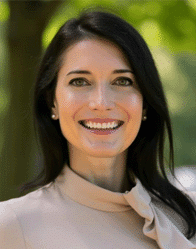
Andra Popa, Assistant Director, Healthcare Compliance and Host of Culture of Compliance Podcast – CITI Program
Andra M. Popa is the Assistant Director, Healthcare Compliance at CITI Program. She focuses on collaborating with learning professionals to develop healthcare compliance content. Previously, Andra was the owner of a consulting firm that worked with over 40 healthcare entities to create, assess, audit, and monitor compliance programs, as well as to create educational programs. A graduate of Boston College with degrees in English and economics, she also has JD and LLM (healthcare law) degrees from Loyola University Chicago School of Law. She has published over 100 articles, written book chapters, and conducted workshops in design and compliance.