




Season 3 – Episode 13 – Opening Doors in STEM: Service Dogs, Advocacy, and Research Accessibility
In this episode, we explore how service dogs and advocacy are transforming accessibility for scientists with disabilities in STEM.
Podcast Chapters
Click to expand/collapse
To easily navigate through our podcast, simply click on the ☰ icon on the player. This will take you straight to the chapter timestamps, allowing you to jump to specific segments and enjoy the parts you’re most interested in.
- Assumptions and Misconceptions About Service Dogs in Labs (00:00:01) Joey Ramp-Adams discusses common misconceptions and fears about service dogs in laboratory environments.
- Podcast Introduction and Episode Overview (00:01:04) Host Alexa McClellan introduces the episode’s focus on accessibility in scientific research and the guests.
- Guest Introductions and Backgrounds (00:02:44) Guests Joey Ramp-Adams and Madeline Jones introduce themselves and share their backgrounds in science.
- Joey’s Journey into Neuroscience and Advocacy (00:02:53) Joey describes her accident, entry into neuroscience, and advocacy for service dog access in labs.
- Madeline’s Path and Barriers Faced (00:04:45) Madeline shares her experience as a service dog handler in science, barriers encountered, and her academic journey.
- Challenges in Lab Access and Institutional Responses (00:09:27) Madeline details difficulties accessing labs, institutional confusion, and her persistence across multiple schools.
- Joey’s Motivation for Advocacy and Policy Change (00:11:04) Joey explains her transition from reluctant to intentional advocate after facing discrimination in academia.
- Barriers for Scientists with Disabilities (00:16:44) Discussion of significant physical, cultural, and procedural barriers in labs for scientists with disabilities.
- Common Misconceptions About Accommodations (00:22:07) Joey addresses institutional misconceptions about accommodations and their impact on safety and fairness.
- Barriers and Accommodations for Service Dog Handlers (00:24:18) Specific challenges and reasonable accommodations for scientists with service dogs in research environments.
- Policy Issues and CDC Guidelines (00:24:43) Joey discusses problematic CDC guidelines, advocacy efforts, and policy changes for service dog inclusion.
- On Tech Ethics Promo (00:30:48:00)
- Mentorship’s Role in Accessibility (00:31:13) Madeline shares how mentorship and supportive faculty have been crucial for her success and access.
- Samsons Legacy Foundation Initiatives (00:35:32) Joey outlines the foundation’s support for disabled scientists, scholarships, advocacy, and community building.
- Impact of the Scholarship on Madeline (00:41:34) Madeline describes how the scholarship supports her and her service dog’s needs in lab environments.
- Visions for the Future of Accessibility in STEM (00:42:29) Both guests share their hopes for institutional changes, inclusive policies, and resources for disabled scientists.
- Episode Conclusion and Credits (00:47:33) Host wraps up the episode, thanks guests, and provides information about CITI Program resources and credits.
Episode Transcript
Click to expand/collapse
Joey Ramp-Adams: Decisions driven by assumptions and fear or personal comfort rather than policy is rampant. I’ve had an individual say to me, “Well, when I go home, my dog jumps on me, and I can’t have that happen in a lab.” I had one professor tell me, “Well, somebody brought in a basket of puppies one day as therapy, and the puppies were everywhere, so I can’t have a dog in a lab.” They’re not looking at the fact that a service animal is a very highly trained, very conditioned service animal. They provide a very specific function for a very specific individual with a disability, and their training alone is off the charts. Actually, I’ve had people say, “The service animal was better behaved than most of the students in my class.”
Alexa McClellan: Welcome to On Research with CITI Program. I’m your host, Alexa McClellan. Today’s episode explores accessibility in scientific research careers, an issue shaped by personal experiences, institutional practices, and the advocacy efforts working to create more inclusive opportunities in STEM. We’ll begin by hearing directly from our guests about their paths into science and the lived experiences that have shaped their perspectives. From there, we’ll examine some of the structural, cultural and procedural barriers that scientists with disabilities continue to face in research environments. And finally, we’ll discuss the work of Sampsons Legacy Foundation, and how its initiatives are helping address those barriers and support the next generation of researchers.
Joining me are two guests whose insights and experiences frame this discussion from both personal and systemic angles. Joey Ramp-Adams is the founder and CEO of Empower Ability Consulting, Inc., and a leading advocate for integrating service dogs and accessible practices into laboratory environments. We’re also joined by Madeline Jones, a Sampsons Legacy Foundation Science Service Dog Scholarship recipient, and an emerging scientist whose experiences offer an important window into what accessibility looks like in academic and laboratory settings. We’ll hear their stories, explore the challenges still present in STEM, and learn how advocacy and community support are creating new pathways forward.
Joey and Madeline, thank you so much for joining me today.
Joey Ramp-Adams: Thank you, Alexa. Thank you for having us.
Madeline Jones: Thank you so much for the invitation.
Alexa McClellan: To begin with, I’d love to ground our discussion in your personal experiences and the paths that brought you here. So for both of you, could you introduce yourselves and share a bit about your background and how you each came into the world of scientific research? Joey, we can start with you.
Joey Ramp-Adams: Well, thank you. Well, I’m a biocognitive neuroscientist, and I’m founder and CEO of Empower Ability Consulting, which is a firm that helps advocate for people with disabilities. We have a very high focus on accessible science, accessible travel, and service dog access to science laboratories. Also, the founder of Sampsons Legacy Foundation, which is something I’m exceptionally proud of. We work directly with people with disabilities to try and provide whatever resources it is that they need at the time. We are highly focused on providing academic scholarships for people with disabilities to include service dog handlers. And I’m the very proud author of the book Insistent, which is a memoir through my journey. It’s the powerful bond that fueled the global fight for inclusion.
Why I started in neuroscience to begin with was after I myself was in an accident and received 23 broken bones and a traumatic brain injury, and no one could explain to me exactly what was happening in my own head. So I made a very unlikely decision to go into a college neuroscience program so that I could better understand and potentially help other people. That process, my education actually became secondary to the barriers I faced and the access of having a service dog in science laboratories, which at the time was unprecedented. So we’ve worked really hard to try and change that, change policies, we are working in eight different countries and working with a lot of the top biosafety organizations in the nation.
Alexa McClellan: Wonderful. Thank you so much.
Joey Ramp-Adams: Thank you.
Alexa McClellan: Madeline, what’s your story?
Madeline Jones: So since I was a child, I knew I was going to go into science. Since high school, I knew I was going to go into engineering specifically. But it wasn’t until I got to college that I knew I was going to go into more of a bioengineering direction of science and engineering, and I wanted to work in a lab. And it never really occurred to me that there was going to be barriers involved, because to me, I just go everywhere with Copernicus, I don’t think about it, he’s just an extension of myself.
And when I went to college, I was a new service dog handler, I had not had one before. I received a head injury in high school, which completely changed my entire outlook on life and just my entire outlook on how things work in the world and how things work inside your head, because I got to a point where doctors said I was fine, and I knew myself I was not functionally fine, even though I could do things, I could function, I just needed a little bit of extra help. So my mom, brilliant idea, she got me a service dog, she got me Copernicus, and he has been my lifeline since then.
But it was met with so many different barriers I was just not expecting because I had never been in this situation before. And it was also met with confusion on the faculty’s end, because they’ve also never been in this situation before, because a lot of the times, how they stated it, people with disabilities don’t get to this level of science, research, education. And it was completely shocking to me, because going into bioengineering, that’s exactly the population of people that you’re going to cater to. You’re creating things and you’re engineering things for people that need solutions, that don’t get solutions, people that have disabilities or inaccessibilities, how to make their lives easier and better and more productive. And I’m over here having to try to figure out how I can get into my general chemistry lab.
And so, it was very interesting trying to figure all of that out, because the professors were met with that’s a dog. And it was very difficult when they could not separate the idea that he was a dog from the fact that he was medical equipment and trained and he wasn’t going to go lick things and he wasn’t doing the experiments himself. But I was also met with very important people in my life that were trying to help me get past these barriers, and while they hadn’t experienced that themselves, they had experienced other types of barriers in their lives impacting their accessibility and their quest for knowledge or just simply living independently, and they were able to help me talk to both the faculty and the environmental health and safety department to figure out the different ways that I could safely bring my service dog into lab with me. And it just felt like a very long, roundabout way.
But again, every single time I go to a new school, because I am at my third school, I’m working on my second master’s degree right now, I’m doing human physiology this time in my quest to eventually get to engineering PhD to do more nerve regeneration research, it is met differently at every single school. In some places, they are very understanding in the academic accommodations office and some people are very understanding in the actual department of the classes you’re in. But there’s always some confusion about something. And sometimes, you just don’t have time to work with people, and it’s difficult because they have things they have to do, and that is frivolous in their mind sometimes to sit down and help navigate you getting into a lab.
And so, I was met at my last school with the impasse that I was not able to do any lab work for my first master’s degree in microbiology and immunology. And I was really disappointed with that, because I really wanted to look at neuroimmunology and different ways the immune system can help impact nerve growth and nerve regeneration, and you can’t really do that if you’re not in a lab. You can read as many papers as you want, but if you have questions, you have to go into a lab. I was at an impasse, I couldn’t go into lab. So as much as I loved that school, I had to move on and go to a different school where I could keep working towards more accessibility in lab spaces.
And right now, I’m at Boston University and I have been met with a lot of understanding and willingness to sit down and work with me, trying to figure out how I can bring my service dog into labs. And right now, it’s looking like my schedule in the spring is filled with lab classes, and Copernicus will be joining me in his full lab gear, which I’m very excited about. So I hope that answers your question.
Alexa McClellan: Oh, absolutely. I love that perspective, and thank you for sharing your experiences that have led up to where you are right now. Joey, I’d like to come back to what you were talking about. Could you share what experiences led you to focus your career on improving access for scientists such as Madeline and how to advocate for service dogs’ inclusion in STEM environments?
Joey Ramp-Adams: Yeah, absolutely. My experience was very similar to Madeline’s. When I went into neuroscience, I was unable to speak or understand language. I was trying to navigate a very painful broken body through very rigorous coursework. The only way that I could function safely and effectively was with the assistance of my service dog. And as I mentioned, service dogs were unprecedented, so I had to start as the pioneer from the very beginning and introduce service dogs into laboratories with lab coats and boots and goggles and wearing the same exact personal protective equipment as I wore for any given lab. I was very fortunate to have a handful of individuals who were willing to work with me at a community college.
Once I moved into the University of Illinois, I thought it was going to get easier, and it only got much more difficult. With a large university, there is a lot of independent, and I want to say bias, against some people with disabilities, especially in science. And when I give presentations, I give a lot of data, a lot of literature-type reviews that focus on the fact that students with disabilities are less likely to succeed in science programs based on a lack of support from faculty members or safety and compliance because it’s just something that’s unfamiliar, which is what we’re trying to change.
But once I entered the university myself, I met barrier after barrier after barrier every single semester. And as Madeline mentioned, it’s kind of a culture thing in some universities. I became more of what I called a reluctant advocate, because the only way that I could get through each semester was by advocating for myself, and I had to take extra time prior to every semester to meet with faculty, to meet with safety and compliance, and go over the exact same material every single semester. And then, I didn’t know if it was going to be accepted or if they were going to say, “No, I’m sorry, you can’t take this course,” which ended up in a big administrative battle, which is extremely stressful, emotionally/mentally damaging for anyone with a disability who has to continue to fight for themselves.
So once I finally met what was the final bit of resistance and I had a professor slam their hands on a desk and with anger say, “You will never have a career in behavioral neuroscience,” after I had fought my way for almost 10 years through a degree program and I had a PhD opportunity, $50,000 research grant, I was graduating top of my class with high distinction in research, my PhD pursuit ended that day. That’s when I knew that I could never let this happen again. And so, I became what I call now an intentional advocate, and I had to pull myself out of what was my calling, what I loved to do was neuroscience research, into building a company that would actually support and help these same individuals, people with disabilities who were trying to simply get an education and get into some sort of science career field.
And unfortunately, there is a dichotomy between schools. You can get very lucky to land in a school that’s willing to look at it and say, “How can we make this work?” Rather than, “This is impossible, this takes up too much of my time,” or you’re going to meet that barrier school that’s going to say, “We can’t do this at all.” So we need to start looking at building new policies, building new procedures, on a national basis, which is what we are working really hard on. We’ve already worked with the American Chemical Society, American Society, or Association, of Microbiology. We’re working to change the CDC’s BMBL guidelines right now. We’re working with a lot of different national organizations so that we can have a more structured, informed policy on how to be inclusive and how to have guidelines in place for service dog handlers entering laboratories, which also give guidelines to faculty, administrators and professors, which makes for a more objective decision-making process rather than a subjective decision-making process.
So even though I lost the ability to pursue my PhD, my hope is that by our efforts, we are giving the community of service dog handlers more access, and providing the platform and the support that they need so that they can continue to move forward in their education and be very successful in whatever career field that they choose.
Alexa McClellan: Wonderful. Thank you so much for sharing, and thank you both for sharing your personal experiences. I think that gives us a lot of added context and background to the barriers that are faced by scientists with disabilities, and I’d like to talk a bit more about specifically what those barriers are. Joey, given your experience, can you speak a bit about what are the most significant physical, cultural or procedural barriers that scientists with disabilities still face in labs and research institutions? And how do the safety policies, PPE requirements or lab workflows sometimes unintentionally exclude or disadvantage these researchers?
Joey Ramp-Adams: Well, this is a very nuanced and very broad topic, to be honest, and I want to touch on some highlights. But generally, when I give a presentation, I talk for two to three hours on what the barriers are and how to make the accommodations work.
But to answer your question, just the accommodation process itself is very, very difficult, navigating that process, for especially incoming, say, freshmen who haven’t got a lot of science experience. They don’t know what they need to know themselves, so it’s hard for them to know what they need for their service dog to come into a laboratory. They don’t know what the specified training needs to be. They don’t know what personal protective equipment they need. And then also, the disability offices have a tendency to have a lack of laboratory expertise, so they are very, very aware of how to make classrooms accessible or office space accessible, but when it comes to science, they defer to the experts, who are safety and compliance, environmental health and safety, and faculty, who are maybe reluctant already or not knowledgeable about the service dog’s training, the depth of training, the function of a service dog, about disabilities in general, and how they can assist handlers safely in a laboratory, while also maintaining the integrity of whatever research is going on and maintaining the integrity of the lab and the safety environment.
Also, accessibility is often more reactive than proactive, so scientists rarely think about accessibility until someone with a disability shows up at their door, and then that individual has to become an advocate for themselves. They have to spark up a conversation. They have to show that their service animal can work very effectively. And this is something that goes beyond what the ADA actually allows. So oftentimes, scientists with disabilities coming in, especially one with a service animal, has to basically prove that they can function in the laboratory, which according to the ADA is basically illegal and discriminatory practices. But if you want to gain access to a lab, you’re faced with this.
Also, just the physical and architectural barriers themselves, sometimes laboratories are very old, and to make different types of accommodations for people with mobility aids or something along that lines, to get to a fume hood, to have non-automated doors, that’s a really tough one to navigate, floor pathways around instrumentation is usually very tough in a laboratory, and to make major alterations to laboratory space becomes monetarily, it is not possible. And so, it fundamentally alters the structure and it is monetarily not possible, which is grounds for not changing those. I’ve met architects who are even designing brand new spaces who don’t want to make labs accessible and say, “We’re going to wait till someone shows up and then we’ll change it.” Well, then that individual either does not get that access or they have to fight for years to get something changed within that lab that should have been done from the get-go.
And also, the biggest barrier to overcome is the attitudinal barriers, the bias, whether it’s implicit, whether explicit, whether it’s conformational bias, is one of the most harmful obstacles an individual in science with disabilities face. There’s a lot of misconceptions about the capability, the safety, productivity and fit in a lab that can lead to exclusion. Oftentimes, faculty members lower expectations for people with disabilities. I’ve specifically had a professor say, “I shouldn’t have to dumb down the science for someone with a disability.” So opinions and assumptions often dictate access more quickly than actual safety concerns.
Alexa McClellan: Joey, what are some common misconceptions institutions have about accommodations in wet labs or other research spaces?
Joey Ramp-Adams: Well, there are a lot of misconceptions, unfortunately, and I hear a lot of them in the work that I do. Sometimes, people will say accommodations will compromise safety, and that’s not factual. In reality, accessibility and safety are not mutually exclusive. Most accommodations actually enhance safety for everyone. I hear lab work requires a very standard physical body. Institutions often assume tasks can only be performed one way by overlooking adaptive methods. I’ve worked with scientists with low vision who use adaptive equipment to actually teach chemistry. There are alternative workflow methods and assistive technology out there that allows disabled scientists to work safely and effectively. Also, there’s a misconception that an accommodation is an unfair advantage or it’s an add-on, something that is problematic, and that’s not true either. A lot of times, administrators treat accommodations as favors rather than legal or ethical requirements, which are integral to inclusion and protected under federal law.
I’ve sometimes been told disability services know how to solve this problem, when in reality, they don’t understand the science, so they defer back to the experts in the field, who are not properly informed or trained. So they are looking at more highly technical research needs without input from scientists with disabilities. Sometimes, I’ve been told if the space isn’t accessible now, the scientists with a disability can ask to work somewhere else. Well, that’s a very unfair statement. It ignores equal access, it ignores academic process and the right to participate in core scientific training.
Alexa McClellan: Yeah. I’d love to hear a few specific examples of what some of the barriers are for scientists to use service dogs, and then I’d love to hear a bit more about the accommodations that could be made to address those specific things.
Joey Ramp-Adams: Well, the top of my list is lack of very clear, informed and inclusive service dog policies. This is something I fight for on a daily basis. Every university or institution I go to, maybe they have a service dog policy, maybe they don’t. Maybe they have a service dog policy that does not address laboratory-specific access, or what they do is they state specifically in their policy that a service dog is not allowed in a laboratory or any space that requires personal protective equipment.
There is an issue right now that I’m fighting with the CDC, there are biomedical BMBL and guidelines that came out in 2020 that specifically state, “Animals and plants not associated with the work being performed in the lab are not allowed in the lab.” And that was in the new sixth edition, that was not in the fifth edition or any prior editions. So what that did was 103 universities across the US, including Department of Defense, Department of Veterans Affairs, seven state biosafety organizations, copy-pasted that into their service dog policy as grounds to say a service dog is not allowed.
Once I contacted the CDC directly, because people ended up getting fired from their jobs who had service dogs, people were told that they could not continue in a graduate program with a service dog because of this statement, the CDC itself, the authors of this BMBL, were shocked and they said, “Well, that was not our intent.” When I said, “You need to add, ‘Service dogs may be an exception based on risk assessment.'” So they said that they would change it in the next edition, which comes out in 2030.
Alexa McClellan: Oh my.
Joey Ramp-Adams: So we launched a big campaign, where I ended up having to fly to the House of Representatives and spoke to Congress and our representative. We’ve gotten in touch with the CDC and the NIH, who have agreed now to adjust that and amend that on their websites. It won’t be officially published until the new edition comes out. However, they are going to include that. So instead of reading, “Animals and plants not associated with the research or work being performed in the lab are not allowed in the lab;” which is very important, “service animals may be an exception based on risk assessment.” That alone, that one sentence in a 604-page document, has excluded service dog handlers, but now will be the grounds for inclusion. So just policies alone are a huge start, biases, misunderstandings and personal perspective. So we face that a lot, misunderstanding about what even a reasonable accommodation looks like.
So for a service animal, for instance, having a safe space for a service dog to rest in direct line of sight of their handler while resting on a mat, maybe under a bench or in a corner, wearing the same personal protective equipment as the handler on a given day, these are very easy, reasonable accommodations. Conducting a risk assessment is twofold. One, it specifically states in the ADA that risk assessment is considered a reasonable accommodation, and in most biosafety guidelines, they state that any lab should undergo risk assessments on a yearly basis. So by providing a risk assessment for lab-specific work with a handler who has a service dog is not considered unreasonable.
Just a lack of knowledge, understanding service dog training, behavior standards and safety protocols. I’ve worked with CITI Program. We had developed an eight module course that will be coming out in 2026, which I’m very excited about, that will provide training for universities, research facilities, clinical facilities, first responders, on understanding service dog behavior, understanding service dog training, behavior standards and safety protocols, also understanding just disability more broadly and looking at it from a different lens maybe, looking at the individual as what are their strengths that they’re bringing into the lab, the different perspectives that they’re bringing into the lab.
Decisions driven by assumptions and fear or personal comfort rather than policy is rampant. I’ve had an individual say to me, “Well, when I go home, my dog jumps on me, and I can’t have that happen in a lab.” I had one professor tell me, “Well, somebody brought in a basket of puppies one day as therapy, and the puppies were everywhere, so I can’t have a dog in a lab.” They’re not looking at the fact that a service animal is a very highly trained, very conditioned service animal. They provide a very specific function for a very specific individual with a disability, and their training alone is off the charts. Actually, I’ve had people say, “The service animal was better behaved than most of the students in my class.” So that’s just scratching the surface, to be honest.
Alexa McClellan: Sure. Thank you so much for giving us those examples and for telling us what you’re doing to pave the way to make these accommodations more easy to be implemented at institutions.
Joey Ramp-Adams: Thank you.
Daniel Smith: I hope you’re enjoying this episode of On Research. If you’re interested in conversations about technology ethics, join me, Daniel Smith, for CITI Program’s podcast On Tech Ethics. You can subscribe wherever you listen to podcasts. Now, back to your episode.
Alexa McClellan: I’d like to talk a little bit about the importance of mentorship in this. Madeline, I’d love to hear your perspective on what role, if any, mentorship has played in helping you find a location that is a safe space for you to practice your science and to even request accommodations. What does that look like for you?
Madeline Jones: Well, first, when you ask that, I have two people that immediately come to mind. But first is from my first school for my bachelor’s, and her name is Portia Altman. She was part of the Disability and Access Services Department, I think that is what it’s called there. She was my coordinator for all of my accommodations, and she helped me to a point where I didn’t know what I needed to be successful in school because I had never been someone that needed accommodations in a school setting before.
I had an alternative high school education past junior and senior year, and so I was back fresh in the classroom and I didn’t know what to do and I had a service dog, Portia knew, Portia would figure it out for me. She didn’t have a service dog, but she’d figure it out. If someone said no, she’d figure it out, she’d fix it. She fixes everything. And her mentality has driven me through so many different things, because it’s always, what would Portia do? What would she do for this? What would she say to me? So she might not have necessarily been a science mentor, but she was a mentor in a broader sense of just accessibility, inclusion and access, and I honestly couldn’t thank her enough. So thank you, Portia, I love you.
Now, in a completely different capacity, doing human physiology research and doing more of an anatomy approach to things, like translational methods, my professor, Dr. Robert, I love her. She’s my anatomy and muscle physiology professor here at Boston. And she has been so helpful, and I know I will be talking to her about my labs in the spring, because there’s no doubt in her mind that I should have accessibility. It’s just like, “Copernicus goes with you everywhere. What are you talking about? Someone said you can’t go in somewhere? They don’t know what they’re talking about.” And so, she’s like, “Okay, I’ll talk to them. We will figure this out.”
And it is so helpful, because it’s never a question of, “Can you do this?” It’s never a question of, “Can your service dog do this?” It’s never a question of, “Well, I’m not really sure about your skill,” or, “Maybe you’re too sick to do this,” because sometimes that comes up and people suddenly start thinking that you have a disability that you don’t have. And so, having someone that has no doubt in your mind about why you need access to something, your skills or your service dog’s skills, and it’s just like, “Of course. Of course you need access. Why would you not need access?” They might not have any accessibility issues, but they see you and they’ll help you, and sometimes just being seen as a person and a scientist, a student, in whatever capacity you want to be seen, just you as a picture, is so helpful to go forward.
Alexa McClellan: Thank you. It really sounds like having an advocate in an administrative role and a faculty role has been essential to your success, because they’ve created a sense of belief that you can do this and that you deserve to do this, and seeing you as a person instead of seeing you as someone with a disability that has a barrier to having access. And I think that speaks to what Joey is currently doing with the Sampsons Legacy Foundation. I’d love to hear more about the steps that the foundation is taking, Joey, and how it supports scientists with disabilities, especially in relation to those who work with service dogs.
Joey Ramp-Adams: Thank you. Just to add a little bit to what Madeline said, mentors and PIs and administrators, they really set the tone within the culture of whether it’s safe even to ask for accommodations. And oftentimes, when I work with someone and I ask them, “What’s your number one criteria for looking at a research or a graduate position?” And they don’t tell me what they came to school to study, they oftentimes say, “Well, this faculty member was supportive, so I’m willing to change my direction or change my major to work with someone who is supportive.” It creates a culture where disabled researchers can actually speak up without fear. And in my experience, mentorship was critical. The moments where someone actually believed in me, listened and backed my accommodations, were the moments that kept me where I was, kept me in science, kept me moving forward. They didn’t just open doors, they made it possible to stay in the room. And that’s something that we’ve always tried to provide with Empower Ability Consulting.
The development of Sampsons Legacy Foundation was a dream of mine. I wanted to be able to support disabled individuals of all sorts, but primarily scientists with disabilities, because that is such a very difficult field. It’s not just a mission, really, it’s a labor of love. It’s borne out of my own experience of facing and fighting barriers, because I was unexpectedly thrown into a world or experience of being disabled late in life. But as much as I asked, “Why me?” At the same time, it became a blessing, because I was able to see and experience firsthand the bias, the barriers, the adversity, the financial need with disabilities that people face.
So people with disabilities get up every day and they face some sort of uncertainty, and it might be pain or it might be hardship, it might be adverse situations. Basically, it’s a world not built for them. But at Sampsons Legacy Foundation, we try to ease that barrier. We provide scholarships and financial aid for all different types of scholars, students with disabilities pursuing STEM or health science fields. For example, the Service Dog Scholarship supports students with disabilities who use a service dog, specifically in a science field. We also provide assistance for service dog-related costs.
It’s very expensive to outfit a service dog in personal protective equipment. Where a student can purchase a lab coat for, say, $25, to purchase a custom-built lab coat for a service dog can cost $180 to $200. And then, eyewear personal protective equipment, goggles, for a service dog can cost $85, and boots can cost $85 or more, and it ends up being about a $300 investment. So we have a financial aid program through Sampsons Legacy Foundation where people can apply to get a grant to pay for this personal protective equipment or whatever other needs that they have.
We also do advocacy and policy change. So if someone is facing a barrier, they contact us, and we work directly with them and whatever university or research facility or clinical facility that they’re in to try and reach a mutual understanding, get the accommodations that they need, and act as a liaison to help them build on providing whatever access or accommodations that are needed. And by building community and support through inclusion in STEM, we do outreach, we do the scholarship awards, we do public-facing efforts, such as a lot of social media and speaking engagements. And at the foundation, we help to build a network for scientists with disabilities in research to include those with service dogs by creating community, solidarity, a collective advocacy group. And the existence of the foundation alone challenges the assumption that labs are inherently inaccessible to people with disabilities who have service dogs.
By showing that access can be achieved and proper planning, advocacy and support, it helps shift an institutional culture. By reducing financial burden, we hope that that reduces some of the barriers that researchers with disabilities face. And through the scholarships and community building, it also creates a visible role model. So I get emails often from people I’ve never met, who I don’t know, saying, “Thank you. Because of your social media or because of the blogs you’ve put out or because we saw you in a presentation, we were able to get the access that we needed. We knew what we needed to move forward. We were able to provide that information.” And they have already gotten through a program and graduated without even having to contact us. So it helps normalize the accommodations and the service dog presence in research by paving the way.
So my first service dog, Theo, I say he was the pioneer. Sampson is the ambassador for service dogs in science. He’s the face in his goggles and his boots and his lab coat.
Alexa McClellan: Thank you. Madeline, you are a recipient of the Sampsons Legacy Foundation Scholarship, and I’m wondering what impact that’s made on your professional development.
Madeline Jones: Well, not only is that just… It’s an honor to be selected for that, I feel like that’s a major thing for me, being a service dog handler in science, so it means a lot to me that I’m able to represent that. But also, I’m using any reward money I’ve gotten for that for my service dog, for Copernicus, I want to upgrade his gear, and that is typically a very expensive endeavor and you have to do it in bits and pieces. My labs in the spring are a little bit more wet lab and he needs more protective gear, and so I’m going to be getting him a custom lab coat and I’m very excited about that.
Alexa McClellan: That’s wonderful. In conclusion, and I know we could talk for another two hours, but I would love to give you both a chance to look to the future and speak a little bit about what you would like to see institutions and funders in the research community at large do to ensure that scientists with disabilities can fully participate and succeed in the STEM fields. Madeline, maybe we’ll just start with you, let us know what you think the ideal future looks like.
Madeline Jones: For me, I feel like the ideal future looks like there’s a handbook. Sometimes, not everyone has ever encountered someone with a disability or someone that has a service dog, but you’re able to go and you’re able to look at this and it’s like, “How to have a service dog in your lab space,” and it will walk you through it and it will show you what accommodations could be possible, what accommodations are mandatory to even get them in the door, things to talk to them about, how to phrase things sometimes, because phrasing things is also an issue, because asking someone, “What’s wrong with you?” is kind of awkward. But sometimes, people are very open to discussing, “Oh, this is something that is a limitation for me,” or, “This is something that’s not a limitation for me. This is maybe something my service dog does.” Legally, they don’t have to tell you that though. So sometimes, having a conversation about that is also really helpful, because different labs require different things.
So questions to help walk you through this situation of how do you foresee yourself in the lab? How do you want this to go? It could be how to guide everybody to talk to each other, because sometimes conversations are hard, just opening the door to that is difficult. So it’s nice to have something that can guide you through things that’s like, “Okay, well, I asked this question and I’ve gotten this and I’ve talked about this. Is there anything I have missed?” And everybody has a checklist of things that they’ve talked about, things that they have not talked about, things that they could possibly discuss in the future. Maybe they should do check-ins. I feel like that needs to happen with everybody in lab, but especially people that have disabilities and service dogs in lab spaces. And so, I think that having guiding literature on that, it doesn’t have to be a crazy in-depth thing, it could really be something more of questions and pictures and more illustrative, but just something to help guide them and make them feel more comfortable being in that space.
Alexa McClellan: Wonderful. Thank you so much. Joey?
Joey Ramp-Adams: Yeah. Well, I think that we need to promote inclusive policies in the culture by developing and enforcing policies that do prioritize and foster the culture that values disability as a form of diversity, encouraging open dialogue and reducing stigma and providing those resources for service dog access to labs, by addressing bias and unconscious barriers, by implementing training programs to combat that bias and unconscious discrimination within either hiring or funding or decision-making or peer review processes, to ensure that the evaluation criteria recognizes the diverse abilities and contributions.
Also, engage scientists with disabilities in the decision-making process. Oftentimes, those decisions are made in some academic silo and they don’t include anyone with a disability. You have to involve the researchers with disabilities in policy development, in funding decisions and institutional planning to ensure that their perspectives and their needs are prioritized, and that helps to promote this inclusive policy and culture, funding support for accessibility. And you can increase visibility and recognition by celebrating and highlighting the achievements of scientists with disabilities. Providing awards and conferences and media attention and representation matters to inspire future generations and challenge stereotypes.
Alexa McClellan: Wonderful. Well, thank you so much for your time. It’s been a joy speaking with you today, and I look forward to a lot of progress in this arena. I’m inspired by you, Madeline, and the journey that you’re going through, and Joey, all the things that you’ve overcome and the advocacy that you continue to do on behalf of scientists with disabilities. Thank you so much for your work, and I look forward to hearing more about what happens in the future.
Joey Ramp-Adams: Thank you. Thank you, Alexa, for your time.
Madeline Jones: Thank you so much.
Alexa McClellan: And that’s it for today’s episode of On Research. Thank you to Joey Ramp-Adams and Madeline Jones for sharing with us their lived experiences, their perspectives on the barriers scientists with disabilities encounter, and the ways these challenges shape academic and laboratory life. For listeners across research, compliance and academic communities, I hope today’s conversation encourages reflection on the ways we can collectively contribute to more inclusive, equitable research spaces. Even small shifts in policy, culture and communication can make a lasting difference.
CITI Program offers self-paced courses in research compliance, including on animal and human subjects research, responsible conduct of research, and research security. Enhance your skills, deepen your expertise, and lead with integrity across research settings. If you’re not currently affiliated with a subscribing organization, you can sign up as an independent learner and access CITI Program’s full course catalog. Check out the link in this episode’s description to learn more.
As a reminder, I want to quickly note that this podcast is for educational purposes only. It is not designed to provide legal advice or legal guidance. You should consult with your organization’s attorneys if you have questions or concerns about the relevant laws and regulations that may be discussed in this podcast. In addition, the views expressed in this podcast are solely those of our guests.
Evelyn Fornell is our line producer, and production and distribution support are provided by Raymond Longaray and Megan Stuart. Thanks for listening.
How to Listen and Subscribe to the Podcast
You can find On Research with CITI Program available from several of the most popular podcast services. Subscribe on your favorite platform to receive updates when episodes are newly released. You can also subscribe to this podcast, by pasting “https://feeds.buzzsprout.com/2112707.rss” into your your podcast apps.



Recent Episodes
-
- Season 3 – Episode 12: Smart Tech, Smarter Questions: AI in Biomedical Research
- Season 3 – Episode 11: 2025 PRIM&R Annual Conference Roundup
- Season 3 – Episode 10: Ethics, Innovation, and the Future of Animal Research
- Season 3 – Episode 9: Black Women in Clinical Research: Building Community and Breaking Barriers
Meet the Guests

Joey Ramp-Adams – Empower Ability Consulting, Inc.
Joey Ramp-Adams is the founder of the disability access firm Empower Ability Consulting, Inc (EAC), a published author, public speaker, and specialist in service dog access to science. As a service dog handler herself her mission is to make the world universally inclusive; one paw print at a time.
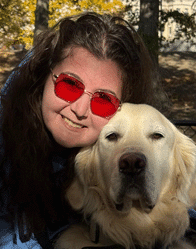
Madeline Jones, BS, MS – Boston University
Madeline is a bioengineer with career goals of working in nerve regeneration after injury. She is an advocate for accessibility into lab spaces as she believes the best solutions come from collaboration and knowledge from lived experiences.
Meet the Host
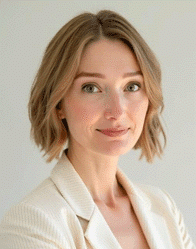
Alexa McClellan, MA, Host, On Research Podcast – CITI Program
Alexa McClellan is the host of CITI Program’s On Research Podcast. She is the Associate Director of Research Foundations at CITI Program. Alexa focuses on developing content related to academic and clinical research compliance, including human subjects research, animal care and use, responsible conduct of research, and conflict of interests. She has over 17 years of experience working in research administration in higher education.