




Season 3 – Episode 15 – Rethinking Child Assent Practices
In this episode, we discuss rethinking child assent beyond procedural compliance.
Notes
To view this episode’s notes, simply click on the “More Info” button on the player.
Podcast Chapters
Click to expand/collapse
To easily navigate through our podcast, simply click on the ☰ icon on the player. This will take you straight to the chapter timestamps, allowing you to jump to specific segments and enjoy the parts you’re most interested in.
- Introductory Quote (00:01) Dr. Coker explains the main advantage of rethinking child assent practices.
- Episode Introduction and Focus (00:40) Host Alexa McClellan introduces the podcast and frames the episode’s focus on child assent in human subjects research.
- Guest Introduction and Background (01:43) Alexa welcomes Dr. David Coker, who shares his academic background and interest in child assent.
- Procedural Compliance vs. Ethical Engagement (04:01) Discussion of the most significant gaps seen in child assent practices.
- Regulatory Frameworks and IRB Constraints (06:00) How existing regulations and IRB processes both support and limit substantive approaches to assent.
- Assent as a Process, Not an Event (08:54) Reframing assent as an ongoing, developmentally appropriate conversation over time.
- Individualized and Inclusive Assent Practices (10:36) Accounting for visible and invisible disabilities, life circumstances, and diverse family structures.
- Accommodations vs. Modifications in Research Design (12:12) How research can remain consistent while being delivered in accessible, child-appropriate formats.
- Power Dynamics and Ethical Responsibility (14:59) Addressing researcher authority, children’s ability to refuse, and ethical safeguards.
- Inclusive Strategies (19:07) Exploring inclusive strategies to help ensure assent processes are accessible and meaningful for children.
- Promo for On Tech Ethics (23:21)
- Tailoring Assent Practices (23:42) How to practically gain approval for more tailored assent practices and balance quality with compliance.
- Practical Strategies for Meaningful Assent (27:18) Examples of tools such as staged conversations, visual aids, and alternative communication methods.
- Future of Child Assent in Research (31:26) Dr. Coker reflects on viewing assent as partnership, learning, and respect for child autonomy.
- Closing Reflections and Takeaways (33:55) Final thoughts on improving child assent practices and strengthening ethical research culture.
Episode Transcript
Click to expand/collapse
Dr. David Coker: And I think the reason this scares people is, this is now no longer a linear process. This is a difficult process possibly. If you have different children with different needs and concerns, you have to forecast this. You might have to also change. You might have to go back, ask the IRB. But when we get at the end of the day, this is about true protection of children as meaningful participants, versus they signed a form they do not understand and we do not know what they know in the process.
Alexa McClellan: Welcome to On Research with CITI Program, the podcast where we explore the ideas, policies, and practices shaping the research enterprise. I’m your host, Alexa McClellan, and today we’re focusing on an area of human subject protection that many of us encounter regularly, but don’t always stop to interrogate deeply, child assent. When research involves children, we often rely on established assent templates, age cutoffs, or simplified scripts. But how often do we ask whether these processes truly reflect children’s understanding, preferences, and emerging autonomy, or whether they’ve become procedural stand-ins for ethical engagement? Joining me today is Dr. David Coker, whose recent paper titled Child Assent Practices in Research: Improving Ethics, Decision-Making and Inclusivity in the Journal of Educational Research and Practice, examines potential gaps in current child assent practices and proposes new, more inclusive and meaningful approaches. His work challenges us to rethink whether assent is something we collect from children or something we practice with them.
Welcome, David. Glad to have you joining us today.
Dr. David Coker: Thank you. I’m excited to be here.
Alexa McClellan: So to start off with, could you introduce yourself and share a bit about your background and what led you to focus your research on child assent and human subjects research?
Dr. David Coker: So I work at West Liberty University in West Virginia, and I also work part-time at American College of Education. So I help students through the research process and IRB approval, including with children. And so two big stories led me to this. I was asked to volunteer with a child that had a clinical counseling session, but he wanted me there to listen in when they went to the consent, because that’s a consent issue. He has a learning disability, had not been to school. He stopped me frequently to review this. And if I hadn’t been to this, it would’ve just been a run-of-the-mill thing, would’ve been signed off, but he truly wanted to be informed. And the words that we think maybe as a 17-year he should know, but he did not know. And so we spent hours on this because he wanted to truly be informed. So that was an eye-opener.
Then I’ve also counseled several doctoral students that want to apply for IRB, and the child assent forms are essentially adult IRB forms that are just changed the name to the child. So that was our motivation. And I put together a team from West Virginia University. It’s a multidisciplinary. Kate Key-Namdar in physical therapy at West Virginia at University, Leslie Cottrell in Medicine Biology at West Virginia University, I think Daniel McCleary at Steven F. Austin State University, who is in psychology and school psychology. So we have quite a mix, very low level risk to very high level risk of people that are doing therapies and medical research. So that was our team, even though we did focus narrowly in educational research and how to apply for child assent.
Alexa McClellan: Great. Thank you. That background helps us frame why this issue matters, not just in theory, but in day-to-day research practices. In your paper, you suggest that many current child assent practices emphasize procedural compliance over meaningful engagement. What are the most significant gaps you see in how assent is commonly approached today?
Dr. David Coker: A major issue when we review dissertations, and then also practitioners in the field as well in child assent and consent, is proceduralism means we’re checking a box. We have to have a format. We have to get a signature and get through this process. And it seems to minimalize that this is just a given that children will consent to that. And part of looking at this, but also helping fellow researchers is readability mismatch, for example, is a major problem. Just because a child’s 10 years old doesn’t mean they read at a 10-year-old’s grade level. So the readability mismatch is we found often there were complex words and phrases and jargon, such as principal investigator, these long titles with conceptual frameworks. And we truly were wondering, can kids understand this? And so when we researched different child assent forms, we found proceduralism reigned the day. It was simple, it was put through, you get the signature, you’re going to get approval. So that was the common problem.
And then two other issues arose here. So besides readability, and of course, some children can’t read, some children have disabilities that limit even listening and reading, we see an exclusionary content here, where children that might have disabilities and they could be invisible or they could just have problems in an area we never hear about. So we don’t know how this is adapted. And so that’s striking to us, because if I’m in a public school, for example, doing child assent with a child, what if a child has cerebral palsy, is in a wheelchair and cannot write? Maybe you have someone low vision or maybe foreign language issue as a challenge. So then the last thing is almost everything seems to be perfect assumptions. Everyone agrees all the time. It’s very rare to hear a child not agree. We don’t necessarily think that’s a problem. We think it’s just under-reported and we don’t think we’re chasing and reporting children that need the extra help in order to be meaningfully represented.
Alexa McClellan: Yeah. How do existing regulatory frameworks governing research with children both support and limit more substantive approaches to assent? Are there ways the regulations are often interpreted more narrowly than they need to be?
Dr. David Coker: It’s a great question. And so, Danielle McCleary has Steven at Boston State University as part of her team and done work on this as well. And so there is a concern that, is this too onerous of a process? IRBs want to get an application in and out. And so it’s difficult for researchers to want to come back repeatedly to possibly amend their IRB. It’s a lot of time, a lot of effort. IRBs have deadlines. So we found that this is part of the problem, that IRBs, institutional review boards, sometimes are just underprepared for this. And so there has to be a balance there. We’ll also point out regulations like 45 CFR Part 46 on child assent, and much more with medical and healthcare than education, but certainly on any human subject, the developmental report. It’s a minimal legal requirement. So a mistake is often we’re doing lots of ever the minimal, minimal requirements.
So you have to get the format, you have to get it checked. Do we actually go a little bit above and beyond that? And we can give an example like in our research here, but we see it elsewhere. So like minimal risk. Well, what does that mean? And that has to be individualized. That has to be considered. What is this child going through? And we think often it’s just so rushed, just assume that children will participate. And part of this too, is the power differential. Children often do not think they can say no. Or they might be in a situation if they’re with a researcher where there’s a co-relationship, a dual relationship. Maybe they also think this is just part of the process. So the minimal regulations we believe is a problem, that we’re just trying to check the box. And we don’t think this has to be onerous or too difficult, but we need to move on beyond just, are we trying to get the process done, the paperwork done so we can satisfy, versus true conversations of participation?
And I think the reason this scares people away is, this is now no longer a linear process. This is a difficult process possibly. If you have different children with different needs and concerns, you have to forecast this. You might have to also change, you might have to go back, ask the IRB. But when we get at the end of the day, this is about true protection of children as meaningful participants, versus they signed a form they do not understand and we do not know what they know in the process.
Alexa McClellan: Yeah, for sure. You describe assent as a process that could function as a standalone, developmentally-appropriate form of decision-making. What would a more robust assent process look like in practice, especially across different ages and levels of maturity or learning ability?
Dr. David Coker: So what would it look like if it was a process and not an event? So an event is what we often find. An event is, sign this form, participate, and we’re done. Where, as research unfolds, often in interview research, might be observational, might be play, this is a process that carries out over time. Maybe it’s going to be repeated visits. Situations, context change what children need. So if this is a process, then we need to keep looking at how’s the child participating. So we first envision that this is not just … Often we’ll hear, “Oh, it’s over eight years of age.” And we know there’s exciting research out there that early childhood should be involved in child assent as well for meaningful participation. So first, we go beyond ages. We think you have to look at the child, the development in what you’re doing. And generally, all children, we want to try to have assent. We want them to be willingful participant. That could even be a two-year-old, it could be a 12-year-old.
The next part of this would be, if it is a process, then there has to be meaningful discussions throughout. And so we think also you need to be mindful of your children’s stress. Are they tired? Do they need a break? Is something making them feel uncomfortable? Is the event going too long, a hour-long interview with a five-year-old, not a good idea unless the child will willingly, meaningfully engage. So we believe chunking, where you’re breaking information up on presenting the ethics, but also representing your research. You’re cycling back to that child assent throughout possibly. And you can also ask and prompt for that.
Two actions we believe can also make this much more meaningful process. We advocate an individualized child assent protocol. And if you’re familiar with special education and individualized education plan, we believe that there needs to be more involvement in how we individualize the child assent protocol. So we need to look at not only if students have obvious visible disabilities, whether they have physical limitations, low vision, maybe they have low hearing, we also need to look for what’s the invisible. We cannot look at someone and know a child has a reading disability. But more than just a disability, we can’t look at a child and know that maybe they’re just not a good reader. Maybe for whatever reason they have not been in school, maybe they’ve had health problems, homelessness, maybe they’ve had physical abuse at home, maybe they’ve moved a lot, maybe they just don’t fit into school for other reasons, but they don’t have a disability.
So we do push out that if we are going to try to make a meaningful participation in this process of an individualized child assent protocol prescreening, if we can ask parent or guardians … And I say parent or guardians because we have to have inclusive language. We often hear there’s non-inclusive language. It just assumes everyone lives with a parent. Well, lots of children live with grandparents. They live with their aunts and uncles. They might be in foster care, they might be in a residential home. So we cannot make assumptions. So we want to prescreen, and this doesn’t have to be too onerous. And it’s voluntary. We should ask parents or guardians, “Is there something I need to know about your child to make them a meaningful, willing participant? And of course, you share what you want to share.”
And we envision this as a parent might say, “Hey, my child doesn’t like to sit this long. He has ADHD.” Or, “This girl should prefer to be with a female than male interviewer, and he’s our issue instead.” So little things like this, and of course it could also be visible or invisible disabilities as well. And then hopefully we can then make accommodations and modifications before we plan that out. A big part of trying to make research accessible is accommodations and modifications. And we can build this into the IRB procedure. Of course, accommodations are that we’re doing the same standard just in a different way. So maybe a child needs bigger print even. Maybe they need it in Braille. Maybe they need it strictly read aloud. Maybe it needs to be an accommodation, but it’s the same content, just presented in a different way.
Modification is sometimes we have to change what we’re doing. It’s not going to work. A child does not understand the reading, so it has to be much simplified language. Maybe it has to be a storyboard where everything’s read and acted out aloud. And we believe researchers need to be open to both possibilities. The big part of this that we push though is self-advocacy. So when we meet with a child in child asset, we need to talk to children about, can you say no, and how to do that. Can you ask for breaks for something different? Also, I think we need to formally teach opt-out procedures. And of course, opt-out procedures means we need to tell children, “If you want to end this or come back later or you don’t feel comfortable, we can do that.” So self-advocacy. The concern is from some researchers, “Well, if we do that, everyone will just start leaving. We will not have interviews.” And we don’t think there’s the evidence there. Children, if they’ve agreed to participate, almost always participate full length.
But we would like to see sometimes maybe a child needs to do something different. It could be just taking a break. It could be doing it on another day. It could be maybe they do want a caregiver there. So self-advocacy is our last major point. And if we do self-advocacy and we work through a research process, this is something we can keep cycling back when we’re going with the child and asking them and reassuring them, and making sure they know it’s okay to opt out, say no, or maybe just run a different schedule.
Alexa McClellan: Yeah, thank you. Those are some great suggestions for how to improve the process. I want to touch briefly on the difference between child assent and parental permission and how those two things intersect. How can researchers ethically balance parental permission with respect for a child’s emerging autonomy, particularly when a child’s wishes may be hesitant, ambiguous, or even in conflict with a parent’s consent?
Dr. David Coker: So most jurisdictions have, if it’s not necessarily in some instances like psychology and therapy and stuff, there are different rules, and in medicine, sometimes the child assent can be overruled because it’s medically necessary. Or sometimes even counseling and therapy, sometimes therapists do not want to work with a child that does not want to assent. So the consent assent in medicine can be different and sometimes it can be forced. Child assent though is not required. Parental permission is two levels. You have to get parent and guardian consent. They have to agree to do this. Then after you get them to agree to do this, then you have to ask for child assent. And a child assent mirrors parent consent, but you really ask them just to agree to be a part of. And so we say assent, but you’re really asking the child for consent as well to participate.
It’s just not a legal consent, it’s an informal consent. So they’re not the same, and of course, the presentation should not be the same. What I’m asking a 30-year-old parent or guardian is not the same thing I shouldn’t be asking a 10-year-old. And of course, if I have a 10-year-old or any child in my research, same thing as an adult, I should also be teaching self-advocacy. So I’ve got to get to their level and I’ve got to help them do that. And so I keep talking about opt-out procedures and rooted in volunteerism. We don’t want to make children do this. And I know we want good research practices and stuff, but if a child’s not comfortable being there or maybe it’s an inopportune time, maybe they’re not comfortable with you, maybe there’s a question that hits a nerve, they can opt out. They can change the procedure, even possibly skip questions, parts of the process and stuff.
And that’s painful to researchers because we want our research to have all the data possible, but we need to balance that with each individual. So this is the big component to individuals. Two points that we like to point out that sometimes we do not see when we’re trying to balance this is, besides parent/guardians consent, the power differential is what’s often called backyard research, and especially in qualitative research by Glesne and Peshkin. Often there’s power differentials. So someone knows the kid and has a relationship over them, such as maybe a school principal doing a study, maybe there’s a caregiver doing a study, maybe there’s a counselor doing a study. Medicine has this as well. So we have to be very careful there too, because if you already inherently have an authority over a kid, then that can curtail the idea of voluntarism because they’re already indebted. They might think this is the role they have to maintain.
So we do caution that if you do have a power differential, you’re going to have to approach this differently. You’re going to have to define this. You’re going to have to try to set up a niche in that relationship that maybe this child can do something different. Another issue we do not often see in child assent forms, I think this would help everyone, privacy boundaries. So we see overwhelmingly, and I mean overwhelmingly, I very, rarely see the issue of violating privacy, and there is a need for this. Now here’s a training need for this. And so privacy boundaries are, if a child states something that could harm themselves, such as suicidal, or maybe they’re going to harm others, active shooter plot or violence plot, where you recognize or they disclose signs of abuse or neglect, whether it’s physical, sexual, emotional, whether you see it or they recount that, we need to have in child assent forms that there’s a privacy boundary here that if I see any of this, I do have to report this.
And so this creates a conundrum, because often in these child assent forms, we never see that posted. So a major suggestion here is we need to educate all of our children that we’re doing a child assent form that there is a possibility where I will violate your privacy. We need to tell children exactly why and when and how we would do that. We also think IRBs probably could be much stronger if they actually provide a training such as mandated reporters of if you witness or observe abuse or neglect.
Alexa McClellan: Yeah, for sure. I want to talk about the balance and how it might change when we consider children who don’t fit traditional assumptions about capacity or communication. You mentioned earlier working with a child with cerebral palsy. Your work highlights how children with disabilities or different communication abilities are often underserved by standard assent modules. So what inclusive strategies could help ensure assent processes are accessible and meaningful for these children?
Dr. David Coker: Well, we first point out if we’re going to reimagine child assent as a process, not an event, it’s participation before, during, and after, the first suggestion is prescreening. Can we ask parents and guardians just reasonable, simple questions that’s totally voluntary? Does your child need any support to participate meaningfully in this? And if you’ve dealt with children, even without disability, most children’s parents or guardian will be happy to share, “My child needs this.” And it could even be, “My child’s a diabetic, okay? They’re supposed to take their insulin here. Can you be open to these signs?” So it could be physical, mental disability. And so prescreening would help us with that so we could create accommodations and modifications.
Well, then we also talk about inclusion by design. So we’re doing the pre-screening, but then we’re creating our instrument, we’re doing inclusion by design. So we commonly see that there is no grade level research when these child assent forms are put out. And so when we look at readability levels, we often find they’re much greater than a child’s reading level. What that means is, some children will obviously understand that, maybe even most. But, so child reading level is, national research suggests maybe one out of three, two out of three do not read at grade level. Some could be significantly lower than that. So our suggestion is we’ve done our prescreening, we need to make sure we have an appropriate reading level.
And by that, we want simplified language. And simplified language doesn’t mean if you’re at a fifth grade level, all the kids will have fifth grade readings. If we can present easier text, we want to do that. This is a great option even for adults because not all adults read at the same grade level. It could be maybe English as a second language. So we recommend, and in our own practice, we require that there’s always multimodal operations of options. And so this is not just sending that assent form out, read it and sign it, or maybe you read it aloud to them. So we suggest reading aloud. It’s already been chunked. It’s in simpler language. Visual aids, pictograms, comics can also help demonstrate this and make it kid friendly depending on the age. If you’re doing a four-year-old versus a 10-year-old, might have limited reading material as well.
Video presentations. We’ve seen some people do narrated PowerPoints and try to ease it up. But ideally in this world, we’re teaching a lesson plan. The child assent is a lesson plan. We’re trying to teach it. We’re trying to see if they learn. Of course, if they learn, they change their behavior. They can talk about it. They can discuss it. Can they maybe even role play how and what we’re going to do in child assent? So another example is you could role play. How can you do this? And so we’re trying to empower children here to be willing participants. And then you might have to modify, you might have to go back to IRB if you have a child that you do not want to exclude because they’re part of your sample. You might have to go back to IRB and say, “I need something much different here.” For example, “I don’t have a Braille reader. I want this kid to be able to read Braille.” Or maybe this kid needs augmented communication or some other device.
And we would like to see researchers not only willing to do this, but willing to report this, because this is a hidden component in research. It seems there’s few children out there that are neurodivergent or have disabilities or other concerns, and we know they exist. Special education populations are often 15%, 20% of every school. So this is a process that can be very simplified. And we think in rare exception, sometimes you’d have to go back and get designers to help you.
Daniel Smith: I hope you are enjoying this episode of On Research. If you are interested in conversations about technology ethics, join me, Daniel Smith, for CITI Program’s podcast On Tech Ethics. You can subscribe wherever you listen to podcasts. Now, back to your episode.
Alexa McClellan: Yeah, you talk about IRBs and going back to the IRB and having to maybe modify a plan that you had originally, and I want to talk about that and explore that a bit about what role IRBs and oversight committees should play in encouraging or evaluating high-quality assent practices. How does that work when you have individual assent plans? Should the IRBs be reviewing each individual plan, or how can that be handled most efficiently?
Dr. David Coker: So it’s been a great debate. You’ve had a continuum. At one side, child assent is child assent. We’re just going to give the form out, and everyone’s going to do it and be done. And then you’ve got another band of researchers that say we should individualize everything. Maybe everyone has their own assent. And we do point out that can be very problematic on both levels, because we’re not going to ask researchers, “You have a sample of 20, you have to go to IRB 20 times to get 20 child assent forms.” But we also think that’s unrealistic. If you know your sample, you have a fairly homogenous sample, or even if you have a heterogeneous sample, if you have forecasted what the average is, you’ll probably hit most of the average. That’s what the average means.
And if we go with a little bit lower simplified reading levels and multimodal, we’re probably going to start hitting in every one. If we think of a statistical distribution, we’re going to think, probably going to hit 95% of children. And in many cases it’ll be more than that. So first, we think this is not going to be a common procedure. It’s not going to be, “I’ve had to go through IRB 21 times initial and then 20 times.” We just do not see that happen. But do we think it should happen sometimes? So if we’ve already had the mechanisms in place to hopefully avoid most of this, so we need quality over compliance. And that means sometimes researchers need to come back and say, “I’m doing this. I’ve got these two children. I cannot serve their needs with my child assent. I don’t have it in my IRB. I’ve planned it out. I had simplified language, read-alouds. I’ve hit most of the areas to help these children. If I needed a foreign language, I’ve already translated it, but I’ve ran into situations where this is not working.”
So quality over compliance is the major issue. We think this will happen occasionally. And we think for most researchers, it will not happen, but we need to be open to that. We need to have a process. We need to say, “What are we going to do?” versus we just either exclude this child. Or we just do a child assent practice that doesn’t work. We talked about readability audits. It should be done upfront. We need to err on what we think is a combination of readability. It can be on grade level, but maybe the verbal presentation is at a lower grade level. We want to try to reach all readers, which means there’s no jargon, means we’re also replacing lots of words that children probably don’t understand and simplify that language. And we believe that’s even the case for even high school-aged children as well, such as we talk about like “principal investigator.” I doubt most 15-year-olds know what that means. And of course, probably a lot of 20-year-olds don’t either.
And so, didn’t have flexibility with IRB that they can come back and ask. And IRB, of course, would have to be brought up to speed. And part of this also could be you might need an outside expert to help. So maybe you did not know how to reach a child with augmented communication, and so this is where parents, guardians can help, or maybe other support staff. Which also creates the situation, maybe you need help while you’re collecting your data as well. So this is creating a new situation. So we think this will be rare, but we think this should happen, we think it should be reported. And we don’t think it’s too difficult for almost all researchers to do.
Alexa McClellan: Yeah. So you’ve mentioned some of this already regarding practical ways to implement this method, but are there more specific tools, methods, or communication approaches, such as staged conversations, visual aids, or ongoing assent check-ins that you believe could realistically improve assent practices in research settings today?
Dr. David Coker: So when we’re going to present a lesson plan to a child, that there’s a good chance we do not know. So we do not know their reading ability, their intellectual ability, their language and communication ability, their social ability. So we’re going to run into cases where we don’t know what’s going on. Depending on the age of the child, they could be shy or introverted. They could be very open, depending on age, if they know strangers, something like that. So we push that if we’re going to make this into a meaningful practice, and we have to have meaningful tools to do this. And we think this is quicker than just, once again, a procedure. I’ll give an example.
So one example is the University of California’s San Diego Brief Assessment of Capacity to Consent. And this was originally designed for persons that might have their cognitive and intellectual disabilities. And for example, you could have someone with dementia as well. And so this is asking, “What are you doing in this study? What can you do if you want to stop?” So this is trying to determine what’s their ability to assent and meaningfully participate. And so this is small sets of questions that we envision could be asked and should be asked at every child assent part at the beginning, and maybe ahead of time. And I point this out though, if you’ve worked with children, a lot of times this can be very quick. So if I have a four-year-old, I’m going to have to make this friendly language. Might take a long time. If I have an individual with an intellectual disability, I might have much more caution. But often, I can size this up immediately. If a child’s talking, they seem to know everything, that if I’ve done my prescreening, there’s nothing pointing it out. So this is all a quick procedure.
But then other children, I might have to stop and say, “I’ve got an issue here. I’m not sure this child’s going to meaningfully assent to this.” And so it doesn’t mean you necessarily have to go back to IRB. If you’ve done your job and you have simplified assent forms and you have read-alouds and videos and comics, maybe you can still present this. And we think that would happen for most children. There’s lots of ways though to be inventive where child assent, especially for younger children, is not just reading and signing a form or even watching a video. So one example of an opt-out procedure is the traffic light system where you can give children green, yellow, and red. And red, they can say, “I want to stop.” Pictorial communication is very helpful oftentimes for some children that have disabilities such as autism, other communication disorders. But this is helpful for every child, and of course, it could be helpful especially for young children if it was practiced.
Another thing, comics and storyboards, narratives and stories are ubiquitous across all cultures and societies. Everyone learns from a good story, seemingly. And so there could be comics and storyboards as well. And of course, this produces visual reminders as well. It also simplifies it in the chunking procedure and also might make it a little bit more lively and interested. And for all this is we’re trying to evaluate the child upfront and throughout, are they assenting meaningfully? Are they participating? Are they getting their needs met? And it could be as simple as, “I want a restroom break.” Do they know how and when to do that? Or can we come back? Or whatever the case might be.
Alexa McClellan: Yeah, great. Thank you. So I like to end each episode on this podcast, futurecasting and trying to set up what the ideal situation would look like if we could snap our fingers and make that happen. So I’m going to give you that chance. What future research or policy developments or cultural shifts would you most like to see to ensure that child assent evolves from a formality into a genuine expression of respect for children as research participants?
Dr. David Coker: If we could wave our magic wand and change child assent practices today, I would move child assent to a learning activity. Instead of a procedure if they get permission, the paperwork, this is a learning activity. It is a socially connected activity. We are working with the children as partners. We are teaching them and educating them, but we also want them to teach us and educate us on what they need and where they need this. So we talk about a cultural shift here is, this is now a participation. This is mini research project in and of itself to see, can this child, will this child agree in part or whole? And that’s what we have to keep in mind, it doesn’t have to be all or nothing. And can we teach children this in a meaningful way and they learn, they’re responsive and respectful on that? And we’re respectful to their needs.
So this is a partnership and this is bringing the researcher down to the child level. Instead of the adult being the boss, asking the questions, pulling out the information, doing the observation, that there’s a reciprocity there. And so this is a transparency where you’re making it known to not only the research world, but to the child, to the parents and guardians, that this is where we are. We’re together in this. And we don’t have to be together in all of this. And children, like adults sometimes, are not a good fit for a research project. It’s not a fit. That’s a good thing. That child knows, “Hey, I don’t really fit in here. I don’t want to be here,” just as an adult sometimes doesn’t participate or continue in research.
And the last thing with that is, we talk about the individualized child assent protocol and we give the checklist. Can we start meaningfully trying to make sure that we’re offering reasonable accommodations and modifications to include all children in the process? And this means we have to challenge our assumptions. Just because we see a sixth grade boy or girl does not mean they have sixth grade reading levels, sixth grade understanding. They might be at 10th grade, they might be at second grade. They might be at sixth grade, but we have to change something up to tap into that ability and that talent. So the future is we’re teaching and we’re partnered. And it’s a slight shift, but we’re also in the very end, we believe, this will create a better research environment because a child now feels valued and respected.
Alexa McClellan: Yeah. Great. David, thank you so much for your time. This has been a great conversation, and I think we have a lot to think about as far as how we can improve this process across the board.
Dr. David Coker: Thank you. And I thank you for having me. And this is a passion of mine, protecting and honoring children, and both researchers and from the child’s perspective.
Alexa McClellan: Child assent is not just a regulatory requirement, it’s a reflection of how seriously we take children’s voices, dignity, and developing autonomy in the research enterprise. Moving beyond checkbox compliance toward meaningful engagement requires effort, creativity, and institutional commitment, but it also offers an opportunity to strengthen trust and integrity in research involving children. Whether you’re a researcher, IRB professional, educator, or policymaker, we hope this episode encourages you to take a closer look at how assent is practiced in your own work and how it might be improved.
CITI Program offers self-paced courses in research compliance, including on animal and human subjects research, responsible conduct of research, and research security. Today’s discussion also connects to CITI Program’s Research Analysis and Design Solution, which supports essential research methods across the research lifecycle. The Foundations in Research Methods Series, including Qualitative Data Analysis, offers practical insight into study design and participant perspectives, particularly in research involving children. Enhance your skills, deepen your expertise, and lead with integrity across research settings. If you’re not currently affiliated with a subscribing organization, you can sign up as an independent learner and access CITI Program’s full course catalog. Check out the link in this episode’s description to learn more.
As a reminder, I want to quickly note that this podcast is for educational purposes only. It is not designed to provide legal advice or legal guidance. You should consult with your organization’s attorneys if you have questions or concerns about the relevant laws and regulations that may be discussed in this podcast. In addition, the views expressed in this podcast are solely those of our guests. Evelyn Fornell is our line producer, and production and distribution support are provided by Raymond Longaray and Megan Stuart. Thanks for listening.
How to Listen and Subscribe to the Podcast
You can find On Research with CITI Program available from several of the most popular podcast services. Subscribe on your favorite platform to receive updates when episodes are newly released. You can also subscribe to this podcast, by pasting “https://feeds.buzzsprout.com/2112707.rss” into your your podcast apps.


Recent Episodes
-
- Season 3 – Episode 14: When Research Ends: Institutional Responsibility, Participant Protection, and Research Integrity
- Season 3 – Episode 13: Opening Doors in STEM: Service Dogs, Advocacy, and Research Accessibility
- Season 3 – Episode 12: Smart Tech, Smarter Questions: AI in Biomedical Research
- Season 3 – Episode 11: 2025 PRIM&R Annual Conference Roundup
Meet the Guest
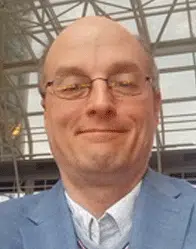
David Coker, EdD – West Liberty University
David C. Coker is a Doctoral Methodologist/Associate Professor at West Liberty University. He teaches graduate students qualitative and quantitative research methods as well as assisting with field work. He researches on research methods, leadership, and education. He serves on many editorial boards nationally and internationally.
Meet the Host

Alexa McClellan, MA, Host, On Research Podcast – CITI Program
Alexa McClellan is the host of CITI Program’s On Research Podcast. She is the Associate Director of Research Foundations at CITI Program. Alexa focuses on developing content related to academic and clinical research compliance, including human subjects research, animal care and use, responsible conduct of research, and conflict of interests. She has over 17 years of experience working in research administration in higher education.