




Season 4 – Episode 9 – Expanding Global Learning Opportunities Through COIL and Virtual Exchange
This episode explores how colleges and universities can expand access to meaningful international experiences through virtual exchange and globally connected learning.
Notes
To view this episode’s notes, simply click on the “More Info” button on the player.
Podcast Chapters
Click to expand/collapse
To easily navigate through our podcast, simply click on the ☰ icon on the player. This will take you straight to the chapter timestamps, allowing you to jump to specific segments and enjoy the parts you’re most interested in.
- Introduction to COIL and Virtual Exchange (00:06) Ed introduces On Campus with CITI Program, welcomes Dr. Danielle Walters, and frames the episode around collaborative online international learning, virtual exchange, and international education.
- Defining COIL and Its Core Components (01:00) Ed asks what COIL is and how it differs from study abroad, and Dr. Walters explains virtual exchange projects, student collaboration across countries, icebreakers, reflection, and intercultural competence.
- Flexible Course Pairings and Interdisciplinary Learning (03:08) The conversation explores whether COIL works best with similar courses or across disciplines, with Dr. Walters emphasizing its flexibility across languages, academic fields, and student levels.
- Global Learning Without Travel (04:17) Ed asks why global learning matters for students who may never leave their home country, and Dr. Walters explains that global citizenship is rooted in competencies, connection, and understanding an interconnected world.
- Making Global Learning More Accessible (05:55) The discussion turns to financial, logistical, academic, and personal barriers to study abroad, and Dr. Walters describes how COIL can embed global learning into students’ existing coursework.
- Student Benefits of COIL Experiences (08:08) Dr. Walters shares examples of academic and personal benefits, including language development, peer-to-peer communication, cultural learning, cultural humility, and empathy through an international social work project.
- Building Successful International Partnerships (11:18) Ed asks what makes partnerships successful, and Dr. Walters emphasizes shared purpose, common vision, aligned outcomes, strong logistics, and investing in partnership-building rather than simply finding a partner.
- Professional Development and Sustained Collaboration (13:53) The conversation connects COIL to professional development, conferences, research relationships, faculty partnerships, Fulbright opportunities, and long-term collaboration beyond a single virtual exchange project.
- The Future of Global Learning in Higher Education (15:38) Ed asks what institutional leaders should prioritize over the next five years, and Dr. Walters encourages building a culture of global learning that is embedded in strategy, faculty development, student success, accreditation, and teaching excellence.
- Closing Reflections and CITI Program Resources (18:33) Ed thanks Dr. Walters, directs listeners to CITI Program resources on research, ethics, compliance, and higher education, and closes with production and distribution credits.
Episode Transcript
Click to expand/collapse
Ed Butch: Welcome to On Campus with CITI Program, the podcast where we explore the complexities of the campus experience with higher education experts and researchers. I’m your host, Ed Butch, and I’m thrilled to have you with us today. Before we get started, I want to quickly note that this podcast is for educational purposes only, and is not designed to provide legal advice or guidance. In addition, the views expressed in this podcast are solely those of our guests.
Welcome to another episode of On Campus. Today, we are going back into the realm of international education to talk about COIL, collaborative online international learning, and virtual exchanges. My guest today is Dr. Danielle Walters, global learning strategist, internationalization expert, and author of multiple courses on international student support for CITI Program. Welcome to the pod, Danielle.
Dr. Danielle Walters: Thanks so much for having me, I’m very excited to talk with you today.
Ed Butch: Wonderful. I’m very excited as well, and I’m excited for this episode because of really my own interest in international education. So, to start, for any listener who might not be familiar with the concept, what exactly is COIL and how does it differ from traditional study abroad programs?
Dr. Danielle Walters: Sure. This is a great place to start. COIL is a virtual exchange project that takes place with a class of students in one country, collaborating with a class of students in another country on a virtual project that usually spans the course of maybe four to six weeks. There’s a lot of flexibility in that, so it can be longer, it can be shorter, it works with the needs and the student learning outcomes that are desired by the faculty, but that is a good median place for a project like this. And so, yes, COIL is defined by a few different aspects. One being the introductory and the icebreaker aspect, which is the part that allows the real collaboration to begin as students get to know each other and they work on the intercultural piece of their project, becoming comfortable being able to work together in their cross cultural exchange environment.
Another interesting aspect is the reflection piece, because reflection is where the student, the real knowledge comes from, after the students have done the work together, they’ve been assessed, but when you reflect, you’re able to think not just about the disciplinary learning that took place in the project, but also about the intercultural learning and the things that might have changed within you and maybe the new skills that you’ve developed. Another aspect that’s important to COIL is looking at the intercultural competences that are developed, not just the academic competence that’s developed within the project. And so, those are some of the defining aspects that make COIL a special and very robust pedagogy in terms of virtual exchange.
Ed Butch: Yeah, that’s really intriguing. And just a quick follow up, I guess, in terms of these classrooms that are collaborating, I guess, do you normally see it where it’s the same kind of course in both countries, is it a math course in both countries that’s happening or are they crossing academic boundaries with a math course in one country and a science course in another, or something like that?
Dr. Danielle Walters: Right. That flexibility I mentioned, it extends even to the disciplines. It’s absolutely possible to have students in a Spanish class working with Spanish-speaking students elsewhere around the world so that they can practice their language skills. But also interdisciplinary concepts are extremely popular, and that’s where you see some of the deepest global learning take place when students are getting not only different cultural perspectives, but also different disciplinary perspectives at the same time.
Ed Butch: Yeah.
Dr. Danielle Walters: And again, that expands, that adaptability of COIL expands beyond that. It can be for K through 12 students, it can be for undergraduate students, graduate students and beyond.
Ed Butch: Yeah, that’s great. Thank you. So, having worked in higher education for many years prior to CITI Program, there’s always a lot of talk about preparing global citizens. So, why do you believe global learning remains important even for students who maybe will never leave their home country?
Dr. Danielle Walters: Sure. Well, the thing is that global citizenship isn’t about the destinations to which you’ve traveled. It’s about the global competences that you have learned. It’s about your ability to interact, to engage, to understand the interconnected world in which we live. So, I think that’s the primary reason that global learning matters for students, whether they travel during their academic career or not, or whether travel is important to the career that they ultimately end up in as graduates. All of the different aspects of global learning are important to us now as the world becomes more interconnected, as societies and governments and industries become more interconnected globally and globalization continues. So, I think those are some of the reasons that global learning is important, no matter whether a student travels or not.
Although, study abroad is a wonderful transformational way to gain your global competences and your intercultural competence, it’s just not the only way, and it’s not always accessible to all students.
Ed Butch: Exactly, exactly. Well, that feeds great into my next question, which was really about the accessibility piece. Because when I used to promote study abroad, a lot of the, I guess the negative feedback, for lack of a better word, I would get from students and families is that accessibility aspect, whether that’s a financial aspect or an academic component, because they’re in such a structured program that they can’t take a semester away. So, I guess how do you really see COIL and virtual exchanges helping institutions making global learning more equitable and accessible?
Dr. Danielle Walters: Right. That’s really one of the most special parts of COIL and virtual exchange in general is the way that it’s able to eliminate some of those barriers that we just have to admit exist. There are financial barriers, there are logistical barriers, there are personal barriers to actual student mobility. And we want as many students as possible to have the opportunity to study abroad. And I hope that everyone wants to eventually travel in their life, if it can be a part of their life. And I think that COIL is something that not only does it make global learning and this kind of intercultural communication and connection with the broader world possible by embedding the project into a course… Maybe this is a gen ed course, maybe it’s a major course, or even an elective.
But it’s embedded in the classroom of a student at home, at their home campus, but they still get the opportunity to have these interactions and to learn from it. So, incredible way to make global learning more accessible, more broadly. And if an institution has that as one of their institutional priorities, internationalizing or building up the global learning aspect, then COIL can potentially, and virtual exchange can potentially really be a springboard and something that can cross campus and really even change cultures.
Ed Butch: And you yourself have been, you’ve helped implement COIL experiences, correct?
Dr. Danielle Walters: I have, yeah.
Ed Butch: Wonderful. So, I guess what do you see as some of the benefits that you’ve seen students gain from these experiences, both academic and personal?
Dr. Danielle Walters: Sure. Well, many, many benefits to COIL, it’s hard to even narrow it down. But it can be as simple as sort of that first simple example that I was giving that you see a great progress and improvement in a student’s language skills because they’ve been interacting with a native speaker of that language and building up their vocabulary and their fluency. So, simple way to see an academic outcome there. And just to add to that, what makes it sometimes so particularly beneficial is that the students are, this is a peer-to-peer communication. So, they may have a fabulous native speaker as their professor, who is giving them wonderful instruction and opportunity, but there’s still something different and a new cultural aspect when they’re working with someone who might be in their same age group or at the very least is a peer that is also in their studies at the same time. And so, it really makes quite a huge difference.
And it adds the cultural aspect in addition to simply the academic, the disciplinary aspect. The student learns about how they’re going to communicate with their international partner, they learn that not everyone uses iPhone messaging and sometimes we have to use WhatsApp because different people in different places have different data, and WiFi that they’re able to access. All kinds of fascinating things that they learn while they’re learning and practicing their fluency in their language, for example. So, that would be on the academic side for that question. Then you mentioned on the personal side. So, that I would pull an example from a COIL project that I helped to implement, I helped a faculty member develop, fabulous faculty member in the graduate school, in the College of Social Work, at the University of Tennessee where I was previously employed.
And she had this incredible outcome of a progress and a building of cultural empathy with her students. They were working with and they were partnered with social work students in Kenya, at a university in Kenya, and the cultural humility and empathy that they gained looking at the concept of social work from a different cultural lens and perspective, and learning different approaches was just, it was fascinating, and it was humbling to see. So, that’s I think more on the personal side, one of the impacts that I’ve seen on COIL students.
Ed Butch: Absolutely. That’s fantastic. And it’s interesting because you obviously have taken a lot of time in developing different global partnerships when you’re setting up these programs, and having to have that communication with the other institutions. From your experience, what would you say makes an international partnership successful and what are maybe some of the mistakes that you’ve seen institutions make previously?
Dr. Danielle Walters: Sure. So, to make an international partnership successful, I think the most important thing is that it not be built around a project, but rather around a shared purpose.
Ed Butch: Okay, interesting.
Dr. Danielle Walters: I think that’s the most important aspect. You want to see that the faculty members and the institutions that are collaborating have a common vision and goal for their students and the outcomes that they want to see from the project that they will work on together. I would say that’s the most important part of creating a successful international partnership in general.
Ed Butch: Yeah.
Dr. Danielle Walters: And then, okay, the second part of the question was around a common mistake. So, that sort of builds off of my previous response because a common mistake can be for an institution to focus a little more on, or a faculty member, to focus a little more on finding their partner rather than building their partnership. Because finding a partner can be a trick too, you’re looking at many aspects and it’s something that takes some time, but building the partnership is where you want to invest the most time.
Making sure that your institutions, your faculty members are aligned in that common vision, that shared purpose for the course, that they have identified their individual strengths and learning contexts and gone through the logistics, those are the things that matter the most and that create a sustainable partnership, especially when those faculty members see themselves and understand that they are co-creators of this experience, and they’re not just guest lecturers appearing in each other’s classes, something like that. It’s what gives that aspect of deeper global learning.
Ed Butch: Well, as you were saying that, it kind of reminds me about the importance of professional development, which is one of those things that for a lot of faculty and staff has been cut a little bit over recent years. But being able to go to national conferences or international conferences like NAFSA, or doing research projects with these faculty members, that’s I think some of those ways that those relationships are really being built before they maybe get to let’s do a six-week experience with our classes together, right?
Dr. Danielle Walters: Oh, absolutely. Right. Many faculty members have these existing relationships or partnerships to leverage, to create a COIL or some sort of virtual exchange experience and to bring that into the classroom for their students. And then thinking beyond that, maintaining a sustainable relationship, there’s so far they can go, as you said, in terms of the research and scholarship opportunities. Maybe there can be a true mobility piece and these students can travel to visit each other and to work together. I had started working at UT with our Fulbright faculty, those were applying and incoming Fulbrighters who would be coming to visit us and to stay with us on campus.
And we were working on incorporating COIL into almost all of the applications and proposals for Fulbright for our faculty, and incoming faculty, to show that it’s a way of maintaining and sustaining that relationship as the follow-on activity for faculty at the conclusion of their Fulbright experience. So, that was another incentive that we were offering to faculty to implement COIL projects.
Ed Butch: Yeah. Yeah. No, I think that’s great, and a really smart way to attract some of those scholars to UT then as well. All right. So, as we start to wrap up, my favorite question that I get to ask all of my guests is to be a little bit of a fortune-teller and look into the future. And so, if you were talking with a provost or president of a university today, what would you say would be the most important thing they should look at with expanding global learning opportunities for students over the next, let’s say, five years?
Dr. Danielle Walters: That’s a big question.
Ed Butch: It is a big question.
Dr. Danielle Walters: It’s a big question, and I’m sure there are many excellent potential responses because there are so many things that could be done. But for me, I think I would say, I would encourage them, don’t focus on creating a program, focus on building a culture of global learning. I think that we have these faculty members who can implement these great projects and they can do some wonderful work, but if you want to see this at the institutional level, then you’re going to need to really embed it in the fabric of the institution, and you’re going to need to embed it in the institution’s strategic priorities and in that faculty development you were mentioning, in student success, all of those different ways that you can make sure that it has become something at the core of what the institution actually does.
Because global learning, it partners, it pairs with all of these things, with student retention and accreditation and teaching excellence, it can be such an important facet of all of that. So, I guess that would be my humble suggestion is that they might consider working on that, building that culture more so than just another initiative, another project, another program.
Ed Butch: Exactly, exactly. Yeah, because I think we hear a lot… Because there are so many competing priorities for a president or for a provost, that we hear a lot of, “Oh yeah, we want to focus on this, we want to do this.” But like you said, instead of that one-off type of thing, let’s truly ingrain it, maybe make it a part of the tenure process. I’m sure that will be a contentious one for me to say that, but maybe it’s part of that. Obviously make it a major for a center for teaching and learning, helping new faculty especially understand how to do these types of things. I think that’s really, really important points that you made.
Dr. Danielle Walters: Absolutely.
Ed Butch: Well, thank you so much for your time today, Dr. Walters, I really appreciate it. Great conversations, and like I said, something that I truly appreciate having a great interest in international ed. So, thank you for your time.
Dr. Danielle Walters: Yeah, thank you so much, I really appreciate the opportunity.
Ed Butch: I invite all of our listeners to visit CITIProgram.org to learn more about our courses and webinars on research, ethics, compliance, and higher education. I look forward to bringing you more expert guests to discuss what’s happening on campus. Special thanks to our line producer, Evelyn Fornell, production and distribution support provided by Raymond Longaray and Megan Stuart.
How to Listen and Subscribe to the Podcast
You can find On Campus with CITI Program available from several of the most popular podcast services. Subscribe on your favorite platform to receive updates when episodes are newly released. You can also subscribe to this podcast, by pasting “https://feeds.buzzsprout.com/1896915.rss” into your your podcast apps.


Recent Episodes
-
- Season 4 Episode 8: Student Success Starts with Purpose: Strategies for Supporting First-Year Students
- Season 4 Episode 7: The Future of Higher Education: A CEO’s View on Workforce Readiness, AI, and Research
- Season 4 Episode 6: From Belonging to Flourishing: Rethinking Student Well-Being in Higher Education
- Season 4 Episode 5: Building a Credible Micro-Credential Ecosystem in Higher Education
Meet the Guest

Danielle Walters, PhD – Independent Practitioner-Scholar-Consultant
Danielle Walters is an independent global learning practitioner, scholar, and consultant helping higher education institutions build accessible, sustainable cultures of global learning. Her work focuses on faculty development, curriculum design, international partnerships, and Collaborative Online International Learning, with an emphasis on expanding access and embedding global learning strategically across institutions.
Meet the Host
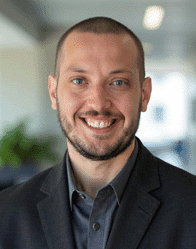
Ed Butch, Host, On Campus Podcast – CITI Program
Ed Butch is the host of the CITI Program’s higher education podcast and the Associate Director of Higher & Secondary Education at CITI Program. He focuses on developing content related to higher education policy, compliance, research, and student affairs.