




Season 4 – Episode 8 – Student Success Starts with Purpose: Strategies for Supporting First-Year Students
This episode discusses how colleges and universities can help students find direction early in their academic journey.
Notes
To view this episode’s notes, simply click on the “More Info” button on the player.
Podcast Chapters
Click to expand/collapse
To easily navigate through our podcast, simply click on the ☰ icon on the player. This will take you straight to the chapter timestamps, allowing you to jump to specific segments and enjoy the parts you’re most interested in.
- Introduction and Episode Framing (00:06) The host introduces On Campus with CITI Program, explains the podcast’s educational purpose, and welcomes Dr. Kate Lehman for a conversation about helping students connect to purpose early in their college experience.
- Why Purpose Matters for Student Success (00:53) Ed asks why helping students find purpose early is important, and Dr. Lehman discusses undecided students, major selection pressures, confidence, persistence, and the need to support students as they build direction.
- First-Year Support as an Ecosystem (04:23) The conversation turns to how institutions can help students explore interests, strengths, and goals through orientation, first-year seminars, residential programs, learning communities, advising, common reads, reflection, and belonging.
- Supporting Undecided Students Without Creating Pressure (06:31) Dr. Lehman explains how prior credits, transfer pathways, AP courses, dual enrollment, and financial realities can limit exploration time, emphasizing structural support, transparent course planning, strong advising, and co-curricular exploration.
- The Connection Between Purpose and Belonging (11:34) Ed asks whether belonging and purpose develop together, and Dr. Lehman describes purpose as connected to identity development, competence, authentic tasks, affirming relationships, and feeling valued within a campus community.
- Career Exploration Beyond the Career Center (16:16) The discussion shifts to career exploration and workforce awareness, with Dr. Lehman describing the “career everywhere” movement, the risks of uncoordinated efforts, and the value of applying a first-year experience framework to postgraduate success.
- Reframing Major and Career Decisions (20:06) Dr. Lehman offers advice for supporting overwhelmed students by normalizing that majors and careers are not always linear, encouraging skill-building, and helping students understand how their experiences can prepare them for changing pathways.
- Small Improvements and Better Communication (23:31) Ed asks what institutions can do in the near term, and Dr. Lehman emphasizes listening to students, talking openly about jobs and money, helping students tell better stories about what they are learning, and communicating higher education’s value more clearly.
- Closing Reflections and CITI Program Resources (26:03) Ed thanks Dr. Lehman for the conversation, directs listeners to CITI Program courses and webinars on research, ethics, compliance, and higher education, and closes with production credits.
Episode Transcript
Click to expand/collapse
Ed Butch: Welcome to On Campus with CITI Program. The podcast where we explore the complexities of the campus experience with higher education experts and researchers. I’m your host, Ed Butch, and I’m thrilled to have you with us today. Before we get started, I want to quickly note that this podcast is for educational purposes only and is not designed to provide legal advice or guidance. In addition, the views expressed in this podcast are solely those of our guests. Welcome to another episode of On Campus. I’m thrilled to have Dr. Kate Lehman as today’s guest. Dr. Lehman serves as the executive director of the National Resource Center for the first year experience, and students in transition, as well as an affiliated faculty member at the University of South Carolina. Welcome to the pod, Dr. Lehman.
Dr. Kate Lehman: Thank you so much for having me.
Ed Butch: Of course. So excited for you to be here and for today’s conversation. So for today’s conversation, I really want to talk about how institutions can help connect students to purpose early in their college career. So with many students arriving on campus, unsure of their major, their career path, or even why they’re in college, why do you think helping students find purpose early is such an important part of student success?
Dr. Kate Lehman: So I really love the topic that you’ve chosen for this episode because this hearkens back to my own decades old now dissertation research on major selection, and especially I studied undecided students. And a really interesting thing happened 15, 20 years ago where institutions knew that students who came to college without a major were less likely to persist. And so campuses moved away from allowing students to come to campus as an undecided major. Now, some institutions still allow it, but if you look, the number of students admitted to college as undecided or undeclared has really shrunk, and that’s a lot of times due to admissions policy that link admissions to a student’s major. So a lot of times you have to come to campus with something or even an intended major, if not a declared major. But a policy change doesn’t change the fact that in their hearts, students are still not sure.
And so something like 80% of college students end up changing their major at least once, and a lot of students change it two, three times. So we really can’t mandate students to have clarity or direction. But we do know that when students don’t have direction or have real low confidence in their ability to succeed, which can manifest as being unsure about their major or their path, that that results in lots of outcomes that we don’t want for students. We want students to persist, we want students to develop all of the skills that we’re aiming for. And when they don’t have that confidence or feel like they know what their plan is, they’re less likely to have those positive outcomes.
And so we really want to help students in building… I think, this is my perspective, is that we want to help students build their skills and knowledge, especially as they arrive on campus, so that they can be more confident in their decision-making, even if they don’t know quite yet what they’re going to do, or even if they chose a major and they really aren’t sure if that was the right fit, but they just picked it because they had to pick one. That’s what I think. Yeah.
Ed Butch: Interesting. Yeah, I had honestly no idea that so many universities started moving away from the undecided undeclared major. In my previous role, I was at Kent State for 12 years. And I think they still have it, I’ve been away for four years now, so maybe not. So I just kind of assumed that that was still a thing. But I guess, because-
Dr. Kate Lehman: And it is still a thing. It’s just became a lot less common.
Ed Butch: A lot less, yeah.
Dr. Kate Lehman: Yeah. And a lot of institutions, even if they don’t totally mandate it, they’re just really pushing students to list on their application what their major is.
Ed Butch: Yeah.
Dr. Kate Lehman: Even if they don’t technically require it, they still have a spot where you have to say what it is, and I think there’s just been a movement towards encouraging students to enter with some sort of major commitment. And so as they have done that, we just have fewer students coming to college undeclared or undecided than we used to.
Ed Butch: Yeah. And so the interesting thing, having worked a little bit with some of those students, what can stay called exploratory majors, obviously a lot of what they were doing, hence the name, was exploring. So with this move then, I guess, what are some ways that institutions can really help students explore their interests, their strengths, and their goals during that first year?
Dr. Kate Lehman: Yeah. Well, so at the National Resource Center, we think about first-year experience really as this ecosystem of support. And so an effective first-year experience is going to bring together resources and support from all over campus. It’s not going to be one office or one particular intervention. It’s going to be orientation, first-year seminars, residential programs, learning communities, advising, common reads, all of those things. I’m not even naming all the possibilities, but there’s a huge network of different interventions that we can do in their first year, that offer skill and knowledge building. So in orientation, we’re going to be talking about the different colleges that exist and the different majors that exist, and how advising works. That’s a key foundational piece of knowledge that as students are thinking about the big life questions, “Who am I? What am I going to do?” that they’re able to then tie it to a campus resource that can help them navigate that.
In our first year courses, hopefully there’s a lot of reflection happening in those courses. We know that’s a best practice for students. And perhaps most of all, we’re fostering a strong sense of belonging. We want students to feel… They need to feel safe exploring. And in fact, part of, I think, the other piece of the movement away from students coming in as undecided or undeclared or exploring majors is they kind of have a bad rap. It’s not necessarily a thing students are excited to share, and so really fostering a community where it’s safe to have questions, to be unsure, I think that’s a piece of this as well.
Ed Butch: Yeah, definitely. So it’s interesting because there’s this pressure on students to choose a major quickly, now apparently even faster based on not even be… come in as undeclared, a lot of places. I guess how do you work with those students who truly are undecided, even if they have a major, and encouraging this exploration without having them feel like they’re really falling behind their peers?
Dr. Kate Lehman: Well, and I’m going to add another wrinkle to this challenge because many students are arriving to college with a good deal of credit already.
Ed Butch: True.
Dr. Kate Lehman: So even though our curriculums might have some sort of general education or liberal arts requirements that are intended to create space for students to explore, we have students who are entering as transfer students or students who receive credit for AP courses or dual enrollment or credit for prior learning. And so by the time they get to us, it doesn’t just feel like there’s no time to explore. Candidly, if they’re trying to maximize their credits and graduate as quickly as possible, there really might not be a lot of space in their actual curriculum to explore. And I think this is an important too to mention that that means that students with more financial resources who can afford to delay graduation can often have the privilege of time that other students don’t have.
And so first I want to advocate for us thinking at a structural level. I mean, it’s great that students come to college having had some really important prior learning experiences and bringing credit with them, but we should be thinking about, well, what does this mean? This is a huge exploding population. What do we need to do with our financial aid policies to make sure that students who come from higher income backgrounds don’t have this privilege of time that students from lower income backgrounds are like, “No, no, I did dual enrollment in high school so that I could graduate in two years”? Well, how do we think about scholarships for them? There are no scholarships for transfer students on most campuses. These are students who have worked their tushes off to transfer to your institution in many cases, and how are we supporting them to make sure that they do have a little space?
I also think we need to help students by being more transparent about course planning. Once about, I don’t know, maybe five or so years ago, I did a content analysis of 15 research universities websites looking about how they communicated information to students about double majoring. And those course planning maps, I’m sure you’ve seen this meme, the Charlie Conspiracy meme from It’s Always Sunny in Philadelphia where it’s like the guy with the red lines. That’s what these websites looked like. And if I were a student and I was feeling like, “I’m not really sure about my major. Maybe I want to change, or maybe I want to add a double major,” and then I went to that website and that was what was there, I would run back to my cave and never come out. And so we just need to, I think, find ways to communicate with students about, “Okay, if you do want to change your major, here’s what that would mean for you,” so they can make informed choices.
And I think that’s also where really good advising comes in. So the NRC is so proud to partner with the Advising Success Network, and ASN does amazing work about how we can redesign advising to support students in identifying their goals and help them use those advising appointments, not just about, “Okay, these are the five courses you need to take next semester,” but instead, how are those course choices connected to their broadened goals? So I think there’s a lot we can do structurally to make it so that if students do want to change their major or do want to make a different choice, there’s support for that.
And then lastly, I think we have to remember that exploration doesn’t just happen in the classroom. That when we provide, even if they are like, “No, I started as a psych major, I’m getting out of here as a psych major,” we can use the co-curricular spaces on our campus to allow them to explore and think about the skills they’re building in that psych major, that might apply to a broad variety of careers, and help them find those sort of beyond tied to a particular major, those broader skills they’re building that will serve them in many different spaces in life.
Ed Butch: I love that you called out academic advising and the Advising Success Network. I spent many years in my career in an advising office as an advisor and in a few other roles, and it is, it’s a huge part. Other than faculty, an advisor is normally the one other person on campus that has so many touch points with the students. So it’s so important that they’re having those conversations and they understand how those students are putting those types of things together. It’s like a double major then as well.
Dr. Kate Lehman: Yeah. Yeah, absolutely.
Ed Butch: So you’ve mentioned a few different times now, purpose and sense of belonging. So I’m interested in the connection between those two for you. So do you think that students need to feel like they belong before they can discover purpose, or do they develop together?
Dr. Kate Lehman: Well, I mean, yeah, I think they definitely develop together. It’s really hard to achieve purpose without belonging. So first, what do we mean by purpose? I think that’s really about bringing together your interests and goals and strengths and articulating, well, maybe you’re not articulating, but at least having a sense of those bigger life questions we were talking about before. So “Who am I, and what am I contributing, and how am I going to navigate the world?” That’s I think this innate sense of the answers to those questions. And to me, that actually sounds like identity development, that we’re developing who we are, and as we’re thinking about that, we actually know quite a bit about identity development and what a person needs to develop their identity. So they need to feel competent like they can do it, and they need to have the opportunity to perform relevant, authentic tasks and succeed at them.
So this can happen in the classroom, on assignments that are real world-based. I used to do a lot of research on computing fields, and a real big problem is that when we make a computing assignment where it’s like if the program doesn’t compile at the end, you fail the whole assignment, that’s really bad for students because then it makes them feel like, “Well, I definitely can’t do this,” even if they really just messed up a couple of steps. So scaffolding the learning so that even if they don’t get it 100% right, they can still see the potential for themselves to be successful at these relevant tasks. So we need to be competent, we need to be able to perform relevant tasks. So that’s one piece of identity development, but the other part is all about community. It is about relevant people in our lives, people who are meaningful, who we think know what they’re talking about.
Our faculty, our TAs, older students who are operating as peer mentors. We need those kinds of people recognizing that students can do this too, and articulating that to them. We need a faculty member saying to them, “I think you would be really good in my research lab. I’m so impressed by what you wrote in this paper.” We need peer mentors being like, “You’re a really good leader,” or “I love how you communicated that.” Those kind of affirming experiences are core to our identities and who we become and how we think about ourselves. And then that last piece is feeling like we belong in that space when faculty and peer mentors and our friends and the folks who are in the hallways, we feel like there’s space for us on that campus, and that we’re safe there, that who we are is valued there. So it’s half about what we do, and the other half is about who we’re with and how they communicate to us in all sorts of different ways that we’re meant to be in that space and that they think we can do it.
Ed Butch: That’s a great way of describing it, so thank you for that. And I really enjoyed the scaffolding part of your identity because when I would teach courses, the students would always get angry with me because I gave essay exams. And I was like, “Look, write down what you know. I can give you credit for what you know. If I’m giving you a true, false, or a multiple choice question, it’s either right or it’s wrong, and you’re losing those points if you choose the wrong answer. So show me what it is that you know about this topic even if it’s not fully developed.” So understanding that yes, you are getting that positive affirmation for at least what it is that you’re knowing, even if it’s not quite all there.
Dr. Kate Lehman: Absolutely. Well, and I like how that is framing it not in a deficit. It’s not about what you don’t know. It’s about what you do know. And that for all of our students, no mater if… You know? We have so many first-generation students on our campuses, and they can often feel like they’re really in over their heads and that they don’t know anything about this space. And that’s not true. They bring all sorts of, I’m thinking about community cultural wealth frameworks. They bring so much important knowledge to our campuses and experiences that are relevant. And so finding ways for us to validate that knowledge and make them see that their experiences, even if they’re different from the kids sitting next to them, are valued and important. That’s really key to helping students then find their purpose and find a pathway to their success, however they’re defining that.
Ed Butch: I think when we talk about purpose and college students and things like that, a lot of people’s mind goes to career. Right?
Dr. Kate Lehman: Mm-hmm.
Ed Butch: And we have career service offices on campuses, and that’s normally what people think of. But the problem is, a lot of students don’t go seek career services until late in their career, junior, even their senior year. So what do you think that institutions can do to connect students with career exploration and workforce awareness at a much earlier stage?
Dr. Kate Lehman: Yeah, I think good news is that I really see this rapidly changing. So earlier I talked about the FYE ecosystem and how we think of this as something that happens across campus. And when we think about postgraduate success, which includes career, of course, we think about that in the exact same way. It cannot be one office, the career center, holding the bag for the entire university. I think NACE is calling this career everywhere. And I absolutely see institutions across the country trying to really move this forward and move it forward quickly. Higher ed is not usually fast, so I love that there is a sense of urgency here. But my concern is that the reason folks are trying to move quickly is because of the broader critiques that we’re hearing about higher education’s return on investment. And we should absolutely be taking those critiques seriously.
I guess I would use the word scrambling though as to how we’re approaching this. And in some, not in all instances, the scrambling is trying to just infuse career everywhere to use NACE’s expression, and it kind of reads like we’re just throwing spaghetti at the wall. Like, “Everybody hurry. Throw the word career into your syllabus,” or into your whatever it is, reflection into your assignment. And I just think historically when we have approached things like that in higher ed, that doesn’t usually work super well. Usually those are not coordinated efforts that result in some sort of systemic change that actually changes outcomes. Those disorganized efforts I think might involve us as institutions expending a lot of resources and energy that may not have the impact that we ultimately really…
I really believe higher ed, I mean, obviously I’m a huge fan of higher ed, I really believe so strongly in the power of higher education institutions. But we don’t particularly work well when we don’t do things with intention. And I think our intentions are good. I just don’t know that we’re doing that in a strategic coordinated way. And so I don’t know that I… I mean, I think that the FYE model could be a really good model for postgraduate student success. I think the first-year experience movement that the University of South Carolina founded has… I mean, it’s really, if you think about it, we just had last year, we celebrated our 40th anniversary.
Ed Butch: Wow.
Dr. Kate Lehman: And so that’s 40 years in the making, but if you look at what the first year experience trajectory has done, most people know what that means, on most campuses there is some sort of coordinated effort. So I think that’s a good model, and to that end, the NRC has started some research about how that could work for postgraduate student success, and we’re going to be publishing some resources in the coming year around this topic. So folks hopefully can be on the lookout for that. But I think for me, this is about using an FYE framework for postgraduate student success.
Ed Butch: That makes a ton of sense to be able to do that, because as you mentioned, over 40 years now, which is fantastic, you’ve been able to develop so much in so many ways, and gone through the iterations, that that framework obviously is one that could work. So for any of our listeners out there that are listening in, what advice would you give them into their institutions to really just support the students who are feeling overwhelmed and uncertain and anxious about this whole career path and major selection type of event?
Dr. Kate Lehman: Yeah. Well, I think our students tend to think that as they’re choosing their major, as they’re thinking about a career, that they’re making this huge decision that they will make only once and it will be this straight line. And we know that’s just not true. That is not true. That is not how most people’s careers play out. As I already said, it’s not even how most people’s major choice plays out. Most people do change their major. And so I’ll draw on my own personal experience, I was a French major in college, and thankfully I had faculty who helped me see that careers are long and will have many twists and turns, and it was about building skills that would travel with me wherever my path went. And my French degree from Miami University, which is where I went to college, served me so well. It taught me that when I walk into a room where I can literally not understand a word folks are saying, that I can and will learn it, that I will someday be able to understand the words they’re saying, literally.
And I survived in my PhD program with that same energy. I had never taken stats before, but I was a hundred percent confident that I would learn it. And even when I took this role two years ago, when I was their new director and it was sort of the same thing, and I was actually excited to be a little in over my head and know that I was going to learn my way out. Now I enjoy that feeling of being like, “I don’t know what I’m doing yet. I know that I can learn it.” That’s really fun, and so that started for me with faculty who helped me put words to skills that I had. And so I hope institutions are helping their students do that. That first of all, that they’re norming, that careers are not a straight path, that they can and will change their mind, and that they’re developing skills that will prepare them to navigate all those twists and turns.
And I think as we’re doing that, we have to also be authentic with our students and transparently share our own twists and turns and missteps and failures. Because a lot of times… I remember when I first started teaching college students and I realized that nobody was telling the faculty what to say and they were just humans. It was like looking behind the curtain of Oz and being like, “Oh my gosh, I mean they have had a lot of education, but they’re kind of making this up.” And I think the more we can be transparent with our students about that, the more reassured our students are going to feel that that uncertainty is normal and that uncertainty doesn’t mean that they won’t be successful. In fact, an openness to changing your mind can often make you more successful in this world that is rapidly evolving.
Ed Butch: Yeah. So as we start to wrap up here, I always like to look into the future a little bit, although for you, I’m looking a little more short-term in the future than normal. But is there something that you think that institutions could do starting tomorrow or in this upcoming academic year that would help more students connect their education to a sense of purpose and future success?
Dr. Kate Lehman: Well, I guess I will reiterate that I believe in systems change, and typically not quick fixes, but there is absolutely value in small improvements. And in this instance, I think it could, I’m going to say, no, it’s not easy, but it’s simple. It might just be as simple as improving our communication. We need to be listening to our students about what they’re worried about, and we cannot be in our ivory towers acting like talking about jobs and money is icky. It’s not icky. It’s a reality.
Ed Butch: It’s survival.
Dr. Kate Lehman: And jobs and money can come alongside. I mean, I think a lot of times for higher education, it’s sort of been like, we’re about more than careers, and there’s this implied hierarchy there. Careers and money are a big part of how people navigate the world. And also, it’s also true that higher education builds skills that are important for society outside of careers as well. And so we can have the both and there and hear our students when they say they’re deeply worried about what’s going to happen when they graduate from college. And then as we’re listening to them, I think we can help them start telling better stories about what they’re learning and how that prepares them for future success. And I think as they go on the job market, that’s the key, is being able to narrate your story and telling people why you will be successful in that role.
And as we do that, I think our students can then help higher education do a better job of telling our own story. I think right now we aren’t doing a good job of communicating our value to the broader public. And I think if we listen to our students, support them in telling their stories, a lot of that will take care of itself.
Ed Butch: Simple, but not easy. I like-
Dr. Kate Lehman: Yeah. I know it’s not easy, but I think it’s kind of simple.
Ed Butch: I love that. It’s so true though. It really, really is. And I think communicating in the right places. Having worked also on the recruitment side of things, we over communicate sometimes to students as well.
Dr. Kate Lehman: Yeah, that’s absolutely fair.
Ed Butch: Right, finding that balance there. So that’s great. Well, thank you, Dr. Lehman, I really appreciate the conversation. Some great points here and some great tips for our listeners. So I appreciate you taking the time.
Dr. Kate Lehman: Thanks so much for having me.
Ed Butch: I invite all of our listeners to visit citiprogram.org to learn more about our courses and webinars on research, ethics, compliance, and higher education. I look forward to bringing you more expert guests to discuss what’s happening on campus. Special thanks to our line producer, Evelyn Fornell. Production and distribution support provided by Raymond Longaray and Megan Stuart.
How to Listen and Subscribe to the Podcast
You can find On Campus with CITI Program available from several of the most popular podcast services. Subscribe on your favorite platform to receive updates when episodes are newly released. You can also subscribe to this podcast, by pasting “https://feeds.buzzsprout.com/1896915.rss” into your your podcast apps.



Recent Episodes
-
- Season 4 Episode 7: The Future of Higher Education: A CEO’s View on Workforce Readiness, AI, and Research
- Season 4 Episode 6: From Belonging to Flourishing: Rethinking Student Well-Being in Higher Education
- Season 4 Episode 5: Building a Credible Micro-Credential Ecosystem in Higher Education
- Season 4 Episode 4: The Stop Campus Hazing Act Explained for Higher Education Leaders
Meet the Guest
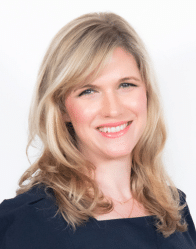
Kate Lehman, PhD – National Resource Center for the First-Year Experience and Students in Transition at USC
Kate Lehman, PhD, is executive director of the National Resource Center for the First-Year Experience and Students in Transition and affiliated faculty at the University of South Carolina. Her research examines student success, major selection, STEM and computing pathways, and college-to-career transitions, with an emphasis on equity and retention.
Meet the Host
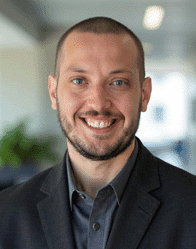
Ed Butch, Host, On Campus Podcast – CITI Program
Ed Butch is the host of the CITI Program’s higher education podcast and the Associate Director of Higher & Secondary Education at CITI Program. He focuses on developing content related to higher education policy, compliance, research, and student affairs.