




Season 3 – Episode 20 – Research Ethics for All: Expanding Access to Research Ethics Education
This episode explores how accessible research ethics education can support more meaningful participation in research.
Notes
To view this episode’s notes, simply click on the “More Info” button on the player.
Podcast Chapters
Click to expand/collapse
To easily navigate through our podcast, simply click on the ☰ icon on the player. This will take you straight to the chapter timestamps, allowing you to jump to specific segments and enjoy the parts you’re most interested in.
- Episode Opening: Introducing Accessible Research Ethics Education (00:00:12) Alexa introduces the episode’s focus on meaningful access to research ethics education as community involvement in research expands, especially for individuals with developmental disabilities.
- Research Ethics for All and Guest Introduction (00:00:37) Alexa explains how ethics training often centers researchers rather than participants or partners, introduces Katherine McDonald and Ariel Schwartz, and describes Research Ethics for All as a collaboratively developed course for community research partners.
- Ariel Schwartz and Katherine McDonald on Community-Engaged Research (00:01:45) Ariel and Katie introduce their backgrounds and explain how their work has centered collaboration with people with intellectual and developmental disabilities and other community partners.
- Benefits of Including People with Developmental Disabilities as Research Partners (00:04:57) Ariel and Katie discuss how inclusion reflects respect, improves trust, strengthens research design, and helps ensure that studies reflect lived experience, real priorities, and meaningful participation.
- Ethical Risks of Inaccessible Training Structures (00:09:33) Katie and Ariel explain that inaccessible ethics training can undermine confidence, exclude community research partners, create superficial certification without deep learning, and leave partners underprepared for real ethical situations.
- Mid-Episode Message About CITI Program’s On Campus Podcast (00:13:43) A brief break promotes CITI Program’s On Campus podcast and invites listeners interested in higher education topics and trends to subscribe.
- Determining What Community Research Partners Need to Know (00:14:06) Katie and Ariel describe how the Research Ethics for All team reviewed standard trainings, literature, and ethical issues specific to disability-related research to balance accessibility, credibility, breadth, and practical relevance.
- Designing the Course for Accessibility and Active Learning (00:18:23) Ariel and Katie explain the course’s accessible design features, including videos, written training, captions, everyday language, images, discussion questions, worksheets, role-play, sorting activities, chunked content, and reinforced key ideas
- Peer-Led Learning and Certification as Professional Recognition (00:20:43) Katie discusses the value of peer-led education, a supportive certification process, and a professional credential that helps recognize community research partners’ skills and contributions.
- Accessible Ethics Education as a Broader Benefit (00:22:11) Alexa and Katie reflect on how accessible training methods, while designed with and for people with developmental disabilities, can support many learners and create opportunities for people with disabilities to teach others.
- Jacob Myers on the Value of Research Partnership (00:23:50) Jacob Myers shares his experience as a research partner and explains how people with disabilities contribute feedback, improve clarity and accessibility, connect with others, and help shape research teams.
- Participant Voice, Choice, and Respect in Research (00:25:45) Jacob emphasizes that researchers should give people with disabilities time, credit, and space to share their ideas.
- Why Lived Expertise Is Essential to Research Ethics Education (00:27:00) Katie explains that people with developmental disabilities help identify risks, safeguards, and impacts that researchers may otherwise miss, making their expertise essential rather than optional.
- Accessible Training Builds Confidence, Belonging, and Trust (00:28:16) Ariel and Katie discuss how accessible ethics education helps community research partners feel welcome, understand their role, contribute ideas, earn professional recognition, and hold research teams accountable.
- Institutional and IRB Responsibilities for Supporting Research Partners (00:30:52) Katie and Ariel explain that institutions and IRBs should distinguish research partners from research participants, tailor training to roles and responsibilities, and remain flexible in accepting accessible ethics education.
- CITI Program’s Role in Reducing Barriers to Community-Engaged Research (00:33:27) Katie, Alexa, and Ariel discuss how making Research Ethics for All available through CITI Program adds credibility, supports institutional acceptance, and helps reduce barriers for community research partners and future principal investigators.
- Future Vision for Accessible Research Ethics and Inclusive Science (00:35:21) Katie and Alexa close by connecting accessible ethics education to public trust, research accountability, community partnership, and a broader culture of science that respects people and communities.
- CITI Program Course Promotion, Disclaimer, and Production Credits (00:37:20) The episode closes with information about CITI Program’s research compliance, human subjects research, community-engaged research, and ethics courses, followed by the educational disclaimer and production credits.
Episode Transcript
Click to expand/collapse
Alexa McClellan: Welcome to On Research with CITI Program, a podcast about the policies, people, and practices that shape how research is done and who holds responsibility within it. Today, we’re tackling an increasingly important question for the research community. As we strive to foster greater community involvement and engagement in research, how can we ensure that everyone truly has meaningful access to research ethics education?
Ethics training is usually treated as something for researchers and institutions. Far less attention is paid to how ethics are explained to the people and communities invited to participate in research. For individuals with developmental disabilities, that gap can affect understanding, choice, trust, and agency. Our guests, doctors Katherine McDonald and Ariel Schwartz work at the intersection of research ethics, accessibility, and community engaged research.
They are the creators of Research Ethics for All, a program developed collaboratively by people with developmental disabilities, disability service providers, researchers, and IRB members. This course is available at no additional cost through the CITI program Human Subjects Research Series or at re4all.org. In this conversation, we’ll explore what it means to include the individuals with developmental disabilities as research partners, where traditional ethics education has fallen short, and how ethics training can be designed to support real understanding and participation. Katie and Ariel, thank you for joining us today.
Ariel Schwartz: Thanks for having us.
Alexa McClellan: To start with, could each of you briefly introduce yourselves and describe your experience working with community-engaged research?
Ariel Schwartz: I’m Ariel Schwartz. I work at the University of New Hampshire. I’m a research assistant professor there, and I have always conducted research and collaboration with folks with intellectual and developmental disabilities, really because I have been motivated to understand scientific problems from the perspective of people who are experiencing them and acknowledging that if I’m going to do research about somebody, they should be included in the process. And this is particularly true because some of the work I do is intervention research and we certainly shouldn’t be developing interventions without the recipients of them.
Alexa McClellan: Right.
Katherine McDonald: So I’m Katie McDonald. I work at Syracuse University in Syracuse, New York. Here, I am both the associate vice president for research, working as part of the provost team and a professor of public health. I come from a field where working on problems in the environments where they occur and with the people who are affected by them is part and parcel of how we do scientific inquiry. And so community-engaged research has always been a part of how I think about doing science from my earliest days of training.
So that’s shaken out in different ways over my career, but it’s been a part of how I do science since the get-go. Doing Research Ethics for All was a project that for me came from a culmination of multiple threads in my life coming together with the right partner, both Ariel as well as the national team, the right opportunity to receive funding from the Patient-Centered Outcome Research Institute or PCORI and a real need in the community.
So these threads of my life I think are what got me here. So I just want to quickly say that one of the things that I’ve grown up with people with disabilities early on in my life as a young adult, I lived in community with people with developmental disabilities. And so Ariel is part of what she’s talking about is the importance of those relationships and knowing that this is a segment of our population that impacts us all, that want to be included, that want to have opportunities.
I then went on to a graduate program where similar to what Ariel is saying is we talk about studying real world problems with the people who are affected by them. And so they’re in my community psychology training program talking about doing community engaged research. So including all of those who are impacted in one way or another by the work that you’re doing is part and parcel with how you do your science.
And then as it happens, I was at an institution that had been shut down by the federal government for violations in terms of research ethics and the IRB was shut down for a while and I started graduate school as the institution was reopening to doing human subjects research. And fast-forward a few years, that led to me eventually having a position as a student on our IRB.
And two things happened there. One is I began to understand at a different level the ethics that undergird our work in a larger framework and became an experienced IRB member, but it also became the place where I started to think about inclusion and science on the research participant side the same as how we think about inclusion in any other part of society. So those threads are really important to me and come in for Research Ethics for All.
Alexa McClellan: Great, thank you. So can you speak to the benefits of inviting individuals with developmental disabilities to serve as research partners?
Ariel Schwartz: I think there’s a couple components to this. First and foremost, I think it’s respect. So there is kind of a moral imperative of including people in research about them, right nothing about us without us and operationalizing that in research means including folks as research partners. And so when we include folks in research, the research reflects their priorities, their preferences, and then research becomes a bit more trustworthy. And I’ll let Katie talk more about that.
But also when we include folks with disabilities as research partners, they’re able to provide input on more potentially valid methods. They’re able to interpret data in ways that people without the experience of disability wouldn’t. An example I really like to use is I was making a survey with a team about the types of accommodations that people got at work. And I was a postdoc and I had just done all my research training and I thought I knew how to make a good survey and that response skills should look a certain way and that they should be ordered response categories and that that would be easier and more accessible.
And they drew upon their own experiences of asking for accommodations, not getting them, realizing six months into a job they should have asked for an accommodation. And we came up with a survey with a series of response options that I thought were really confusing and not going to work. And it resulted in us getting the most important data from that whole study and the most interesting data that really drove interpretations from our interviews and everything else we did. And had I not partnered with folks with disabilities who had that lived experience, there’s no way we would’ve ever learned we did.
Katherine McDonald: Ariel, I think that’s such a great example of bringing to life the values of doing community engaged research, both for the people as well as the quality of what ensues from the scientific product. Just to add or amplify a couple things Ariel was saying, I think part of if science is a public good. We as a country have largely decided that we invest in a scientific enterprise because we are curious about the world and we want to understand it better and we think that science can make our lives better, whether that’s through technology advancements or thinking about equitable healthcare access or whatever those things might be.
And so if science is a public good, we also have to think about public trust because without public trust, we don’t have funding for research, we don’t have partners for research, and we certainly don’t have people who will enroll in research. And so by democratizing the process of how we do science, opening up that it’s not just trained professionals in terms of scientific methods, but those with lived experience and a ton at stake in terms of what the work does, there’s a value proposition there. And so I think that’s part of what’s important about doing community engaged research.
And then just as Ariel is saying, we see all types of scientific benefits. The work that’s done answers questions that are important to people on the ground, the relevance of the work, the accessibility and ability to enroll people because it fits with their lives. It’s an intervention that they’re excited about. It’s an intervention that they can see implementing in their lives. They trust the research team more. They don’t feel that it’s a scam. They don’t feel that they’re going to be taken advantage of. Part of what you’re trying to do with community engaged research is accelerate knowledge translation.
So when we see findings having impact in people’s lives and community engaged research is better positioned to do that. And then you also have all kinds of benefits for the people who are part of the team. They expand their social network, they learn new things, they have an opportunity for meaningful employment, you name it. And so those are just a few of the benefits of doing community engaged research.
Ariel Schwartz: Well, and then there’s also the idea of we think about social capital that people have. So we’re including people in spaces that they’ve systematically been excluded from and they’ve been kept out of this having power to participate in knowledge generation. And so a theory that we talk about sometimes is this idea of social role normalization, and that gets debated hotly in disability spaces.
But one of the components of that is when folks with disabilities have the opportunity to just engage in the range of social roles that people without disabilities have, that it can be powerful for them as individuals, but also to enhance their inclusion. So whether you subscribe to that or not, there is something very powerful about entering a space that you’ve been excluded from and changing that space from within.
Alexa McClellan: Yeah, that’s wonderful. Thank you so much. And I want to come back and talk about that trust that’s generated by participation a little bit later. But first, I want to talk about what the ethical risks are when people with developmental disabilities are invited into the research, but the ethics education and training structures are not designed for their learning needs. They’re not adequately supported.
Katherine McDonald: Yeah. Unfortunately, we have a lot of examples of that and we’re excited that Research Ethics for All is available because we’re trying to have an alternative. So many of our institutions have a blanket approach to thinking about training requirements at a foundational level, not things that are protocol specific, but at a foundational level. And those trainings don’t necessarily differentiate the types of roles and responsibilities that community research partners have.
So those trainings often don’t meet their needs in terms of what their responsibilities will be on a project, but then they’re also done in ways that aren’t accessible to them. And so it’s just another instance of maybe feeling less than, feeling excluded, feeling incompetent. And so it doesn’t set up that partnership to build trust, to build respect as Ariel was talking about, and most importantly, to offer effective learning. What would you add, Ariel?
Ariel Schwartz: So I just want to clarify that we’re talking not about people being invited to be participants, but invited to be partners. And so I think something that can happen too is when training is inaccessible, but maybe somebody can kind of make their way through it to get maybe that check mark and get certified, but it wasn’t quite accessible enough for that deep learning.
You may have people who are not fully prepared to fulfill their role on the research team because maybe they were able to complete a training, but the learning wasn’t deep, it wasn’t applied. And so then maybe when they’re put in a situation to carry out different research roles, they don’t feel confident or they feel like they are making mistakes and we can teach people those skills if there’s a more accessible training and we can have them approach those interactions with participants with more confidence.
Katherine McDonald: Yeah. And as Ariel saying, with more skill. And so for example, if you haven’t had a chance to learn about how complicated it is to think about recruitment and enrollment when you’re doing it within your own community and you’re a member of that community and both the things that facilitate you being able to be in touch with and help people learn about an opportunity to be a study participant, but also when you might not want to cross a boundary and do that with certain people.
So as you go through eligibility criteria, sometimes there’s a lot of sensitive information. So you want to make sure that those training opportunities really think about the positionality of community research partners and the ethical issues that they’ll encounter. And so they have the applied skills as Ariel’s talking about to really be able to navigate and then have a plan because we’re trying to prepare ethical researchers so that you know how to handle complex situations as they come up, including like, “I might need to pause here. I’m not sure what to do,” rather than doing something that might be harmful.
Ariel Schwartz: And that’s one of the reasons that most ethics trainings that we’ve seen don’t include application to your own project. They’re kind of generalized, and that’s one of the reasons we though that that application piece was so important for Research Ethics for All. And so we have these add-on activities that give people the opportunity to apply what they’re learning to their study. So to start building their understanding of thinking about what Katie was saying, “I’m a member of this community, I might want to recruit individuals, but how will that actually look in real life for me and my situation or for this specific research study?”
Alexa McClellan: Yeah. So what I’m hearing you say is that really it’s threefold. It’s respect for these individuals who are participating that they can have a more positive experience overall because they can feel confident and they can feel like they’re meaningfully contributing to the project. And that also leads to then better research, better results because everyone’s on the same page and everyone feels like they can really contribute to the science. That’s great.
Ed Butch: I hope you’re enjoying this episode of On Research. If you’re interested in important and diverse topics and the latest trends in the ever-changing landscape of universities, join me, Ed Butch, for CITI Program’s podcast On Campus. New episodes released monthly. Now back to On Research.
Alexa McClellan: So you talked about the importance of having educational resources available that are accessible, but at a basic level, how did you determine what information these individuals needed to know in order to be effective participants in the research enterprise?
Katherine McDonald: What a complex question. One of the complicated pieces of this is, as Ariel’s talking about, the knowledge that’s most relevant to the work you’re going to do is where you’re going to really have active learning opportunity to apply and really enhance your knowledge, your skills, all of that. But most of our institutions have a requirement for general education that’s not just protocol specific.
And so as Ariel was saying, we tried to thread the needle a bit in terms of offering what an institution will find credible for saying this is the whole of it. We are exposing people to all the important information from the history to the federal regulations to thinking about what it looks like to apply those in a research study where you’re going to be doing it peer mentoring deliberate intervention with transition age youth with developmental disabilities, for example.
And so this is why we were fortunate to have support from PCORI because we were able to do a really rigorous process to figure out balancing tailoring the information to the roles and responsibilities of community research partners while also being credible to institutions to accept this as a training for people who are community research partners. They’re not principal investigators. They’re not the FDA specialists on the team.
And so we reviewed standardized trainings including CITI. We had a national committee of steering committee members, people with and without developmental disabilities, academically trained researchers, folks working in the human research protections world, and we looked at ethical issues that came up in doing research with this population. And we had this robust engagement process to narrow down the content, and especially I think deciding what needed to be featured more in depth.
And so where could we expose somebody to the knowledge to say, “Yeah, these are the Belmont principles. Here’s the contours of them, but let’s talk about what they look like in research with people with developmental disabilities. Let’s focus on consent and what does it look like?” And luckily these are values or principles that resonate with the disability rights movement, so they’re not hard to teach because they’re the same thing.
Respect, we’ve said that how many times already, agency and the ability to direct what happens in your life. And so there’s a lot of resonance there. And so we landed on this place where we have a didactic curriculum so that there is standardized education everyone is exposed to so that institutions can feel confident that this is a credible training program, but then with application, all these great learning activities, discussion questions, things that you can apply to your particular project to really help you bring them to life and going in depth there where we thought it was more important for people to have skills.
And sometimes that’s in terms of helping design the protocol, sometimes that’s helping to carry out the protocol so that when you’re in the field recruiting or in the field doing an interview, you’d be prepared and ready. It was hard because you had multiple places where we needed to think about what to include. What else, Ariel?
Ariel Schwartz: The only thing I’d add is, you mentioned it, but to expand on a little bit, is we looked at the standard curriculum, but then we also reviewed the literature to identify ethical issues that come up specifically in research with people with developmental disabilities to think about that there may be community research partners with developmental disabilities working on projects that are not recruiting people with developmental disabilities.
But for the most part, usually they’re engaged in disability related research. And so we wanted to ensure that our training covered some specific concerns for ethical research with that population. And so that content wasn’t necessarily covered in the standard ethics training. So we looked to the literature to identify those.
Katherine McDonald: Yeah. And to say very explicitly, part of what we had to balance was breadth of coverage, the robustness of what we covered, but being accessible and lengthy education isn’t necessarily one that’s easy for any. All of our attention drops off. And so balancing thinking about the length, the overall length of doing it and balancing the didactic with the learning activities.
Alexa McClellan: And that’s great because I want to talk about that next, the design of the course and what specific things you did when you were designing it to be the most accessible for this population.
Ariel Schwartz: So as Katie said, we wanted to have a standard set of information that was delivered to everyone. And so we knew that to have that, we couldn’t have it just all be active learning, that there needed to be some sort of didactic information delivery. And we talked with partners and most said, “Videos are my favorite way to learn.” But then we also know there are other partners who really prefer to read. So we used a multimodal approach in which people can receive that didactic standardized information in two ways as videos or written training. So that was one thing, thinking about multimodal learning.
The next thing we thought about was this idea of active learning, and we really designed it to be completed in conversation in a group and for multiple people to be discussing the questions and completing activities to have that group-based learning. And so we have a range of different ways that people can go through the activities. We have discussion questions where people could have the opportunity to discuss verbally, but we also set up our workbooks so it’s kind of like worksheets so people could also write.
Then we also know that some people discussion questions aren’t going to be the most successful way to learn or communicate their knowledge. So we have some things where people are building scripts and acting out what they’re going to do in different situations or where they’re doing sorting activities. And so we tried to really take this multimodal approach throughout and have it be in doses as well. I think another part of it was chunking and putting things in small bits of knowledge that are reinforced continually. And then we’ve packaged it to have key ideas emphasized.
So you receive that didactic training, you immediately review main ideas, and so that’s an opportunity to check understanding. If you’re facilitating, you can review the main ideas and make sure, are there questions about these main ideas? And if there are, that’s a good cue to go back because we’re trying to guide the facilitator of these are the main things people need to take away from the video or the reading. I’m sure I’m forgetting something. Katie, go ahead.
Katherine McDonald: I’ll add a couple more. So the language we use is common everyday words and examples, so things that people are familiar with. We paired words with images. So in addition to being multimodality in terms of you could watch videos and the videos have closed captions or you could access the written training. There’s also the pairing of imagery with written content. One of the features that I think we’re most excited about is that it’s a peer-led training.
So if you look at the didactic curriculum, our main teacher, we call her our narrator, is a person with developmental disability and we feature a pretend research team bringing community engaged research to life in terms of a place of example. And I think Ariel was talking about the ways that we reinforced learning and our certification process is the same way. And so we built the certification process to not be a, “Aha, we got you a test that you’re going to fail,” but an opportunity to uncover places of relative weakness that need to be strengthened in terms of understanding of content.
So it’s an applied, if you will, certification process where you do it one-on-one with a training facilitator and a learner, and you have opportunities that like, “Let’s go watch that video part again, or let’s talk about this thing,” so that you’re reinforcing the learning through the certification process. And it’s really focused on what do you need to know as a community research partner. You’re not the principal investigator, you’re not the FDA specialist or whatever that may be. So being really reasonable in what are those expectations and using it to reinforce learning to correct misunderstandings or things like that.
Alexa McClellan: Yeah, those techniques really seem like things that would help us all learn better. And it’s good to incorporate that all of our training.
Katherine McDonald: Exactly, but it also adds link to training, and so that can become a barrier. I mean, we’re wrestling with this at my own institution. We know this is what is an effective learning approach, but then it will take longer to meet training requirements, which I imagine you all wrestle with every day too.
Alexa McClellan: Every day, yes. We hear too often people saying, “This is so helpful, this training module, but unfortunately it took me so long to do eight hours. Can you make them shorter?” And it’s always a balance between, “Well, what do you need to know,” and, “How can we best help you have that information?” But I think breaking it into chunks is a great way to do it because then you can take it on your own time or in a way that fits into your schedule.
Katherine McDonald: Just to add one more point, which is we designed it very deliberately with and for people with developmental disabilities, but we also believe that it will help and be useful to others. So anyone who could benefit from a slower pace of learning, from more active learning, from more everyday words. So we also think there are a lot of other populations, and it was probably two or three years ago at this point, but one of the exciting moments that I think we had in one of our meetings with our partners was somebody saying, “Well, we should be teaching other people.”
And so the fact that we have peer-led education in the didactic parts of the curriculum, that there’s an opportunity for people with disabilities to be positioned as the experts and to teach others. And so that’s a real opportunity that I think accessible research ethics education offers to the broader community.
Alexa McClellan: So I’m going to interrupt my discussion with Katie and Ariel for a moment to introduce another guest. I also had the privilege of speaking with Jacob Myers, who is a research partner and member of the Research Ethics for All Steering Committee. Here, Jacob offers his perspective on why including individuals with disabilities in research teams is important.
Jacob Myers: Sure. My name is Jacob. I live in Bedford, Mass. I’ve been a researcher since 2013. The first project I did was called Project Team, which was a project to help people with disabilities guide them in their own goals. So my goal was to handle money and to budget and to navigate that situation. And other studies I’ve been part of is PD Pro, which is a toolkit to help people with or without disability navigate through hard situations.
Alexa McClellan: That’s great. Jacob, what do you think are the good things that happen when people with disabilities work in partnership with researchers?
Jacob Myers: I think it’s good because they get to get feedback for one another and they get to connect with each other.
Alexa McClellan: Yeah. And what are some of the ways that you give feedback to the research team?
Jacob Myers: The pictures, to make sure that it’s clearly, make sure that it’s right, make sure that it’s readable, people who might not be able to read or might not be able to see.
Alexa McClellan: Yeah, that’s great. Can you tell us what are some of the things that you like most about participating in research?
Jacob Myers: I get to meet a lot of people who have the same similarities with me. I get to share feedback. I get to inspire others. I might not really feel that they’re part of something or they might be interested in being a researcher, which is very nice.
Alexa McClellan: Yeah. And is there anything that you think that researchers need to know that’s important when working with people with disabilities?
Jacob Myers: I think they should know that they should give them time, they should give them credit for why they’re participating. And I know that they might have some issues, but they might also not have issues and I’ll give them their time to share their ideas that could help other researchers that might have problems.
Alexa McClellan: Yeah, that’s so great. Thank you. So Jacob, why do you think that Research Ethics for All is important?
Jacob Myers: Research Ethics for All is important because everyone has a right to say yes or no in any situation or any research or any project that they are doing.
Alexa McClellan: Absolutely. And finally, what has been your favorite project that you’ve worked on so far?
Jacob Myers: I would have to say all of them. I think all of them are a great project because I get to learn about taking transportation, I get to learn about emotions in daily life situations, and I get to learn about having the right to say yes or no or speaking up about what they believe or what we believe in.
Alexa McClellan: Perfect. Jacob, thank you so much for talking with me today. And now back to the rest of my discussion with Katie and Aria. So what role should people with developmental disabilities play in shaping research ethics education, and why is their expertise essential rather than optional?
Katherine McDonald: I think that’s a great question. I think most fundamentally it’s because their perspectives are different on what are the risks and what are the community supported safeguards. And so if we don’t have those integrated into how we think about developing a scientific protocol, we may miss risks that are really important, and we may come up with things that we think are solutions or safeguards that are actually paternalizing, that are disrespectful, that decrease agency and control.
And so to me, that’s fundamentally where I’ve seen in terms of how we think about the ethical aspects of what we do is bringing in those voices and perspectives changes what we identify, how we think about it in terms of its impact. So if risks are about the bad things that might happen and their magnitude and likelihood, something that I might think would be really bad, people who are living that might think about it differently, and I think that perspective is really valuable. It should include the voices of people who are living it.
Alexa McClellan: Yeah. So coming back to trust now, what differences do you see when ethics education is designed to be accessible for people with developmental disabilities in terms of confidence, trust, and engagement in research?
Ariel Schwartz: I think that they just feel more welcome. I think about times that I’ve kind of pulled people through different trainings and they still talk about how challenging it was. And when we invite community research partners to be part of research, and especially if they’ve never done it before, like I mentioned, they may be entering a space that they’ve been excluded from and told isn’t for them and told that they don’t have the capacity to be part of.
And so if one of the first things you do or if a task you have to get started is a training that is too hard, difficult to understand, doesn’t seem relevant, that could just reinforce this idea that, “I don’t belong here.” And so I think it’s a really important way to tell people they’re welcome and to tell them that, “You have the capacity to do this and you play an important role.”
And so when you give people information that they can understand, they can then generate their own ideas and immediately feel like they’re contributing to the work that you’re doing when they’re able to take the knowledge and connect it to their own work and then see the impact of that connection.
Katherine McDonald: Yeah, I think one of the exciting things too about Research Ethics for All is it offers a certificate. So this is a professional credential and to a population that’s been excluded from educational systems for so long and told that’s not what they can or should do, we’re in a changing era fortunately of that, but so many of our partners are people who didn’t even have a chance to receive much of a High school diploma, particularly not a general education one.
And so here they are achieving this professional credential that they can claim. They get a certificate at the end of it, they can put it on their resume, they can claim it as a professional competency, which I think is really exciting and it helps professionalize the role and demonstrate the significance of what they’re bringing to the partnership, which I think is a nice bonus as well.
Alexa McClellan: Absolutely. I hadn’t thought of that before, of the value of a certificate as being something that is really meaningful in a space when maybe that’s not something that they traditionally had access to.
Katherine McDonald: And I think the other good thing about having accessible ethics education is you’re strengthening the ways that scientifically trained members of the research team are being held accountable. And I think that has a lot of value.
Alexa McClellan: And that’s great. And that’s really what I want to talk about next is what that responsibility is that IRBs and research offices and institutions have when they’re working with people with developmental disabilities and involving them in the research. What do they need to be aware of and what do they need to make sure that they are doing in order to support these individuals?
Katherine McDonald: So first, I think since we’re talking about research ethics education first and foremost, I think one of the responsibilities of institutions is carried out by their institutional review boards or IRBs is that they need to understand that research partners are different than research participants. So research participants being those that we enroll in our studies and collect data from or about.
Our research partners are part of our research team. They are helping in the design, the conduct, and the dissemination of the actual research. And fully differentiating those roles is really important for institutions to understand and to think about having policies and procedures that differentiate those roles. That’s one. Then I think within that, once you’ve got the framework of, “Okay, these are research partners, they’re part of the research team, but let me sit back and think thoughtfully about their roles and responsibilities.”
And there are people with developmental disabilities who have scientific degrees and who are principal investigators, but here we’re talking about a role where what you’re bringing is your lived experience and all that you know about the world through the lens of that experience to the research team. And so thinking really thoughtfully about what are those educational requirements for community research partners.
And so we really need research institutions to be flexible and thoughtful and thinking about like, “Okay, so we understand, first of all, principal investigators are responsible for educating their team and it is okay for training to be tailored to the particular responsibilities people will have on a team.”
And so we need IRBs and institutional leaders like vice presidents for research who set policies around all this to be thoughtful and say it is okay to have not our usual training or something that is more accessible to this population or inclusive of the ethical issues that they will encounter.
Ariel Schwartz: Yeah. I mean, I was just going to emphasize this kind of flexibility and understanding of we have rules to make it simple and easy to follow that yep, everyone who’s named on the IRB needs to have this training, that simplifies processes, but the flexibility is really important. And it doesn’t just apply to engagement of people with developmental disabilities on research teams. This applies to any community engaged research where partners may have barriers to accessing training for whatever reason.
Katherine McDonald: I think it also is part of the reason why we’re so excited for Research Ethics for All to now be available through CITI. You are a credible provider of education in this space with global reach. Most institutions rely on your educational programs, and so being embedded in your e-learning platform helps institutions say like, “Oh, okay, this isn’t some off the wall sort of thing that this researcher is trying to get by with.”
It adds an aura of credibility. This is a rigorous and appropriate educational program and sure, we can say, “Yes, that for these people with these roles and responsibilities, this works.” And so that’s part of the reason why we’re excited for the partnership with CITI.
Alexa McClellan: Yeah. And we just released another course too on community engaged research, and that course is designed for community research partners as well. And so we’re really excited to be able to promote these courses that target a particular learner group that we haven’t traditionally been able to reach.
Katherine McDonald: And I think part of what’s so exciting about that is all of these are resources and solutions to reduce barriers to doing community engaged research. And so it’s really exciting to see new resources available to the scientific community to help them enact what they want to enact, but often had barriers against.
Alexa McClellan: Exactly.
Ariel Schwartz: And I think something particularly important about that is that there is a barrier to entry. So thinking about that PhD student or early career scientist who really wants to do this work, but they have timelines or other sorts of pressures and they’re feeling overwhelmed, and if they have to spend 10, 15 hours figuring out what types of research ethics training they’re going to do, they might abandon this approach to doing research. And so it’s not just barriers for the individuals, but it’s also barriers for the pipeline of principal investigators who are going to conduct this work.
Alexa McClellan: Yeah, that’s great. So vision casting, because I’d like to end my podcast on a note for the future, kind of an action item for everyone listening. If research ethics education were routinely designed with accessibility in mind, how might that change the culture of research ethics more broadly?
Katherine McDonald: My first answer is I hope we change more fully the culture of science, which I think research ethics allows us to do. So I think it circles back to this issue of public trust. We’ve invested in scientific knowledge, the pursuit of it as a public good, and we are accountable and responsible to the public to do that work in ways that respect communities, respect people that do more good than do harm, that have real world impact so that there’s something to save for those public investments. And I think that work like this, that when we are serious about adhering to ethical principles and bringing them to life and how we conduct our science helps all of that and transforms it.
Alexa McClellan: Well, that’s wonderful. I think that these things that we’ve talked about, these methods that we’ve talked about today are not only applicable to individuals with developmental disabilities. They’re broadly applicable to all of our community partners that we work with. And as we seek to engage the community more directly to increase trust in science, to increase a sense of mutual responsibility for the scientific enterprise, I think we can keep these principles in mind and we can utilize them in all the designs that we do in education and especially in research ethical education moving forward. Thank you so much, Katie and Ariel. I really appreciate your time. It’s been a great discussion.
Katherine McDonald: Thank you, Alexa. We appreciate the opportunity and the partnership with CITI. Thank you very much.
Alexa McClellan: CITI program offers self-paced courses in research compliance, human subjects research, community engaged research, and research ethics. Throughout this episode, we’ve explored how accessible ethics education can help expand meaningful participation in research and support more inclusive research partnerships. As researchers, institutions and communities work together to advance science. Ensuring that ethics education is understandable, relevant, and accessible to all research partners is an important part of that effort.
If you’d like to learn more about the Research Ethics for All course, visit CITI Program or click the link in this episode’s description. Enhance your skills, deepen your expertise, and lead with integrity across research settings. If you’re not currently affiliated with a subscribing organization, you can sign up as an independent learner and access CITI program’s full course catalog. Check out the link in this episode’s description to learn more. As a reminder, I want to quickly note that this podcast is for educational purposes only.
It is not designed to provide legal advice or legal guidance. You should consult with your organization’s attorneys if you have questions or concerns about the relevant laws and regulations that may be discussed in this podcast. In addition, the views expressed in this podcast are solely those of our guests. Evelyn Fornell is our line producer and production and distribution support are provided by Raymond Longaray and Megan Stuart. Thanks for listening.
How to Listen and Subscribe to the Podcast
You can find On Research with CITI Program available from several of the most popular podcast services. Subscribe on your favorite platform to receive updates when episodes are newly released. You can also subscribe to this podcast, by pasting “https://feeds.buzzsprout.com/2112707.rss” into your your podcast apps.



Recent Episodes
-
- Season 3 – Episode 19: The Belmont Report at Belmont: Voices of Research Ethics
- Season 3 – Episode 18: Beyond Persistence: How Early-Career Scientists Can Thrive
- Season 3 – Episode 17: Hope, Uncertainty, and the Future of Science
- Season 3 – Episode 16: Protecting Innovation: COGR’s Guidance on Research Security for Tech Transfer
Meet the Guests
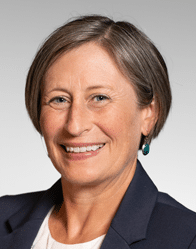
Katherine McDonald, PhD – Syracuse University
Katherine McDonald is the associate vice president for research and Professor of Public Health. Katie uses community-engaged research to promote inclusion and address disparities experienced by individuals with disabilities. Her work focuses on ethical, legal and social implications of research and strategies to advance models and practices of community-engaged research.
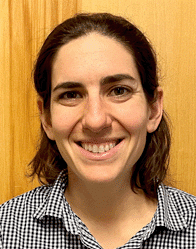
Ariel Schwartz, PhD, OTR – University of New Hampshire
Ariel Schwartz is committed to advancing knowledge about the use of inclusive/participatory research approaches with individuals with intellectual and developmental disabilities. Topically, she studies peer-delivered mental health intervention and transition to adulthood for individuals with intellectual and developmental disabilities.
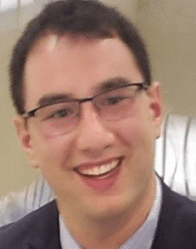
Jacob Myers has been doing research since 2013. Jacob’s favorite part of research is helping to give feedback and sharing ideas. Jacob is a member of the Research Ethics for All Steering Committee.
Meet the Host

Alexa McClellan, MA, Host, On Research Podcast – CITI Program
Alexa McClellan is the host of CITI Program’s On Research Podcast. She is the Associate Director of Research Foundations at CITI Program. Alexa focuses on developing content related to academic and clinical research compliance, including human subjects research, animal care and use, responsible conduct of research, and conflict of interests. She has over 17 years of experience working in research administration in higher education.