




Season 3 – Episode 18 – Beyond Persistence: How Early-Career Scientists Can Thrive
In this episode, we discuss what it takes for early-career scientists to thrive in today’s research environment.
Notes
To view this episode’s notes, simply click on the “More Info” button on the player.
Podcast Chapters
Click to expand/collapse
To easily navigate through our podcast, simply click on the ☰ icon on the player. This will take you straight to the chapter timestamps, allowing you to jump to specific segments and enjoy the parts you’re most interested in.
- Episode Opening: Scientific Mindset as a Career Superpower (00:00:01) Jim Gould frames the scientific method as a transferable skill early career scientists can use to navigate uncertainty in research, professional development, and career transitions.
- Episode Introduction and Guest Overview (00:00:59) Host Alexa McClellan introduces the episode’s focus on helping early career researchers survive and thrive amid funding uncertainty, career identity questions, and changing research expectations.
- Jim Gould’s Career Path and Work Supporting Postdocs (00:02:13) Gould shares how his path from PhD training and postdoctoral work at the National Cancer Institute led to his role leading postdoctoral affairs and career development at Harvard Medical School.
- Key Pressures Facing Early Career Scientists (00:05:25) The conversation turns to the pressures of publishing, funding, career advancement, reputation-building, work-life integration, and preparing for the job market.
- Expectations Versus Reality in Scientific Training (00:07:35) Gould explains that while researchers are highly trained technically, many receive less preparation for interpersonal communication, emotional intelligence, conflict resolution, and mentoring dynamics.
- Navigating Funding Uncertainty and Short-Term Appointments (00:10:08) The discussion explores how shortened appointments, changing funding realities, and increased job market competition are affecting early career researchers.
- Using the Scientific Method to Manage Career Uncertainty (00:12:13) Gould encourages researchers to apply the same process they use in science—gathering information, testing assumptions, experimenting, and learning—to career planning and transitions.
- Recognizing and Communicating Transferable Skills (00:14:19) Alexa and Gould discuss how early career scientists can identify, articulate, and use transferable skills, including communication and relationship-building, to support career development.
- Knowing When Resilience Becomes Staying Too Long (00:15:14) The conversation examines how researchers can distinguish healthy persistence from remaining in unsustainable environments by clarifying priorities, seeking support, and reassessing plans.
- Mid-Episode Message About CITI Program’s On Campus Podcast (00:19:15) A brief break highlights CITI Program’s On Campus podcast and invites listeners interested in higher education topics and trends to subscribe.
- Undervalued Skills in Research Training (00:19:38) Gould discusses the importance of administrative, compliance, collaboration, leadership, mentorship, and personnel management skills that are often overshadowed by productivity and funding expectations.
- Building Career Optionality Without Losing Research Integrity (00:22:54) Gould explains how early career researchers can integrate professional development into their existing research work rather than treating it as an unrelated add-on.
- Protecting Purpose When Research and Career Plans Change (00:25:15) The discussion focuses on separating personal worth from work outcomes and reframing failure as a normal part of scientific progress and career development.
- Why Talking About Failure Matters in Science (00:28:00) Gould highlights the value of openly sharing failed experiments, rejected applications, and negative data so researchers can learn from setbacks and reduce wasted effort.
- Practical Steps for the Next Six Months (00:30:27) Gould recommends self-reflection, skills inventory, outreach, networking, and follow-up as concrete steps early career researchers can take to support long-term success.
- Final Takeaway: You Do Not Have to Navigate Uncertainty Alone (00:32:54) Gould closes by emphasizing the importance of de-escalating uncertainty, identifying where help is needed, and engaging support networks.
- Episode Closing and Protocol Development Course Promotion (00:33:26) The episode closes with information about CITI Program’s research compliance courses and highlights the Protocol Development and Execution: Beyond a Concept course.
- Educational Disclaimer and Production Credits (00:34:15) The closing disclaimer notes that the podcast is for educational purposes only and provides production credits for the episode.
Episode Transcript
Click to expand/collapse
Jim Gould: So, how you maintain a positive attitude or better perspective is understanding that, as a early career scientist, you are the world’s number one expert among other scientists in the scientific method. So, you understand that there is an inherent process and steps that take place as part of starting something new. And you can do that as a process, not just in your research, but also in your other lives, in your career development, professional development, and your career transitions. So, remembering that you have this ultimate superpower transferable school in the scientific method, but also as a scientist being trained, you have already navigated a lot of uncertainty. And it’s just a new and different kind of uncertainty.
Alexa McClellan: Welcome to On Research with CITI Program, a podcast where we explored the policies, practices, and people shaping the research enterprise. I’m your host, Alexa McClellan. Today, I’m joined by Jim Gould, the Director of Postdoctoral Affairs at Harvard Medical School, where he has spent more than a decade designing and leading research, training, career, and professional development programs for early career scientists. In addition to his institutional leadership, Jim is also a co-host of the podcast, Propelling Careers, where he has candid conversations with scientists and professionals about career decision-making, uncertainty, and building sustainable fulfilling paths, both within and beyond academia.
Jim builds a perspective shaped by both personal experience and hundreds of conversations with scientists at every career stage. Today, we’re talking about a question we hear often from trainees and early career researchers. How do you survive and actually thrive in the current research climate? From funding uncertainty to career identity, we’ll explore what’s changing, what skills matter most, and how scientists can build resilience and real career options without losing sight of research integrity. Jim, welcome to the podcast.
Jim Gould: Thank you very much for the opportunity and the invitation. I’m happy to be here.
Alexa McClellan: So, before we dive in, could you briefly introduce yourself and share how your career path has shaped the way you think about scientific careers and the research enterprise today?
Jim Gould: Of course. And you gave such a great introduction already, so I appreciate that. So, generally, I got my PhD at the University of Louisville in biochemistry and molecular biology. I did two postdocs at the National Cancer Institute. And from there, while I was a postdoc, I was interested in finding help. I needed help myself in navigating my career, what the next steps were, understanding how what I was doing mattered. And in needing help myself, I actually discovered ways that I was helping others. So, I began helping others. I began sitting on committees. I started running our postdoc association at the NCI. And I just started doing those things, things that I was interested in, but also things that I needed to figure out for my own career and what I was doing. So, I was doing career and profession development for myself, while also providing career and professional development for my peers and fellows at the NCI.
And I was doing that a little bit as a graduate student because I wasn’t sure what I was going to do next. I was interested in science and I was interested in continuing in the scientific enterprise, but I had in my mind an understanding what it took or what it might take to become a faculty member. And I knew I probably didn’t have enough of those credentials, meaning enough publications to move forward in that type of career. So, I was wondering, as a graduate student and as a postdoc, what can I do that is still valuable and move forward? So, I was doing those things, career professional development, but also gaining some credentials and building a reputation. And the opportunity to run a postdoc office at Harvard Medical School came about. And I was able to apply, interview, and ultimately got the job. And I’ve been here since 2011.
And what I do, it’s not just provide programming for career in professional development, but also try to anticipate the needs of our postdocs and our early career researchers. One, because I’ve had experience doing that, but also trying to understand the drivers of their early career, publications, funding, doing good research, and training, and good techniques and also responsible conductive research, but also career advancement. Because research isn’t a monolith and neither are the career opportunities for researchers. As I came to discover myself, but also now I talk about more often than not is look broadly about your career, look broadly about your professional development opportunities.
If you’re on a track, faculty track, industry track, other, something like myself, perfectly fine. But the skills that you’re gaining as a postdoc, as an early career researcher, as a PhD, are highly transferrable. Which is both a boon and a bane for our researchers, because knowing that they are highly qualified to do a lot of different types of jobs, but also trying to focus in on what they can actually do practically to move forward in the next stage and phases of their career.
Alexa McClellan: Yeah. Thank you so much. From your perspective, what are the biggest pressures facing early career scientists right now? And how do those pressures show up in their day-to-day research lives?
Jim Gould: I’ve mentioned a few already, the drivers, in addition to publication funding, doing good research and getting a job. They’re also trying to build their reputation and independence. They’re trying to differentiate themselves from their advisors, from their mentors, from the schools, and universities that they come from, and trying to establish their career somewhere else. They’re also doing all of those things while trying to grow skills, learn new techniques and skills. And likely growing their families, too, because our early career researchers are in their prime reproductive years as well. So, there’s sometimes this conflict of being highly productive in the laboratory or at work, but also highly engaged as a member of society and their own families. So, they’re trying to balance and integrate work and life. So, it shows up on a daily basis, on how are they building boundaries around communication, what are their actual working hours?
Knowing that a trainee or an early career scientist should not be working 24 hours, seven days a week, 365 days a year, but sometimes you do work those types of hours for a week or two, maybe a month at a time. And then what’s the ebb, what’s the flow, and how do you balance that? How do you integrate that? So, those are the things that are the day-to-day pressures. And then there’s this sort of existential pressure of how do I find the next career step. How do I actually transition? Because many of our early career scientists, they’ve never actually been on a job market, so they don’t know what the job market steps are. They don’t know what the job market actually looks like.
They don’t know if they’re prepared for the next stage and step. They’ve received training, but it’s mostly technical training. So, they’re trying to understand what it takes to survive and thrive in the next stage of their career. And they need help and sometimes they need help asking for help. So, that’s one of the things that I try to do in my own job.
Alexa McClellan: Yeah, great. So, I want to talk about expectations versus realities. Most trainees are familiar with CITI Program because they’ve likely been required to take our trainings when doing their work in the course of their research. But where do you see a gap between what early career scientists are trained to expect and the realities that they actually encounter?
Jim Gould: This is one of the things that I talk about a lot. As I’ve mentioned, they’re highly trained technically. They are the top maybe 1% or maybe 0.1% of the world’s population in a technique, in a technology, in a field. Highly technical. However, when I’m working with them and we’re actually going through our RCR sessions at Harvard Medical School, a lot of the issues that come up aren’t with the science or the research or the techniques or technology, it’s the people that they do science with. It’s the other scientists. So, that to me is probably the biggest gap, is that most conflicts happen not with science, but with other scientists. So, it’s emotional intelligence, it’s communication style, its support networks, are so vital that sometimes they have yet to establish those. They haven’t paid enough or any attention to that. They’re not formally trained in emotional intelligence or interpersonal communication, or how to write a good email, or how to resolve a conflict head-on or negotiate. So, those are the things that I think there’s a gap.
Highly technical, very well-trained in their laboratories, very well-trained as scientists. But as people doing science with other people doing science, that’s where a lot of the issues happen. And that’s where I think there’s a big gap in formal training, informal training, good mentoring, and leading by example. And that’s also a large part of our discussions in our actual responsible conductive research classes that we do. And many of our fellows that go through are like, “Do the faculty get this type of training?” I’m like, “Yes, but in different ways, but also the faculty have been postdocs before. So, they’ve gotten some level of training, but you have to give them grace at some level and say they’re expected to do a lot of different things. And you as an early career scientist or you as a postdoc have maybe the privilege who just maybe concentrated your career in science, but the faculty may not.” So, there’s that gap as well, the understanding of the actual dynamics placed upon the academic research enterprise.
Alexa McClellan: Yeah, for sure. So, I want to talk a little bit about living in the system and the uncertainties that we’re seeing right now. We’re seeing a lot of short-term appointments. We’re seeing funding uncertainty. And I’m curious, what mindset shifts or practical strategies might help early career scientists stay engaged without burning out?
Jim Gould: Right. So, this is a great question. And I think one of the things that’s helpful to remember is at most institutions, their short-term appointments have always been short-term appointments, especially at HMS, your postdoc. It’s always an annual appointment, but there’s always been an expectation where you would have the time and the funding to both initiate and then, ultimately, complete a project or multiple projects. And as you just outlined, that’s no longer the reality for many labs and many researchers, where funding uncertainty happens and appointment uncertainty happens. And there are shortened appointments, shortened postdoc positions, graduate programs are hiring less or bringing in less. PhDs are being maybe pushed out before they’ve ultimately finished or published their manuscripts.
So, there’s pressures happening already where they’re shortening the training. And then what happens when it’s shortened? Again, there’s an increase in uncertainty, an increase in the job market at that moment, where you’re competing against possibly more graduate students getting postdocs. You’re competing against more postdocs for faculty and industry positions. And that may eventually work itself out through time. But even in industry, even in the private sector, those things are also happening because of funding uncertainty. There’s a lot of turnover in the private sector. So, not only are you competing against academic-trained or fresh academics on that job market, you’re also potentially competing against people who’ve been in the private sector for a couple years with some experience.
So, how do you maintain a positive attitude or better perspective, is understanding that as a early career scientist, you are the world’s number one expert among other scientists in the scientific method. So, you understand that there is an inherent process and steps that take place as part of starting something new. You gather information, you test that assumption, you experiment, you try new things, you talk to different people, you gather even more information. You test and try those assumptions and then you come to a conclusion. And you can do that as a process, not just in your research, but also in your other lives, in your career development, professional development, and your career transitions.
So, remembering that you have this ultimate superpower transferable school in the scientific method, but also as a scientist being trained, you have already navigated a lot of uncertainty. And it’s just a new and different kind of uncertainty. It seems a bit more urgent because it’s much more career-related, but you’ve already dealt with uncertainty. You fail all the time in experiments. You might get one experiment to work or on positive result out of 10 or 15 or even 100 experiments. The fact that you’re able to find something new is fantastic. So, I think reminding yourself and ourselves that we are okay with uncertainty already. We live and deal with it already. So, it’s just putting this perspective, this framing on a new and different kind of uncertainty.
If you have a process and you have the scientific method or a process similar to that, you have a network of support. Maybe you have the support of your mentors and guides. You can move through anything with that type of support, especially with some intentionality and understanding that it might take a little bit longer in the time being. So, not panicking, because panic is usually not productive, but understanding that you’ve already navigated the world and uncertainty. This is a new and different type.
Alexa McClellan: Yeah, I love that. And you were talking about transferable skills. And so, the training in scientific process is something that can be applied to finding a job, navigating this uncertainty.
Jim Gould: Yes, absolutely. You have many of the skills already necessary to navigate the process, but also to be successful on the other end of it. It’s just being able to recognize them, uncover them, and then communicate those skills, and then use those skills while you’re doing it. It’s a very sort of meta process and it’s highly self-reflective.
Alexa McClellan: Yeah. And it relates to the need for soft skills that you were talking about as well, communication and personal relationship building. That’s the support that can help you get through it.
Jim Gould: Absolutely. It’s because they’re not ever going to take away your technical skills. But how do you utilize those interpersonal skills, those soft skills, those transferable skills to emphasize your credentials and success, while helping you actually through the process?
Alexa McClellan: Yeah. So, resilience is great. Persistence is important, but how do early career scientists know when maybe it’s time to walk away? When maybe the difference between healthy resilience and staying too long in a system or in a role that isn’t sustainable?
Jim Gould: So, this is a tough situation to describe and unpack and work through, because as we just talked about, there’s uncertainty. What’s happening outside? Because at least historically, maybe not very recently, but at least historically, academia has been this warm cocoon that allows you to develop and grow at a slower pace that gets you credentials and publications and skills and all these things. Now, it’s kind of speeding up, it’s condensing, and there’s less opportunity to stay and grow in this environment. So, that might be what’s lending to staying longer than you otherwise should have. Whether it’s a good environment, a bad environment, a toxic environment, people tend to stay in academia a little bit longer because they historically have been allowed to go on maybe multiple job searches, multiple job cycles.
Like, “Oh, you didn’t get a faculty job this year? You can try again next year and maybe the year after, if it’s not successful, but then we really have to talk about options.” But getting to your question is, it’s really about identifying early and coming back to as often as possible. It’s trying to identify what’s important, what’s most impactful, and what’s aligned with your agreed upon vision with your mentors, with your support network, trying to do one thing at a time, but moving on multiple fronts. That sounds like they’re at odd, but how do you make things worth multiple things at one time?
For instance, if you’re going to… This is one of my favorite examples and it’s not necessarily technical. But if you are going to and expected to already go to a weekly or monthly department seminar, you’re already expected to be there, you already have to be there and you already go there. So, what do you do while you’re there? Do you print out a paper beforehand, and you sit, and you just read that paper and you don’t really pay attention to the science? One, pay attention to the science, but did you ask a question to the speaker? Did you meet the speaker? Did you talk to somebody else new in that audience? Did you sit with your lab or did you sit with someone else? So, how do you make this multipurpose?
The other area around staying longer or being in an environment that isn’t as supportive or possibly borderline toxic are, are you setting ground rules and are you, again, revisiting them often? Are you communicating? Are you inviting your coworkers, your peers, your mentors into conversations, where you have the time, the place and an agenda ahead of time? So, are you making the most of your time together? Are you having conversations? Are you inviting people to help and guide you? And are you asking for help? And then are you checking in with your allies, your other peers, and mentors, and colleagues? So, there’s a multifaceted thing that’s happening.
You’re moving on multiple fronts, you’re engaging your community, you’re not isolating yourself, you have a plan, you have a process, but you have to be flexible enough to know when things aren’t working and are working. It’s a very complicated process, which I then say, don’t do this alone. Again, identify allies, engage your mentor to be a mentor where it’s possible or your manager to be a manager. Seek other resources, because many places that you find yourself doing work and research are very rich in human resources as well. Not just HR per se, but resources to help you succeed as an employee, as a researcher, as a scientist.
Alexa McClellan: Yeah, it makes sense.
Ed Butch: I hope you’re enjoying this episode of On Research. If you’re interested in important and diverse topics and the latest trends in the ever-changing landscape of universities, join me, Ed Butch, for CITI Program’s podcast On Campus. New episodes released monthly. Now, back to On Research.
Alexa McClellan: So, you’ve talked about soft skills and you’ve talked about mentorship. But what other skills do you think the institutions and training programs undervalue, skills that are critical for navigating compliance, collaboration, leadership, and long-term career stability?
Jim Gould: So, the administrative burden around doing science, I think, tends to be undervalued, because there’s a bunch of paperwork, so to speak, to be done in order to get the research going, in order to put people at the bench and do good work. So, yes, they undervalue these things. Like, “Oh, compliance is just do good science and compliance will follow.” Maybe or collaboration, but you have to actually have paperwork for many collaborations, NTAs and MOUs and all of these things where you have to have agreements in place. So, maybe, yes, they undervalue some of these things, but they also tend to emphasize, select for, or even reward productivity over rigorous training and good mentoring. And it’s not so much that they undervalue. It’s that they overvalue maybe other things. And anything that doesn’t lead to productivity publications or funding, might be looked at as either a waste of time or not worth your time.
And you should be doing stuff that builds your leadership skills, that builds collaboration, that also allows you to be compliant with state, federal, and institutional laws and policy. So, there’s a conflict of commitment and possibly incentive within the research enterprise, where they’re selecting for productivity, but you also need to provide support and resources for personnel development. Personnel development, being trainees but also employees. So, there’s usually not enough time and resources to do this comprehensively well. So, this, I think if there is a revolution in the research enterprise, this would be it, is making sure that there is a way to not just emphasize this process, compliance, but also leadership, mentorship, training.
Many of our trainees within our RCR programs ask, “Well, we are having this training on mentorship. We are having this training on authorship. We are having this training on conflict of interest. Do our mentors, do our faculty get this training? Because I know that they are dealing with these things and they might not be dealing with them well.” So, many of our mentors, many of our faculty have never been trained in personal management, never been trained in mentoring best practices, never been trained in financial analysis and running a small business. They’re expected to do what? Get published and find funding. So, within the enterprise, not just faculty and people doing research, how do we address those imbalances?
Alexa McClellan: Right. Especially those established researchers who may have been in the field for a very long time are resistant to wanting to do more training, because they feel like their time is very valuable. They have a big amount of things to manage. So, that’s a hard sell sometimes.
Jim Gould: And that’s what they’re told by their department chairs, it’s what they’re told by the dean. You don’t have time to do this. You need to be really doing this other thing, but it’s sometimes at the cost of best practices.
Alexa McClellan: So, for our early career scientists, we often talk about career optionality. How can early career scientists build in flexibility to their career path, while still maintaining research integrity and a genuine commitment to their work?
Jim Gould: What I’m going to say sounds simple, but the actual execution thereof is very difficult. Our early career researchers, and this is one of the ways that myself and my office and other resources similar to mine are trying to work with our early career researchers and postdocs, is that they need to find a way not to do things in addition to their research and in addition to integrity and finding jobs. They need to figure out a way, an effective way to integrate those into the work they’re already doing. They need to find a way to integrate professional development into their work, into their training, into their projects. The example I gave earlier was you go to a workshop or a seminar and you’re doing 10 other things while you’re there, while still being present and being visible. So, what are the ways that you can integrate communication skills within your project?
Are you doing posters? Are you giving talks? Are you accepting invitations to other places? How are you training and bringing on and sharing information about your project? Are you mentoring other students or graduate students, or summer students, or interns, or even younger postdocs, or younger trainees as part of your project? So, you get mentoring and leadership skills, but also you get potentially more productivity on your project. So, how do you integrate some of these things? Are you interested in teaching as a career? So, do you take on an evening adjunct position? Or do you teach within your faculty mentors course? Or do you run workshops? Or do you mentor undergraduates or graduate students while you’re doing it?
So, how do you integrate a lot of the professional development into your already day-to-day training and your project work and productivity? And then looking for opportunities to bolster and enhance where possible. But sometimes you do have to take time out of the lab to develop some of these skills, but you have to do it strategically, as well as intentionally.
Alexa McClellan: So, for many scientists, research is closely tied to their sense of identity. How can early career researchers protect their sense of purpose when experiments fail, when grants aren’t funded or when career paths change?
Jim Gould: As you just said, it’s very hard to distinguish worth from work. And many professionals do that even outside of science, where if I’m not successful at work, that means I’m not a successful human being. And that’s absolutely not true. It couldn’t be further from the truth. But it’s very hard to distinguish submitting or getting that paper accepted versus I’m a good human being because I actually didn’t get that to happen. So, one, just understanding that work and worth are related but not intertwined, nor dependent on each other. The other thing, going back to what I was saying earlier about understanding the scientific method in a different context, where failure is actually baked into that. When you’re talking about the null hypothesis, that’s actually what you are designing your experiments to do.
You’re designing experiments to fail, because if you don’t get anything, then nothing has changed and it’s considered a failure even though you haven’t done anything to fail. You’ve designed your experiments to fail. So, being able to think about it in that way from that perspective, where you are designing things, your career, your project, your experiments day-to-day to fail. But if they don’t fail, they then produce things. But you’re doing this all the time. You are future-proofing yourself because you’ve already been familiar with failure. You’ve already been, “Okay. Well, I know I need to do this 1,000 times before I can actually be confident that this is a real thing happening or 100,000 times. Or I only need to do this 10 times because of the system within which I’m working.”
So, I think having that perspective of repetition helps. Again, having a community helps. Understanding the system within which you are working, failure is actually baked into that process. And if you’re okay with that, how can you not be okay with failure in not getting a job, but coming back again, writing a better application, getting an interview, and then finding a job? Or when you’re going out and networking and not hearing back from people. Or you’re like, “Okay, well, success might be 10% response rate or 5% response rate.” So, that means you have to reach out to 20 people to get one response back. If I know the scale against me, the failure scale, I’m okay with it.
The other thing that is helpful is that there need to be more people willing to talk about those failures. And there’s a famous CV of Failures out there. A former scientist put this out there and is like, “Well, I’m going to tell you all of the graduate programs, the PhD programs that did not accept me. I only got accepted to one, but 10 others did not accept me. I’m going to tell you about all of the grants that I didn’t get. I got three grants, but I submitted 30 other proposals that weren’t funded. I can tell you I had 10 publications, but I also need to tell you that one publication of those 10, it took me five different journals to put that in.” So, I think talking about that more openly and more transparently is going to be helpful for the entire community.
Understanding that failure is part of the process and it leads to growth and ultimately resilience, because if you’re not failing, you’re not learning most likely. If you’re only succeeding, then you are the unicorn. No one else out there in the world is only succeeding. They’re failing, failing, failing, failing, and then succeeding, failing, failing, learning, learning, and then succeeding. So, I think understanding that perspective, but also being humble and aware enough to share some of those stories of challenges and failures is going to be helpful.
Alexa McClellan: I think that’s a great perspective. We don’t hear about the negative stories. Enough for mentorship is so important, because this is the person who should be able to tell you that no one succeeds all the time, even though that’s what they want to highlight, that what you hear about, because those are the feel good stories.
Jim Gould: Yeah. And the other part of this, and we can talk about how this actually relates to responsible conductive research as well, is there’s negative data. There’s literally failure data. There’s data out there that never gets published because we only go for publishable data. So, what’s your publishable data this week? Actually, my non-publishable data, my failure data is actually much more informative than my publishable data, sometimes. We know this isn’t working. And then we should actually find a way to publish those things so other labs and other resources and other institutions aren’t wasting time and resources and money doing the same thing, finding out the same failures as well. So, that’s been a topic of discussion for years, I know. But it doesn’t get grants and it doesn’t get more funding, because no one wants to celebrate failure, but failure actually brings knowledge. I think that’s the perspective.
Alexa McClellan: Yeah, that’s great. So, I want to close by getting you a chance to give some concrete steps to our early career researchers about things they can do in the next six months to support thriving research careers. What are some practical strategies?
Jim Gould: Practical strategies? There’s one thing that you can do. And we can talk about actual steps. But I think anytime you’re going off on a new adventure, anytime you’re going off to think about the next step, the next step of your project or the next step of your career, there needs to be self-reflection. So, within that self-reflection, there are multiple steps. What’s the situation? Are you satisfied with your current situation or are you unsatisfied with something? Do you need to do something about that? And if you do, what next? Are there skills you need to develop? Are there people that you need to engage? Are there support networks or resources that you need to avail yourself? There’s an element of self-reflection in all of these steps, but within self-reflection, you need to understand where your situation is. Again, are you satisfied with it? What are you going to do about it?
Because if you don’t know yourself, it’s going to be very difficult to navigate that uncertainty and remember the transferable skills that you have. So, you need to take moments to inventory those skills and resurrect them and identify them. And then I think a next important big step is outreach to others. Building and maintaining a community, building and maintaining a network, growing that network, but also following up. It’s not just enough to meet new people. You need to follow up and maintain and grow that rapport, that relationship. So, for me, two big steps. And you were talking about, give me concrete steps. And I’m like, I’m up here in the clouds.
Two big steps, self-work and then network. And if you can do that systematically a bit more often, you will be very successful because you know yourself and you know others. And if you know yourself, you’re communicating with others, you will have a support network. You won’t be isolated, you will have resources, you will have options. And other people will bring you leads because you’ve communicated your wants and needs, skills and values. Those are two very big steps towards success that could help you continue to survive and thrive.
Alexa McClellan: Jim, thank you so much for your time. It’s been really great talking to you. I love the perspectives that you brought in. It feels much more doable and less up in the clouds. I like the logical steps that you’ve talked about today.
Jim Gould: Yeah. A lot of what I end up talking about is just kind of deescalating the situation and saying, where do I need help? How can I find help? And then I know I don’t have to do this alone. So, that could be a take home.
Alexa McClellan: Yeah, definitely. Thank you so much.
Jim Gould: Thank you, Alexa.
Alexa McClellan: CITI Program offers self-paced courses in research compliance, including on animal and human subjects research, responsible conduct of research and research security. If today’s conversation has you thinking about the skills needed to move research from ideas to implementation, check out CITI Program’s course, Protocol Development and Execution: Beyond a Concept. It provides practical guidance on developing and executing research protocols, helping researchers build a strong foundation for successful studies. Enhance your skills, deepen your expertise, and lead with integrity across research settings. If you’re not currently affiliated with a subscribing organization, you can sign up as an independent learner and access CITI Program’s full course catalog. Check out the link in this episode’s description to learn more.
As a reminder, I want to quickly note that this podcast is for educational purposes only. It is not designed to provide legal advice or legal guidance. You should consult with your organization’s attorneys if you have questions or concerns about the relevant laws and regulations that may be discussed in this podcast. In addition, the views expressed in this podcast are solely those of our guests. Evelyn Fornell is our line producer. And production and distribution support are provided by Raymond Longaray and Megan Stuart. Thanks for listening.
How to Listen and Subscribe to the Podcast
You can find On Research with CITI Program available from several of the most popular podcast services. Subscribe on your favorite platform to receive updates when episodes are newly released. You can also subscribe to this podcast, by pasting “https://feeds.buzzsprout.com/2112707.rss” into your your podcast apps.



Recent Episodes
-
- Season 3 – Episode 17: Hope, Uncertainty, and the Future of Science
- Season 3 – Episode 16: Protecting Innovation: COGR’s Guidance on Research Security for Tech Transfer
- Season 3 – Episode 15: Rethinking Child Assent Practices
- Season 3 – Episode 14: When Research Ends: Institutional Responsibility, Participant Protection, and Research Integrity
Meet the Guest
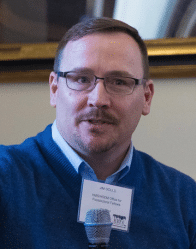
Jim Gould, PhD – Harvard Medical School
Dr. Gould is the Director for Postdoctoral Affairs and the Program Director for RCR at HMS. Jim has a book, Making the Most of the Postdoc, and a podcast, Propelling Careers. He received his PhD from the University of Louisville and was a postdoc at Frederick National Labs.
Meet the Host

Alexa McClellan, MA, Host, On Research Podcast – CITI Program
Alexa McClellan is the host of CITI Program’s On Research Podcast. She is the Associate Director of Research Foundations at CITI Program. Alexa focuses on developing content related to academic and clinical research compliance, including human subjects research, animal care and use, responsible conduct of research, and conflict of interests. She has over 17 years of experience working in research administration in higher education.