





Season 3 – Episode 17 – Hope, Uncertainty, and the Future of Science
In this episode, we explore how researchers and institutions can navigate change, rebuild trust, and stay grounded in science’s core purpose: serving people.
Notes
To view this episode’s notes, simply click on the “More Info” button on the player.
Podcast Chapters
Click to expand/collapse
To easily navigate through our podcast, simply click on the ☰ icon on the player. This will take you straight to the chapter timestamps, allowing you to jump to specific segments and enjoy the parts you’re most interested in.
- Episode Introduction and Guest Overview (00:00:30) Host Alexa McClellan introduces the episode, frames the conversation around policy, ethics, trust, and the future of science, and welcomes guest Dr. Josh Fessel.
- Dr. Josh Fessel’s Career in Medicine, Research, and Federal Science Leadership (00:01:15) Dr. Fessel shares his professional background, tracing his path from physician-scientist training and academic research to leadership roles at NIH and NCATS.
- Why Dr. Fessel Left NIH (00:07:12) Dr. Fessel explains why he chose to leave NIH, describing how policy changes in 2025 conflicted with his scientific and personal values.
- What Feels Most Different in Science Right Now (00:11:55) The conversation turns to the current research climate, with Dr. Fessel highlighting uncertainty in funding, leadership, and scientific processes as major concerns.
- What the Research Community Should Watch in the Next 12 to 24 Months (00:16:06) Dr. Fessel outlines key issues the research community should monitor, including process changes, transparency, and the importance of shared understanding across institutions.
- Why Quiet Inaction Can Be Dangerous (00:21:53) The discussion explores how silence and resignation can signal acceptance of harmful change and create long-term risks for the scientific enterprise.
- Mid-Episode Message About CITI Program’s On Tech Ethics Podcast (00:25:42) A brief break in the episode highlights CITI Program’s On Tech Ethics podcast and invites listeners to subscribe.
- What Individuals, Leaders, and Institutions Can Do Right Now (00:26:00) Dr. Fessel offers practical guidance for responding to this moment, emphasizing meaningful individual action, supportive leadership, and institutional transparency.
- How Science Can Rebuild Public Trust (00:32:30) The conversation examines how researchers and institutions can rebuild public confidence through consistency, clear storytelling, honesty, and respect for uncertainty.
- Why There Is Still Reason for Hope (00:38:20) Dr. Fessel reflects on the resilience of the scientific enterprise and explains why creativity, vision, and shared purpose still offer reasons for optimism.
- Final Takeaway: Science Is Fundamentally About People (00:41:47) In his closing reflections, Dr. Fessel emphasizes that science and medicine are ultimately human-centered efforts grounded in truth, service, and collective problem solving.
- Episode Closing and Conflict Management Course Promotion (00:44:00) The episode closes with a message about navigating uncertainty, followed by an invitation to continue learning through CITI Program’s Conflict Management Course.
Episode Transcript
Click to expand/collapse
Dr. Josh Fessel: We have to have a vision for how to get over around and through the present obstacles to get to where we want to be, but that’s what scientists do. Vision and creative problem solving, that’s the job. And so make that the job and support that in one another. And I think we’re actually pretty good at that. And I think increasingly people see the need for that in the present moment.
Alexa McClellan: Welcome to On Research, a podcast from CITI program where we explore the forces shaping the research enterprise, from policy and regulation to ethics, trust, and the future of science. I’m your host, Alexa McClellan. Today we’re joined by Dr. Josh Fessel, a physician scientist whose career spans biomedical research, federal regulation, and science policy. Josh has worked at the intersection of science and government during periods of both growth and constraint, and he’s been a thoughtful and sometimes cautionary voice about what the research community should be paying attention to right now. Josh, welcome to On Research.
Dr. Josh Fessel: Well, Alexa, thank you so much. I’m so happy to be here with you today.
Alexa McClellan: To start us off, can you briefly introduce yourself and tell our audience about your experience working as a physician, a researcher, and with the NIH?
Dr. Josh Fessel: Absolutely. I would love to say back when in the distant past… No, I’m not going to go that far back. We don’t need all that. Yeah, so my training as a physician and a scientist started with medical school and graduate school. So I did my medical training and my graduate training together as part of the NIH supported medical scientist training program or MSTP, the MD PhD program. Did my PhD training in pharmacology. So very much I described myself as very much a chemicals and test tubes, cells and dishes, mice and cages kind of scientist to start. I wasn’t doing clinical trials. I wasn’t doing big data. I don’t even think that phrase existed then. This was in the late 1990s, early 2000s. So did my PhD training, finished my MD training, and then did my clinical specialty in pulmonary and critical care medicine.
So I’m trained as a lung doctor and as an ICU doctor and continued my research career initially at an academic medical center on a pretty traditional physician scientist path where I was seeing patients part of the time, primarily in the veterans administration system and the VA medical center where I was, and that was a great privilege. It’s a very special population of people and families to take care of and I really valued that. It was really a gift to be able to take care of the veterans where I was. And then the rest of my time was spent running a research lab, again, very early discovery basic to early translational science, mentoring students doing the whole thing.
And I was moving along the tenure track and I had a moment where I realized I wanted to have an impact in a bigger and broader way if possible. And I was contemplating how to do that. And I got a very fortuitous email from the NIH from the National Heart, Lung and Blood Institute. My research was in the area of lung diseases and I had NIH funding from the Division of Lung Diseases through an NHLBI. And there was an opening coming up for a medical officer, so somebody with clinical training who was going to have the opportunity to oversee a research portfolio at the Heart, Lung, Blood Institute in the Division of Lung Diseases.
And it was the research portfolio that I was part of as a grantee. And I thought, this sounds interesting. Had never been on my radar screen to be in federal service. Went to the interview thinking I probably would find out, well, this isn’t necessarily the right fit for me. I had been pretty focused on the traditional academic physician sciences path. By the end of the interview day, I knew I wanted that job. It took just a couple of hours, maybe not even that long, maybe by the middle of the interview day, I knew I wanted the job and I wanted the job because I was meeting with incredibly brilliant, dedicated people who were putting the health of the scientific enterprise, at least I was in the division of lung diseases, but this is true of essentially everybody I worked with at NIH. It was the wellbeing of the scientific enterprise and the advancement of what we know about how to take care of people better.
And that was the primary driver. It wasn’t publications, it wasn’t how much grant funding, and that was so exciting to me. And so I moved to NHLBI as a medical officer in the Division of Lung Diseases, and this was in late 2018. And then you may remember that a little bit over a year after that some stuff happened, some stuff. It turns out that when there’s a global public health catastrophe that shows up as a lung disease that’s killing people, the division of lung diseases at the National Heart, Lung and Blood Institute at the NIH gets extremely busy. And so that was a scary time, a fraught time for all of us, but I had the opportunity to contribute in ways that I never would have had I been anywhere else. And I feel very privileged to have been there. In the course of doing that, I got connected with people at NCATS, the National Center for Advancing Translational Sciences.
And initially I thought, I don’t really know a lot about what NCATS does, but these people are impressive. Everybody that I worked with at NIH was impressive, but I was like, wow, these people really have their act together and they’re thinking about things in a really interesting way. It’s not just the specific question that you’re trying to answer, but it’s how you’re trying to answer it. And I always had a secret love of, maybe not so secret, love of studies that were just as interesting for how they were conducted as for what they found. And a number of times when I was trying to write research manuscripts, people said, “Yeah, yeah, yeah, don’t bore people with that part. They don’t care about that. They care about the answer to the question.” I was like, “But look, this is such a neat way to ram the question and to ask the… There’s so much innovation there.”
And I found out there’s a whole part of NIH that does that. And so I got the opportunity to move to NCATS and ended up rising through the ranks there to be the chief medical officer and the director of the office of translational medicine there. And things just kept getting better and better in terms of what I was able to do, how I was able to help think about things and shape all sorts of different research activities to be done more efficiently, more equitably, more creatively, faster, better, cheaper, all the superlatives. And it was a privilege to do that.
Alexa McClellan: Yeah. Thank you so much. So you’re not at NIH now. What happened there?
Dr. Josh Fessel: Yeah, good question. So I don’t think it’s a secret that stuff started changing in pretty substantial ways at the beginning of 2025. And the short summary from my standpoint was that the way things were changing, it was moving in a direction that I felt personally did not square with my personal feeling about my oath of federal service and my oath as a physician. And the example that I’ve talked about previously is the Triennial Inclusion Report. It’s this very wonky thing. This was a catalytic moment. It’s why I bring it up. It’s an example that stands for a lot of the rest of it, but it’s this very wonky thing that most people have never heard of because frankly, it’s not typically all that interesting, but the short summary is that when NIH funds human participant research, they are required every three years by law to report to Congress on the makeup of people who have participated in those studies funded with federal dollars.
And it’s to ensure that we are serving the population of America, that the people whose tax dollars are paying for this research are being served by the research, that we aren’t forgetting to study women’s health issues, that we aren’t forgetting about or intentionally or unintentionally excluding a specific population, that we’re remembering to study children as well as adults and to protect them with research, not from research. And so what had been recognized for some time is that the variables of sex and gender were separable scientifically and had independent and independently studiable effects on people’s health. And the directive that had come through was that gender was supposed to be removed from this reporting. And what was hard for me about that was that that did not feel like the right way for me to serve people because scientifically those are separable in my opinion, those are separable concepts.
And if knowing about gender independently of sex means that we can better take care of people, that’s what we promised to do and that’s what people expected would happen when they participated in these federally funded studies. Again, I’m speaking only from my own opinion here. So that felt wrong to not uphold that what I saw as our end of the deal in terms of that. The other thing is that on a personal level, it felt like an attempt to erase identities of people that I love, people in my family, people that are close to me that are dear friends. And that felt wrong again for me personally and all of those things pointed in a direction that I felt I couldn’t go. And I also had a sense that it may not stop with that. And I think in time, what we’ve seen is that it hasn’t. And so those were the things that drove my decision to leave. I couldn’t support that for myself.
Alexa McClellan: Thank you so much for sharing your story. I can feel the heartbreak in your story because you express such a love for the NIH and for federal government and for the things you were able to do with an incredible team. And then to lose that, to see that go in a direction that you weren’t comfortable going, this real heartbreak there.
Dr. Josh Fessel: You’re absolutely right. I’m still grieving because I think there are things that can be done by a robust and healthy public scientific workforce that won’t be done by any other part of the enterprise. And there are things that, in my opinion, should be done. I felt like we were serving very noble purposes and I feel like the people, my friends that are still at NIH are still trying to do that as best as they can. And it’s really difficult and the heartbreak is real for those of us that have left, for those that are still there. And it is a real grieving process and I miss being able to serve people in that way.
Alexa McClellan: I want to talk a bit more about the state of science right now. You’ve seen a lot of changes in the last few years and I’d like to hear your take on in terms of federal priorities, leadership signals and funding stability, what feels the most different right now compared to a few years ago?
Dr. Josh Fessel: Yeah, that’s a really good question. I have said to people, if you were to have asked any federal employee… Well, let me walk back from that. If you were to ask anybody at NIH, because I was at NIH, I can only speak to that. If you were to have asked anybody at NIH and sometime in the early part of 2024, let’s say, or even in the early part of 2025, if you had said, “What do you think? Is everything great? Nothing needs to change.” I think anybody who had been in the federal system for a while would’ve said, “Do you want a bulleted list of the things that I think we should work on or would you like a narrative format? Maybe I can even do an interpretive dance for you.” Look, yes, we all have an idea. We have lots of ideas about things that could be done better, but I think the thing that is most different and that makes it really difficult is the injection of uncertainty into process.
And what I mean by, that sounds like a super wonky thing to say, but let me tell you what I mean by that. Science has always been hard because biology is complicated or biomedical science at least has always been hard because biology is complicated and humans are even more complicated. And there’s always been issues of, well, will the NIH budget stay stable? Will it increase? Will it decrease? And that’s been true as long as I’ve been in science. I got in in a period where funding was amazing. It was right after the doubling of the NIH budget. It was an incredibly exciting time to be in an academic medical center and doing biomedical science and then I’m still in science. So that’s always been true, but what’s different is that the processes by which science is planned, funded, executed, reported and discussed, those processes have all, it’s not that they’ve never changed, but they’ve been very understandable and they’ve been pretty consistent.
They’ve not changed suddenly until the last year. And I think what makes that so difficult is that big important questions in biomedical research aren’t answered quickly. We’ve already answered all the quick ones a long time ago before you and I were born. So we’re left with complicated, thorny questions to answer with the biomedical research approach and that’s fine. But what that means is that you have to be able to plan. And if you can’t plan for some period of time in advance, then it doesn’t make sense to allocate the resources of people’s time of research funds, of research space, of all of that. It doesn’t make sense to allocate it on the front end if you’re not sure that maybe you’re building a bridge to nowhere because the process is going to be totally upended in six weeks or six months and you aren’t going to be able to finish.
When you’re talking about clinical trials or clinical research and you’re talking about human participant research, it can be downright unsafe. It’s not okay to start a clinical trial not knowing if you can get people safely over a finish line. And so I think that’s been maybe the most … I mean, there’s lots of other things that we could talk about, but that uncertainty is I think a huge part of what makes all the rest of it so difficult right now.
Alexa McClellan: Given your experience in the federal government at NIH, what are some things, maybe the top three things that you think the research community should be actively watching for in the next 12 to 24 months?
Dr. Josh Fessel: Yeah, good question. So I’m going to say two things that are related and we can count those as one or two. It’s up to you. The first thing has to do with that process piece. Many processes, I would say that NIH processes have been understandable in the past. That doesn’t mean they’ve been super clear at first glance and I’ll admit that. I learned a lot about how the NIH works when I moved to the NIH to work as a medical officer and in the other positions that I held there. And one of the things that I’ve always tried to do and encouraged my colleagues to do when I was at NIH is be communicative about what the processes are because people don’t know, people don’t understand and it’s just because it’s complicated, but it is understandable. And for most of the time that I’ve been in science, most of those processes you could not pay real close attention to because they worked and they weren’t going to change.
And so even if I, as a faculty member at a university, even if I didn’t know the ins and outs of how each stage gate of the grant application and funding process happened, that’s okay because there was a whole office of sponsored programs at my university who knew all of that “for me”. But the uncertainty around changing processes is affecting everybody. And so the first thing I would say is keep close eyes on process. Look at how things are happening, look for where you can get clarity on how things are happening, look for where you can’t. And there have been some interesting pieces, some really good pieces written in the lay press on Substack. I mean, there are people who are trying to demystify all of this and I think that’s good. There’s been some attention recently on, for example, the NIH Advisory Council situation.
Each institute center at NIH has an advisory council that has input into what programs for new directions in the scientific mission of that institute, what programs go out, what grants get funded. They have a lot of advisory, that’s right there in the name, capability and advisory councils have lots of vacancies right now and it’s worth I think people paying close attention to how is that supposed to work? Is it working as it’s supposed to work? And if it’s not, what is happening and asking questions about that. I think that’s critical. So point one, close eyes on process and get clarity if you don’t have it. And the second point relates to that, which is that I think investigators need to get really good at talking to people that they may not have talked to before and in ways that they haven’t before. So for example, I know that university I was at had an Office of General Counsel.
I have no idea who worked in it. I have no idea what they did. I never spoke with them. And up until the last year, I probably would’ve said, “That’s a good thing.” But I actually think there’s some real value to building relationships and having an open communication with your institution’s Office of General Counsel because they have a different lens on things and they can bring a different perspective. When I was at NIH, some of the things that I was involved with, I had to get input from NIH’s Office of General Counsel and it was incredibly instructive. They were wonderful for me to work with. They taught me a ton and it changed my whole thinking about some of the projects that I worked on in really useful ways. So having that open dialogue so that everybody has shared understanding at your institution, for example, about, okay, here’s the new policy that just came out or here’s the new executive order that just came out, or here’s the new whatever that just came out, here’s how we’re thinking about it.
I think it helps with that demystification. The other thing, a second example is investigators talk to each other very, very effectively about some things but not others. And for example, there’s a lot of question that I picked up from conversations with people in what the NIH would call the extramural community, the community of investigators. There’s a lot of question about what does the new funding framework at NIH mean? How are funding decisions going to be made? If pay lines no longer exist, how is that going to go? How do you know what to make of your impact score when you get it back? And I think that’s a very fair question, again, to reduce that uncertainty because there’s a lot of uncertainty right now.
One way to do that is to talk to each other in a very transparent way. “This was my impact score and I got funded.” or, “This was my impact score and I didn’t.” and start to triangulate amongst the community on what’s actually happening. I mean, in a way this is being scientific about it, but it’s also extending the boundaries of shared understanding. And I think that’s a really important thing to do because then you can ask better questions on behalf of not only yourself and your own institution, but on behalf of the community as a whole. And if a whole lot of people are asking that question, it I think increases the likelihood of getting a functional answer and being able to move forward with them.
Alexa McClellan: Yeah, thank you. I want to come back to what we can do, but before we jump into that, I want to talk about the risks of inaction. I think that periods like this can be dangerous not just because of cuts or shifting priorities, because of a sense of resignation. I’m curious why quiet acquiescence by the research community could be a risk to the long-term future of science.
Dr. Josh Fessel: Yeah, boy, that’s a really good question. And we talked a little bit about this before we got on that when you see people feeling or seeming to feel resigned to a situation, it’s hard to know is that a period of rest and replenishment, which is a vitally important thing because just as no complicated question in biomedical research gets solved with a single quick thing, that’s true for the larger context. Nothing about the current situation gets changed with a single action or quickly. And so sustained involvement is required just to keep your lab open and keep the lights on and keep doing what you do and then beyond that to try to move things in a direction that maybe is more consistent with what you would want to see. So it’s hard to know when you see people feeling resigned to a situation, are they resting or are they beaten down?
Rest is good, beaten down is not. And so to get to your question, what I think is dangerous or problematic about quiet inaction is that the message that sends is that you’re okay with what’s happening, that you’re okay with the situation, that you are going to go along with it and maybe even that you support it. We’ve all had that experience of being in a meeting where something that doesn’t sound quite right comes up and we’re all waiting for somebody to say, “Wait, are we sure about that?” And there’s that sense of relief when somebody says it because then everybody goes, “Yeah, yeah, yeah. I was wondering about that. Is that really?” And so there’s a little bit of that at a national scale right now, I think, for the biomedical research enterprise. Now we have to be honest about it.
There are ways of saying, “Are we sure about that, that feel and probably realistically are riskier than others?” And we can talk a little bit more about that as we talk about what can we do because I think if you don’t acknowledge the fact that there’s a risk calculation that you have to do, and I think if we said otherwise, that would be disingenuous and that would be wrong. And I also worry about the possibility, a little bit of the boiling the frog analogy. I worry about people forgetting that it doesn’t have to be like this, in my opinion, maybe shouldn’t be like this. And there’s a need to find that balance between keeping your head down and just doing the work and poking your head up and saying, “Hey, wait a minute, no, I can’t do that.” And that’s why I think the importance of a bigger community is there because even when I can’t say or do a specific thing, maybe somebody else can and together we get the message across that, “Hey, we’re not fine with X, Y, Z.”
Daniel Smith: I hope you are enjoying this episode of On Research. If you are interested in conversations about technology ethics, join me, Daniel Smith for CITI Programs podcast On Tech Ethics. You can subscribe wherever you listen to podcasts. Now, back to your episode.
Alexa McClellan: So given those risks of inaction, what are some concrete, realistic actions that institutions or scientific leaders or even individual researchers can take right now to protect the future of science?
Dr. Josh Fessel: Yeah, I love how you frame this question. You mentioned institutions, leaders, and individuals, and I think the actions look different for each of those. And so I love that you broke it out that way. And let’s start with the individual level because that’s where we all live. It’s our own head that hits the pillow at night and nobody else’s, at least in terms of the thoughts that we hear and the things that we say to ourselves. So at the individual level, there are many options in terms of what one can do. And you may have heard me say before that I worry about at the individual level, the phenomenon of what I call litmus tests or purity tests. And I try to take every opportunity I can to push back against this notion because it can be very appealing in a sense. And what I mean by a litmus test is, well, if you as an individual don’t do this specific thing, go to this specific protest, support this specific organization, sign this specific petition, then you aren’t really doing the important work.
And I think that’s dangerous. And I think it’s dangerous because it can feel good to say those things and nobody ever says something like that if they think they’re on the wrong side of that. But the problem is that as you do that, your circle gets tighter and tighter and tighter until you don’t have a critical mass inside the circle who have passed all of the litmus tests. You don’t have a critical mass of people who can actually do anything. So at the individual level, I would say resist the temptation to think, oh, I must do X, Y, Z, or else it doesn’t count. It all counts. It can be something as seemingly small as taking a lab meeting period to say, “I just want to check in with everybody and how is everybody feeling?” Because supporting your lab staff as whole human beings, that is an act of supportive resistance because now those people are more resilient, they’re more intact, they’re more able to do the right science, the better science, the whatever.
So it can be anything from that to conversations with family, to if you’re moved to go to protest, go to protest. That’s great. That can be a very empowering thing. If you’re moved to talk to your elected officials, that’s wonderful. All of those things matter. So for the individual level, I would say if you feel moved to do something, find the thing that feels meaningful to you and understand that it is meaningful and not every individual has the same ability to act. If you are here on a visa, you may not feel comfortable speaking up in a way that you might otherwise want to. That’s real. Take that into account. If you feel that your job would be at risk and there are people in your home that depend on your income or your job benefits or both, that factors into your individual risk calculation. Okay, so that’s individuals.
So the summary there is reach out in the ways that feel meaningful and maintain connections with your colleagues, reach out, make the circle bigger. For scientific leaders, I think that there’s additional obligation. I think supporting your colleagues to make the circle bigger is a key part of that and that flows up to institutions as well, create spaces where it’s okay for people to talk about the hard things, have their backs. It was very distressing to me and I understand And why it happened, but it was very distressing to me when the notice came out late on a Friday night that indirect costs were being capped at 15%. Some of the first things that we saw happen were cessation of accepting applications to PhD programs and in some cases rescinding offers that had already been extended. I absolutely understand why that happened. But had I been a graduate student thinking about trying to go to graduate school at that time, I would not have understood. All I would’ve seen was that, oh, I am the most expendable thing here.
And so I want institutions and institutional leaders to be very mindful of those sorts of things because that’s what comes with that job in my opinion. And that’s hard. There are hard decisions that will be made. I think leaders and institutions both need to work together when a hard decision has to be made, be very clear and transparent about what the decision is and why it’s being made. And then leaders ask yourselves, institutions ask yourselves, how can we show up for the communities we serve in a way that is visible and how can we show up for them in ways that may not be immediately visible but are still impactful? There are options open to an institution that are not open to an individual. Don’t miss a chance to help in some aspect of keeping the biomedical enterprise together because we need everybody rowing together in the same direction to get to anywhere that we want to be.
Alexa McClellan: Thank you. I love that you brought out that everyone doesn’t have to do everything.
Dr. Josh Fessel: Yeah.
Alexa McClellan: That’s overwhelming to so many people when they look at this situation and they go, “Oh, I should be talking to my representative and I should be supporting my mentees and I should be doing all of this stuff and I should be at…” And then it’s just like, I can’t do anything because it’s overwhelming.
Dr. Josh Fessel: That’s right.
Alexa McClellan: So just do something, whatever that can be for you, but it doesn’t have to be everything at the same time.
Dr. Josh Fessel: Every bit matters. A beam of sunlight is made up of countless individual photons. So your individual quantum of good contributes to the sunlight. You don’t have to do all of the things. You can’t do all of the things. Don’t try. You’ll hurt yourself.
Alexa McClellan: So I think that these changes in the federal landscape have gone hand in hand with declining public confidence in science. What role should researchers and institutions play in rebuilding public trust?
Dr. Josh Fessel: Oh yeah. Boy, this is maybe the most important question that we need to be thinking about, not just in the present moment. Actually, we needed to think about this and address it for a long time. And it is absolutely the question that we have to wrestle with to get to the desired future state of the biomedical enterprise in the United States. So okay, I think we’re all thinking about trust and what does that mean and how does that happen? Some people have heard me say that one of my favorite things to say on a call is that saying the words trust and trustworthy a lot, don’t make it happen. You actually have to do stuff. And I think the first thing that you have to do is show up consistently. That’s how we learn to trust. Whether it’s a person or an organization or whatever.
If you say you’re going to do it, do it. Keep showing up. Be reliable. Part of trust is knowing that you can rely on. And so institutions need to show up for the communities they serve and to do it regularly, consistently, even when there’s not a direct benefit immediately to the institution. Don’t make it transactional. It’s not. It’s relational. Real deal community engaged researchers have taught me that it really erodes trust when investigators or organizations or institutions show up in the community when they want something and then they’re not there otherwise. So you’re not really part of the community, are you? So for science to be part of the American community and part of America’s communities, you got to show up. You got to show up consistently. Getting good at telling stories is really important. People aren’t moved by numbers and data. Never have been.
Even scientists. And we know this because if we were, our scientific papers would just be tables of numbers and graphs. We wouldn’t need very many words, but apparently we like to write so much that scientific papers have word limits on them. So we know that the story matters. And I think many of us in scientific circles get good at talking to one another about science because of course that’s what you have to do and that’s how you keep things going. You got to be good at talking to your colleagues in writing to get your manuscripts published and to get your grants funded and all that kind of stuff. But there’s a much wider community that we really need to communicate with effectively and that the best time to plant a tree is 20 years ago and the second-best time is today. So I think we need to get good at helping one another tell our stories.
Does every scientist need to be a guest on a late night talk show or something? No. No, that’s not the goal. But be available to tell that story and then tell it in a way that people can receive. This is definitely something that in medical training I think a lot of people learn, I certainly did, that I paid all this money to learn all of these fancy medical terms. And then the real work of medicine is having all those in my head and not using any of them when I actually talk to people because I went to medical school so that they don’t have to.
I’m doing them a disservice. If I show up and start going off about this medical term and that medical term, I have no idea what you’re talking about, bro. You just need to tell me, why do I feel like this and what are you going to help me do about it? And I think scientists have some of that to bring to the interactions as well. So I think that’s a critical component of trust. And then a big part that I think science and medicine and public health have to deal with is helping people understand how we think about and reckon with uncertainty. There’s a great tendency sometimes, especially when communicating with folks who are not engaged fully in the scientific enterprise to communicate in ways that come across as being more certain than we really are. And I think there are lots of reasons for that and I think it is problematic.
I mean, people are smart, people are paying attention and people remember. And if you say today, “Definitely X.” And then six weeks from now you say, “Maybe not X.” People are going to say, “Wait a minute, six weeks ago, you said definitely X. Was it definite? What changed?” And that’s a conversation that can be had. Maybe it really was definite then and now you’ve learned something new or maybe it wasn’t so definite and you probably should have been a little more circumspect in how you talked about it. I think there’s a fear that people can’t handle nuance and I think they can. Again, people are really smart. I think you just have to take the time to tell the story in a way that can be received and that communicates, here’s what we think we know, here’s what we know we don’t know and here’s how we’re bridging the gap.
Alexa McClellan: That’s honesty.
Dr. Josh Fessel: That’s honesty. Perfectly summarized. Correct.
Alexa McClellan: Respecting the audience.
Dr. Josh Fessel: Correct. Beautifully summarized. Yes.
Alexa McClellan: Despite all of this uncertainty, you’ve argued that there is reason for hope. Who do you personally see the strongest sources of resilience or renewal in this biomedical scientific enterprise and what gives you confidence that science will endure moving forward?
Dr. Josh Fessel: Yeah, no, I think there’s definitely reason to hope. We are seeing technological developments. I mean, we have to say AI at least once during this podcast or it doesn’t count. But for real though, I think it’s actually a great microcosm of what is most exciting about science and scientific research because there’s great opportunity, there’s real risk. And one of the major goals of biomedical research is to maximize those exciting opportunities and minimize the risk to people. We know how to do this and we have capabilities that literally did not exist when I was thinking about molecules bonking into one another in a test tube back in 1999 or 2000 when I started my graduate work. That’s really exciting. And when people get excited and people get hopeful about how we can do more to help each other, you can overcome a lot. The whole core of science is overcoming what we don’t know to better serve people. And I don’t think that core has gone away. Science is too hard otherwise if that doesn’t fire you up. Nature is complicated.
I remember thinking this as a graduate student, who am I to show up in a lab to try to know a thing that people haven’t known before? I had to convince a committee of people smarter than me. I think collectively they had close to 150 years of experience in science. I calculated it up once right before the dissertation committee meeting and then all the color drained from my face and I got lightheaded and then I had the meeting. But who am I to think that I can do that? And it’s the promise of being able to maybe know that thing and that’s still part of science. So the thing that drives scientists is still there, I think, and has always been there. I think the vision that science has is imagining what could be better, imagining where we could get to.
And I think particularly if we do a good job of nurturing that vibe amongst one another and in ourselves, that’s exactly how we have to have a vision for how to get over around and through the present obstacles to get to where we want to be. But that’s what scientists do. Vision and creative problem solving, that’s the job. And so make that the job and support that in one another. And I think we’re actually pretty good at that. And I think increasingly people see the need for that in the present moment. And so in some ways it’s a return to the thing that gets us all into the lab or into the clinic or in front of the computer with fingers on keyboard initially. So I mean, that sounds romantic, but I also think it’s true.
Alexa McClellan: Yeah, no, I love that. This is the job, like you said, this is the problem to solve right now.
Dr. Josh Fessel: Exactly.
Alexa McClellan: Josh, this has been a really interesting conversation and I’ve really enjoyed speaking with you. But before we end, I want to give you a chance to sum up for our listeners the highlight, the top thing that you’d like for them to take away from this conversation. What do you think they should be empowered by to do next?
Dr. Josh Fessel: Thank you for that question. I love that. For me, way down in the inside of my head, what I call the sacred core of science and medicine is human beings and humanity. It’s people. It’s always people. Science is done by and for people, medicine is done by and for people. And so I think that is the inescapable truth of it for me. And it’s about honoring people by finding the truth and telling the truth, even when it’s surprising, even when it’s uncomfortable, and then getting together to figure out what to do with that truth.
And so I want people to feel empowered to see the work they do as scientists, as leaders, as clinicians and healthcare workers, as lab personnel, as students, as citizens, that science and the biomedical enterprise are fundamentally people. So you are a part of it. And so be a part of it and find the ways that you can do that meaningfully, whatever that is and know that if you are looking ahead to how could we do this, how could we be better? How could we creatively solve those problems with other people for other people? That is science. Again, that is the job. So feel empowered to do that job and to be part of that mission from whatever seat you occupy.
Alexa McClellan: Thank you so much, Josh.
Dr. Josh Fessel: Oh my gosh. Thank you.
Alexa McClellan: This has been great.
Dr. Josh Fessel: Yeah, for me too.
Alexa McClellan: And I hope to continue this conversation in the future.
Dr. Josh Fessel: We have to.
Alexa McClellan: Yeah.
Dr. Josh Fessel: Yeah, this is not an endpoint. This is a way point.
Alexa McClellan: Absolutely. Great.
Dr. Josh Fessel: Thanks, Alexa.
Alexa McClellan: In times of uncertainty, hope isn’t just a feeling. It’s a skill we can build. In this episode of On Research, we explore how individuals and institutions can navigate ambiguity, manage stress, and maintain forward momentum when the path ahead feels unclear, but hope alone isn’t enough. It has to be supported by how we engage with one another, especially when tensions rise. That’s where conflict management comes in. If today’s conversation resonates with you, we invite you to continue learning through CITI Program’s Conflict Management course. It offers practical tools for addressing disagreement constructively, communicating across differences, and fostering environments where challenges don’t derail progress but strengthen it. Because in uncertain times, hope grows stronger when we know how to work through conflict, not around it. Enhance your skills, deepen your expertise, and lead with integrity across research settings.
If you’re not currently affiliated with a subscribing organization, you can sign up as an independent learner and access CITI program’s full course catalog. Check out the link in this episode’s description to learn more. As a reminder, I want to quickly note that this podcast is for educational purposes only. It is not designed to provide legal advice or legal guidance. You should consult with your organization’s attorneys if you have questions or concerns about the relevant laws and regulations that may be discussed in this podcast. In addition, the views expressed in this podcast are solely those of our guests. Evelyn Fornell is our line producer. And production and distribution support are provided by Raymond Longaray and Megan Stuart. Thanks for listening.
How to Listen and Subscribe to the Podcast
You can find On Research with CITI Program available from several of the most popular podcast services. Subscribe on your favorite platform to receive updates when episodes are newly released. You can also subscribe to this podcast, by pasting “https://feeds.buzzsprout.com/2112707.rss” into your your podcast apps.



Recent Episodes
-
- Season 3 – Episode 16: Protecting Innovation: COGR’s Guidance on Research Security for Tech Transfer
- Season 3 – Episode 15: Rethinking Child Assent Practices
- Season 3 – Episode 14: When Research Ends: Institutional Responsibility, Participant Protection, and Research Integrity
- Season 3 – Episode 13: Opening Doors in STEM: Service Dogs, Advocacy, and Research Accessibility
Meet the Guest
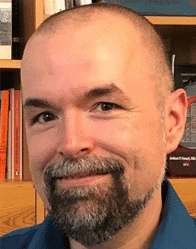
Josh Fessel, MD, PhD, ATSF – Independent Consultant
Josh Fessel, MD, PhD, ATSF is a physician-scientist with experience spanning molecules to medicine to massive data across academia, government, and private sector. He consistently seeks to find and elevate the humanity at the heart of everything we do in science and medicine.
Meet the Host
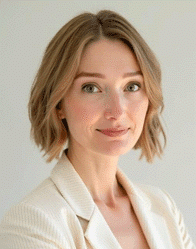
Alexa McClellan, MA, Host, On Research Podcast – CITI Program
Alexa McClellan is the host of CITI Program’s On Research Podcast. She is the Associate Director of Research Foundations at CITI Program. Alexa focuses on developing content related to academic and clinical research compliance, including human subjects research, animal care and use, responsible conduct of research, and conflict of interests. She has over 17 years of experience working in research administration in higher education.