




Season 4 – Episode 3 – Gen Z Expectations for College and the Future of Higher Education
In this episode, we explore what Gen Z students truly want from higher education.
Podcast Chapters
Click to expand/collapse
To easily navigate through our podcast, simply click on the ☰ icon on the player. This will take you straight to the chapter timestamps, allowing you to jump to specific segments and enjoy the parts you’re most interested in.
- Podcast Introduction and Disclaimer (00:06) Host Ed Butch welcomes listeners to On Campus with CITI Program, introduces the show, and provides an educational disclaimer.
- Framing the Conversation on Gen Z and Higher Education (00:33) Ed sets up the episode by challenging assumptions about Gen Z and the value of college today.
- Guest Introduction: Dr. Corey Seemiller (00:57) Ed introduces Dr. Corey Seemiller, leading Gen Z researcher and co-author of Generation Z Goes to College.
- Setting the Stage: Misunderstanding Gen Z (01:39) Dr. Seemiller outlines the core misconceptions institutions still hold about Gen Z students.
- Gen Z Is Not Millennials 2.0 (02:07) Discussion on why approaches that worked for Millennials do not automatically apply to Gen Z.
- The “Paying Your Dues” Myth in Higher Ed (02:46) Dr. Seemiller challenges outdated expectations around rigor, workload, and student endurance.
- Outdated Pedagogy and Faculty Expectations (03:24) Examples of faculty assumptions that undermine learning effectiveness for today’s students.
- “If You Build It, They Will Come” No Longer Applies (03:55) Why institutional existence alone no longer guarantees student enrollment.
- Alternative Career Pathways Competing With College (04:30) Exploration of trades, freelancing, and direct-to-work options pulling students away from traditional degrees.
- Reframing the ROI Question (05:49) What Gen Z actually considers when deciding whether college is “worth it.”
- The Full Cost of College—Beyond Tuition (06:16) Lost wages, time, debt, and opportunity cost as major decision factors.
- The Rise of the ‘Tool Belt’ Generation (07:16) Why trades, entrepreneurship, and hands-on skills are increasingly attractive.
- Freelance Economy and Early Career Earnings (08:02) Coding, freelancing, and high school-to-workforce pipelines reshaping expectations.
- Micro-Credentials as a Recruitment Strategy (09:10) Ed introduces micro-credentials as a response to enrollment challenges.
- Micro-Credentials: Promise vs. Reality (09:32) Dr. Seemiller explains where micro-credentials add value—and where they fall short.
- Access, Bureaucracy, and Student Friction (10:28) Why traditional admissions processes undermine the appeal of micro-credentials.
- Trust, Transparency, and Authenticity (12:00) How Gen Z evaluates institutional credibility and messaging.
- How Colleges Lose Trust (15:28) The role of PR language, unmet promises, and perceived performative values.
- What a Degree Is Still Good For (18:25) Nuanced discussion of degree value across industries and career paths.
- College Beyond Job Training (21:10) Higher education’s role in critical thinking, perspective-building, and civic development.
- How Gen Z Learns Best (23:23) Preference for experiential, applied, and demonstrable learning models.
- In-Person vs. Online Learning Tradeoffs (24:52) Why flexibility matters more than modality alone.
- Gen Z and AI Skepticism (26:08) Students’ concern about over-reliance on AI and erosion of critical thinking.
- AI in Teaching, Recruitment, and Communication (28:03) Where AI helps—and where it actively turns students off.
- How Gen Z Will Reshape Higher Education (32:58) Changes coming to programs, services, majors, and institutional priorities.
- Preparing Students for Economic Reality (34:39) The growing need for entrepreneurship, advocacy, and life-navigation skills.
- Closing Reflections and Call to Action (36:15) Dr. Seemiller urges institutions to listen, adapt, and confront discomfort to stay relevant.
Episode Transcript
Click to expand/collapse
Ed Butch: Welcome to On Campus with CITI Program, the podcast where we explore the complexities of the campus experience with higher education experts and researchers. I’m your host, Ed Butch, and I’m thrilled to have you with us today. Before we get started, I want to quickly note that this podcast is for educational purposes only and is not designed to provide legal advice or guidance. In addition, the views expressed in this podcast are solely those of our guests.
For the past few years, higher education has talked a lot about Gen Z, what they want from college, how they learn, and whether higher ed is still delivering real value. But too often those conversations are built on assumptions rather than listening to the students themselves. In this episode of On Campus, we take a closer look at what Gen Z actually wants from college and where institutions are still missing the mark.
My guest today is Dr. Corey Seemiller, one of the leading researchers on Generation Z and co-author of Generation Z Goes to College. Her work is grounded in years of national research in student voices. So welcome to the pod, Dr. Seemiller.
Dr. Corey Seemiller: Oh, thanks so much for having me. You know I love talking about this stuff.
Ed Butch: Of course. I’m very, very excited about this actually. So let’s just jump right in. So you have been studying Gen Z probably longer than almost anyone in higher ed. So when you listen to how colleges talk about Gen Z today, what do you think that they are still misunderstanding or just oversimplifying the most?
Dr. Corey Seemiller: Well, I think there are really kind of three things. And I’m going to be really blunt on this podcast because honestly, I think people need to hear what I’m about to say. And if you don’t like it, you need to sit with it for a minute and say, “What if she’s right?” Okay. So I’m going to actually highlight a few things. And again, from all of our research, we’ve done so many studies, we’ve written six books, I mean, this is a lot of data and hearing right from the voices of students themselves and prospective students.
So probably the three biggest misunderstandings is one is that they are an extension of millennials, so what worked 20 years ago is still going to work today because it’s just good educational practice. What was good educational practice, whether that was from admissions and recruiting all the way to pedagogy and classroom instruction is different today. It has to be different today than it was 20 years ago. And there are people who are just like, “No, it’s not. It’s just the core universal fundamental aspect of education is education, and we still need to be doing exactly what we’ve been doing.” They might not articulate it as forcefully, but that’s really the underpinning.
The second thing is that students today need to go through the same things that we had to when we were in college. I’m a faculty member now, I was in student affairs for 20 years, is that if we paid our dues, they have to pay their dues. And that is absolutely inaccurate. It is unhelpful and it is even problematic. I had a conversation with a faculty member who basically said that he was going to continue to assign 600 pages of reading a week because that’s how much was assigned in his class. Well, his classes total. So he was collectively going to contribute to 600 pages assuming that the other classes did that.
And he said, “I had to read that.” And I said, “Well, how effective was that for you?” And he said, “Well, it wasn’t. I don’t remember any of it.” And I said, “If we now know that that’s not good educational practice, why are you going to do that?” So one of five classes with 600 pages of reading a week, didn’t he do the math? It was that 50 pages in his class a week. And I said, “Even 50 pages, and if you’re assuming that the other classes are assigning that too, that is too much reading.” And he’s like, “Well, I had to do it, so they have to do it.” And that’s just harmful. And we know better now, we have way better modalities and pedagogies, and we understand learning a lot better.
The third misunderstanding, and this is the biggest one, and I will reiterate this continuously through this podcast, is that Gen Z are going to come to college just because we have buildings on campuses. This whole, if you build it, they will come, it is not true. It is not true. They have many alternatives that they didn’t used to have in terms of their careers. They can jump right into the workforce. A lot of companies are hiring people without bachelor’s degrees now, particularly in the tech world. They can freelance, they can work in the trades where they’re making way more money than sometimes college degree programs will ever afford them.
But it’s this idea that we just exist, so therefore they will come. And that is true for many, but it is not true for all and is becoming less and less poignant. And so we have to do more to help show the ROI on what college is. And so I think those are the three misnomers that we really have to grapple with. And I hope they create dissonance and discomfort in whoever’s listening right now to take this back to whoever the powers that be on your campus are and have these conversations and say, “How real is this for us?”
Ed Butch: Yeah. I mean, I love those three points. That’s fantastic. And when you talked, the second point about paying your dues, I remember when I took my first introductory course in my doc program, my faculty member said, “If you have an advisor who tells you that you have to go through these things because they did and they’re not going to be helpful to you, ask for a different advisor.”
Dr. Corey Seemiller: Right, right.
Ed Butch: Because that’s not the way to go about these things at all.
Dr. Corey Seemiller: No.
Ed Butch: And so I love that you point that out, but really focusing on that last point there as well about because we exist, they will come. So based on what you’ve talked with these students about, when they’re deciding whether it’s worth it to go to college or not, what are some of those factors that really help in that determination for them?
Dr. Corey Seemiller: Well, I mean, certainly cost. I mean, when I went to college, I worked at a summer camp the summer before and I was able to save enough money to pay my tuition for the entire next year. That is not an option. That isn’t an option, not even at community colleges anymore, unless you’re in some state that has some kind of free program. And so the cost, you have to weigh in. And it’s not just the outset of the cost. It’s not just like, this is how much tuition is and this is how much living on campus would be, whatever.
It’s also the lost wages of taking the time for four or five years to take classes when they could be four or five years ahead in the workforce full-time in a position that’s going to pay way more than maybe the position that they would get right out of college. And so they’re weighing a lot of factors, right? It’s not just this kind of short term. So do you take out $150,000 in student loans and start five years from now in the workforce? Or do you start now in the workforce, work your way up and within those five years, make more money than that and have no debt?
So we have to show the return on investment. Do I believe college is worth it? I do. I fundamentally do. I work in higher education. I think that it provides more than just employment training, but we don’t do enough of a job of telling students that and helping them understand that. And so we have got to help them with cost, we’ve got to help them find financial aid. We’ve got to help them find more creative ways to getting to degree completion that isn’t just dragging it out on and on and on. Every extra class they take is money out of their pockets, time out of the workforce. So that’s a huge thing.
But I don’t think that cost is the only thing. I think that really this idea of understanding, as colleges and universities need to do, is that the other alternatives that students have to be able to go into a meaningful job in the workforce that they are completely happy and financially solvent in, is much more real than it was even for my generation. People in the trades industries are making, who knows, $90 an hour at $150 an hour as a plumber, and they go take a handful of classes at the community college. So they’re calling this generation, the word is out that Generation Z is the tool belt generation. They’re saying, “I’d much rather go into that. I could be an entrepreneur. I can set my own hours. Everybody needs a plumber and I can make some money.” And plumbers and welders and electricians and mechanics.
And we are so short-staffed, even construction workers, we are so short-staffed, so this is a real viable option. When I was younger, people in these industries were making minimum wage. It wasn’t the same. The second thing is that the freelance economy is so booming that it’s not just in these trades you can freelance, but I mean, we have young people in high school that are coding and they’re making $100 an hour coding. This is a real viable career option that you can do without a college degree. So again, the alternatives are stacking up and up and up.
And while colleges and people in higher ed can get all kerfuffled about it and well, college provides more than that. It sure does. But if we don’t tell people that and show people that and give them reason to believe that, they’re going to choose some other financially more sustainable alternatives for themselves, especially in an economy like this when you got six 23-year-olds trying to live in a studio apartment, all working actual full-time jobs with a college degree. So it’s a real factor that we have to consider.
Ed Butch: Yeah, for sure. I’m interested to hear your thoughts on micro-credentialing, because this is something I hear about a lot obviously with universities over the past few years and they’re looking toward micro-credentialing as a way to bring those students into universities. Do you think that that’s something, I guess, that’s viable for a university? And is it something that Gen Z is really looking for?
Dr. Corey Seemiller: I mean, micro-credentials are cool. I mean, in the sense that they are less time to completion, they’re less costly, but a lot of micro-credentials at a lot of universities, not all of them, but a lot of universities are tied into the typical admissions process. So a student still has to get admitted to the university. They still have to go through all the processes, get an academic advisor, go through … I mean, that stuff is just such a red tape barrier for them. If you could just offer a micro-credential where you just signed up online, right?
I mean, that’s why these things like even MOOCs today are still popular because you don’t have to go through all of the bureaucracy to actually access the content. And so if you’re going to offer a micro-credential at a school, you need to make it incredibly accessible. It should not be tied to the regular admissions process. There should be no application fee. You should just be getting students into classes. And then also considering though that, and this is something we’ve been talking about at my institution, is we have students who want a micro-credential and they’re blended in with the students who are there for maybe a four-year degree.
Different purposes, different experiences. Should those courses be separate, even if it’s the same content? Like a separate section for micro-credential students, because a lot of them are people who really are focused on just that content matter, it’s not part of a larger landscape of their academic portfolio. So there’s some questions. I think that just simply basically giving a miniature degree, but making everybody do the same exact stuff is not the answer. I think micro-credentials have to be really thought about differently.
Are the Gen Zers interested in those? Sure. But the question is, does it matter to the workforce? Because if it doesn’t, it’s just another expense and more time. Why do you need them? And a lot of the micro-credentials are popping up in things that are relatively conceptual. So what about a micro-credential in plumbing, like I said? Is that something that’s worth it where you get some real hard skills? Some of these things on AI coding, micro-credentials are really good. You get some of those that you can leave with some tactical skills. But other than just the idea that you would take a few classes and get some type of a certification isn’t really the draw that I think that Gen Zers would be looking for.
Ed Butch: Yeah, that makes complete sense. And a lot of these things that you’re talking about to me really look at skepticism and trust issues and things like that. So I guess, again, talking with these students as you’re doing the research for your books, I guess what is it that builds and breaks trust for these students when thinking about college and university leadership?
Dr. Corey Seemiller: Well, I’ll start with the first one that’s about what builds trust. So it’s kind of interesting. So I have a Gen Z daughter. She is a junior in high school. She’s already getting all of her college recruitment materials and she’s pretty well versed on this. She actually spoke with me at a conference one time for higher ed professionals. They actually asked her a bunch of questions. They’re like, “Okay, Mom, move over. We’re going to ask her some questions.” She actually had some amazing insight, which really, strangely enough, her insight aligned with some data that we had collected, but hadn’t analyzed in that way. And once we went back and looked at the data we had, it totally supported her opinion.
And let me tell you what that is. She said that one of the most important things for colleges is to show students the good side of life. And she said, “In a world of doom and gloom where all you’re getting is just click bait of bad stuff going on, you want to see really hopeful things.” And you don’t want to see contrived things. You don’t want to see that picture where you have a person of every race, and honestly, the obligatory display of diversity on the front of the pamphlet. That’s not what she’s talking about.
She was like, “I just want to see a day in the life.” So she said that she and her friends have been spending a lot of time going to college websites or actually platforms on Pinterest that collate college information. And you can click on things and see colleges that might have pictures of a football game or pictures of just students hanging out, just real life pictures, some that are even curated by students themselves. They’re not photo staged.
Ed Butch: Not the professional photography.
Dr. Corey Seemiller: Exactly. And she said, “Just be out, just be able to see students being students. And it just makes you happy. It’s like you get to see how cool this is.” And she was telling me that and I was like, “That’s so interesting.” Actually, she said it at this conference and I hadn’t heard her say it before. And I thought, well, that’s interesting. We went back to the data and we’d spent so much time looking at social media use that we had focused mostly on things like TikTok and Facebook and Snapchat and all those things. We went back to the data and looked, and it turns out Pinterest was actually much, much higher than we thought.
And so I don’t think it’s necessarily the idea is just like, okay, colleges, start a Pinterest site and then curate it, make sure that all your Gen Xers, millennials and baby boomers are putting pictures on there. That’s not what I’m saying. Is this idea of, it just felt organic and natural and it felt like it was a place where she said, “I could call home. What felt like home to me.” And then like I said, “In a world of doom and gloom, it feels good to be in a space that feels happy.” So colleges and universities, be mindful of this, but I wouldn’t say run out and create your Pinterest site and then artfully curate it through a staff decision making process.
But I think that those kind of things build trust where you say, “Here’s where we lie.” I do wonder, and we don’t have data on this, but I do wonder the extent to which colleges have changed some of their policies around DEI to remove support services. Not necessarily those that were required to by state law, but those who are doing so by coercion or pressure to do so. I’m wondering, and again, we don’t have data on this, how much of an impact that makes to students seeing that their institutions not only don’t have those support services, but they, in their mind, easily capitulated to these coercive “requests.” And this idea, do I trust you as a college to take my best interest into hand when it doesn’t look like you’re doing so?
And I’m just being really blunt about that because those decisions, I understand they’re wrapped into grant money and they’re very complex and I get it, but students don’t, some of them, but not a lot of them, the publicity around that is this institution cut their diversity center and you have Gen Zers saying, “Well, why would they do that when people need support?” And we’re not even talking about just students of color or students who in marginalized communities, we’re talking about all Gen Zers are like, “Why is this happening?”
And so that’s a way to lose trust, is to make decisions that have PR effects that are not explained. Bad PR, one of the biggest things that Gen Z has said that they lose trust in organizations in general, whether it’s colleges or whether it’s a brand, is when they make a mistake and they don’t admit it. And so you see things like in the news where some college has a coach that was arrested on these charges and the school did nothing about it. And then after it happens, the school sort of meekly comes out and says something.
And Gen Zers see right through that. They’re like, “Why didn’t you step up?” And so they’re looking at larger trust issues. They’re not necessarily looking at, do I trust that I’m going to have a good degree or do I trust that I’m going to get my classes? They’re looking at what is this reputation and who’s leading this institution and do I want to be affiliated with it?
Ed Butch: Yeah. That’s really interesting because again, as I’m an outer millennial, not something that I would’ve ever thought about when I was looking at colleges was looking at the leadership and who’s in charge and what are they like. That’s just a foreign concept to me. I mean, not now, I think about those things obviously, but when I was making that decision process about what university to attend, I never would’ve thought of that.
Dr. Corey Seemiller: Right. Well, and think about how much information like that was apparent to you, was put out. I mean, I grew up in an area when we didn’t have cell phones or social media, so clearly we weren’t going to see those kind of scandals and things. And for millennials, it was much more reduced than it is today. But it’s all over the place. One decision by a university, boom, it’s on every news channel and you’re getting it through social media and you’re getting all the narrative that comes with it.
And so you can’t help but kind of take it into account. And do you want to be like, “Yay, I’m going to so-and-so school,” and hold up your admissions letter when that school’s been in the news for some kind of corrupt thing or at least perceived corrupt thing and do they want to do that? I mean, that’s a real reputation question.
Ed Butch: Yeah, definitely. So you’ve talked obviously a little bit about this already in terms of the value of a degree. And so there’s the trades, there’s jobs that are not requiring a degree or anything like that. I guess can you talk a little bit more about how Gen Zers are really perceiving that value? And then also, what is that shift that you’re seeing, I guess, in the workforce itself?
Dr. Corey Seemiller: Well, I mean, a few years ago, if I remember correctly, Google came out and said that they were no longer requiring bachelor’s degrees for some of their entry level programming positions. Other organizations followed with that, and a lot of them are either hiring people right out of high school that have tech backgrounds or skills, or they’re training people on the job because they’re using proprietary systems and you can’t really learn that in college.
And so the question about the value of the degree really depends on the industry that you’re going into. Some industries really do require you to have a college degree, not only because that gives you the credential, but it also signals to them that you know the information you need. But there’s still even states now that are hiring teachers without bachelor’s degrees. So it’s really, I mean, that’s because of maybe a shortage.
We’re doing that in my state where there’s questions around temporary instructors that can have certain credentials that aren’t as high as they used to be. And so the credentialing is coming down for some positions and they’re saying, “Okay, for this, you used to have a master’s. Now you only need a bachelor’s.” “For this, you needed a bachelor’s and you don’t need it, you need a high school diploma or an associate’s.” And so I think that the question is by industry, so that’s impacting whether or not people are going to college, Gen Z and otherwise, are seeing that this is even useful. Do I even need this?
So the value of the degree, and again, I’m talking about it all in an employment sense because that’s where the value of the degree has really come to play is, does this equate back to money in my pocket? Does it equate back to a long career and something that I enjoy? So is there a value there? And it’s questionable. It is. It’s questionable. However, there are some organizations, workplaces that really value the college degree, like for instance, Starbucks who actually helps pay for the college degree. They have partnership with ASU.
And so that shows that the value of the degree, and so you have a lot of people coming into and potentially working at Starbucks that then do that simply to get the degree also and then end up maybe even staying with Starbucks as an organization. So the value of the degree is really, it’s not just dependent, like I said, on industry, but it’s also dependent on the organization itself and who you want to work for.
The thing though is that there’s another value of the degree that we don’t talk about a lot is that the college has in the past, and typically and currently you would argue, that it provides a place to learn about critical thinking, other perspectives, open-mindedness. People with college degrees have, whether it’s an input, output, like they came in that way seeking it or they just learned it, but they come out with a lot of times a broader perspective of the world. That’s why we have things like the general education curriculum, and that’s why you’re not just coming in and taking a micro-credential.
And so there is that value. It just creates a more open-minded world. That has become somewhat of a threat to some people politically is like, okay, what does open-mindedness mean? And this idea that college is not… Maybe we don’t want to send kids to college because what are they learning in terms of not even the curriculum per se, but the outside of the curriculum.
And so the value of the degree for some Gen Zers is I want to go and I want to be able to meet new people. I want to get out of my small town. I want to have broader perspectives. And so they’re seeing it as more than just employment. But the question is, what are colleges and universities doing to emphasize that that is what college can offer? It’s a blend of a whole bunch of things. But again, I don’t know that all Gen Zers are just picking up on that inadvertently or colleges need to do a better job.
Ed Butch: Wow. Yeah, that’s really interesting. So let’s say that we have Gen Zers that they say, okay, we see the value of a degree. We, through our Pinterest board, found a university that we wanted to attend. What does teaching a Gen Z student actually look like in 2026?
Dr. Corey Seemiller: Well, I mean, it looks more diversified than it did in the 1900s, as my daughter would say, when I went to college.
Ed Butch: I love that.
Dr. Corey Seemiller: And so last century, we learned through lecture, tests, quizzes, maybe some papers. I went to a big school, so we didn’t do a lot of papers. It was mostly tests and things. Today, we have a lot more modalities offered, not just technical ones, but even just more kind of pedagogies to think about. There’s a lot of group work, there’s a lot of experiential work. Gen Zers love experiential learning. They also really enjoy demonstrated learning, which is this way of saying, show me what you want me to do and that way I can practice doing it. And so that’s been a real typical thing we use in science classes, like in chemistry. The teacher will show a chemistry lab and then say, okay, now you do a chemistry lab and students will have watched it.
But now it’s becoming more and more of an interest for Gen Zers to have that in other classes. And in a class like, I teach leadership, and it’d be like, okay, I want you to do a case study. But what I might do is do a case study with them and they learn how to interpret a case study and then they go home and they do one by themselves. So we do almost like practice and demonstrate it. And one of the things that’s really interesting is while pre COVID, there was a lot of interest in not just online learning, but more like interpersonal self-directed modules, self-directed learning where you could just sort of watch a video and then take a quiz or do an assignment, after COVID, they were a little exasperated and we’re like, oh gosh, that’s a lot.
But one of the things that a lot of them say that they really miss moving back to in person classroom instruction is that they had gotten used to those videos being recorded and being able to watch them over and over. So if they didn’t understand a concept, they could watch the instructor teach it three or four or five times. Now in person, if you don’t get it, you don’t get it. And so that’s become a real hindrance to some of them who are really used to that modality, and now it’s gone.
And so while we have the benefit of being in person, we really lose something super critical. I might post a video about something in my class and I have 30 people and it might’ve been viewed a hundred times, which means that they’re viewing it more than once. They’re not just viewing it for the assignment. And so this is a real thing that I think universities and colleges really have to consider is how do we capture that demonstrated learning if we’re going to have them in person.
Because there are downsides to in person learning, and everybody seems to think that is like the bellwether of education and that everything else is just not good enough. And that’s not actually the case. There’s pros and cons to all sorts of modalities. And the idea is how can we merge them all to create the best form of education? And I think we have to really consider how do we capture the demonstrated learning for them?
Ed Butch: Yeah. I mean, that’s fantastic to think about because I’m thinking about when I learned to do drywall by watching a YouTube video, how many times did I rewind and watch something over and over again? So it’s the same sort of thing for students, but again, not something I would’ve thought about. So that’s a great piece of advice I think out there, especially for, any centers for teaching and learning administrators who are listening, something to think about for some of their workshops.
Dr. Corey Seemiller: Yeah, absolutely.
Ed Butch: So I don’t think I can have an episode where I don’t ask about AI because that’s the environment we live in. So in particular, I guess, how do Gen Zers really think about AI and learning? Do they see it as a tool to utilize, as a shortcut, as an expectation, all of the above?
Dr. Corey Seemiller: Okay. So there’s mixed feelings on AI with Gen Z. So in the state it is today where it’s not 100% accurate and where it’s kind of clunky and where it, itself, takes a lot of shortcuts. Gen Zers are relatively skeptical of using it. Some actually, there’s a study, not one that I conducted, but a study that basically said, “I’m afraid that if I use it too much, whether I’m required to or whether I choose to, that I’m going to literally lose critical thinking skills.”
And that’s a fear. I mean, here I am, I’m in my 50s, I’ve got pretty good critical thinking skills. If I use AI, I’m not going to lose the skills I already have. But when you’re 16, 17, 18, 19, and you’re still developing those skills and you rely on a tool so much that … I mean, that’s why you ask yourself, look at when spell check came out, people just fundamentally became worse spellers. I already knew how to spell because I grew up in an era we didn’t have spell check, but kids who grew up with spell check rely on it a lot more. And so you do lose skills and Gen Z recognizes that and they are concerned about that.
Interestingly, I talk to my daughter a lot about AI. Like I said, she’s 16, she’s a junior, and she’s on a lot of group chats with people all over the place. And she’s talked a lot about how much she and her friends, and I mean, this is not empirical data, this is anecdotal, but I do think it’s important to hear is that they describe AI as soulless. And she told me, even just this morning we were talking about it, she’s getting all this college correspondence. And she’s like, “It’s so easy to see what stuff is AI written.” She goes, “I won’t even consider a school if they send me an AI generated outreach message.” She said, “Because if they don’t care enough to hire one person to just craft a two-paragraph email that’s from the heart, even if it’s a mass email, then they’re not going to care about me.”
Ed Butch: Yeah.
Dr. Corey Seemiller: And she said, “It’s a signal. It’s a signal that we’re not going to personalize your experience here because we can’t even personalize your experience inviting you here.” And I thought that was really interesting. And the other thing too is a lot of Gen Zers are very concerned about the environmental impact of AI, the amount of water that AI uses compared to Google, it’s over and over, and that it’s really bad for the environment. And she says, again, she’s tired of seeing organizations and institutions saying, “We are really environmentally friendly,” and nah, nah, nah, and then they use AI.
And so that was really also important. But the other thing too that I thought was really fascinating was she said that policies on AI, and again, I’m trying to bring life to this by sharing her perspective, but our data is really showing a lot of this same kind of stuff, but she said, “If students can’t use AI to craft content in college, then faculty shouldn’t be able to use AI to grade it.” She said, “That’s a double standard.” And so whether you believe that should be an ethical statement or not is irrelevant. If you have people who are considering coming to your institution and believe this, then that’s something to have to consider.
Some might see AI I think more so in the workplace as being helpful. So you’re looking at some older Gen Zers who might be able to pop in something that they wrote into AI and have it draft them an agenda for a meeting. Some of those things for efficiency, Gen Zers and even millennials or younger folks are on board with some of those efficiency measures. But as far as content creation and anything that sort of comes off as an AI bot or …
My daughter says if she corresponds with an institution and she gets an AI admissions counselor before she gets to a real person who responds to her, she will not consider going to school there. She’s like, “I don’t want to talk to a bot.” And I know that there are people listening that are furious with me, but I mean, come on, nobody wants to talk to an AI bot.
Ed Butch: No.
Dr. Corey Seemiller: You could find yourself even caught in a 1-800 cycle and I’m screaming at it. “Agent, agent, agent.”
Ed Butch: Yes, exactly. I did the same.
Dr. Corey Seemiller: And why would you want a prospective student to have to do that?
Ed Butch: Right. Exactly.
Dr. Corey Seemiller: And so it really depends on what it’s being used for. I don’t want to say it’s all bad stuff and AI is bad, but I’m telling you, Gen Z has not necessarily been wooed by it. Some are finding that they can cut corners and do assignments with it, but they all worry about getting caught and eventually many of them do. So once that gets tightened up and we have better AI checkers for content submission, I mean, that’s not even going to be necessarily an option the same way it is today.
But yeah, I just think that we really have to pay attention to how is AI being used. If it’s for efficiency in our institutions to create agendas and bibliographies to look up stuff, great. But if we’re creating our own content and expect students to believe that that is full of soul when it is just soulless, then we have some things to think about.
Ed Butch: Yeah. Well, I personally really appreciate their healthy skepticism of that because everything that you just said that your daughter told you, I pretty much would agree 100% with her.
Dr. Corey Seemiller: Right? Well, that’s the thing is we’re creating things that we don’t want to use ourselves, right?
Ed Butch: Yes.
Dr. Corey Seemiller: But we think it’s okay to do with other people. And it’s like if I were taking a class and I turned in a paper, would I want AI to grade my paper and give me feedback? Absolutely not.
Ed Butch: Of course not.
Dr. Corey Seemiller: So why would I think it’s okay as a faculty member to do that, which I don’t by the way. And so we have to think about it too, is, nobody wants this. People don’t want to talk to a bot. I bet if you … There are studies out there that in the 90 percentiles of every generation that said they do not want to talk to bots. But what do we do? We create more of them. And so I think as we look at AI, we really have to take it under a much bigger landscape of what things it can be productively used for because I’m not against AI whatsoever.
Ed Butch: Agreed.
Dr. Corey Seemiller: Absolutely. I think there’s some great uses for it, but I think at this point we’re throwing AI at everything and our students and prospective students are noticing.
Ed Butch: Yeah. That’s great. Yeah. Well, I guess as we kind of wrap up here, I always like to ask our guests about looking into the future a little bit. So you’ve done all of these studies, you’ve written, I think you said six books, right? So you have a lot of great information and you’ve shared so much of it today, which I appreciate. But what do you think as more Gen Zers get into college or choose not to, I guess, what are they going to change about higher education, whether institutions are ready or not?
Dr. Corey Seemiller: Well, I think just their presence or non-presence is going to change how we have to think about admissions, recruitment, and ROI. The idea that they’re going to come no matter what, I think is one of the biggest lessons that I think institutions are already learning. Many institutions are seeing a decline in enrollment, some are even closing. And so I think that that’s one thing.
I also think that what are Gen Zers going to change within higher education is that there’s going to be a demand for more services that are more holistic development of them, more support services, a lot more mental health services. People that are sort of one-stop shops. I mean, colleges have become very bureaucratic, even more so than they ever have been, and one person’s sending you to this office and that office is sending you to this other office and it’s getting exhausting. And so I think they’re going to sort of demand that they get their answers answered and that colleges are going to need to think about restructuring in a way that’s student-friendly and not administrator-friendly.
And so I think they’re going to do that. I think they’re also, I don’t know how they might do this, but just their own interests are going to potentially shape the types of majors that are offered at institutions. I mean, obviously we’re looking at growth in technology majors and so forth, but I also think that institutions would be remiss if they didn’t think about creating some type of a gen ed class like entrepreneurship 101. A lot of these students are going on to work for themselves and could really use basic skills of budgeting, staffing, marketing that isn’t a four-year business degree, but it isn’t a micro-credential either. It’s just maybe a gen ed class, entrepreneurship 101. And you look at your institutions and a lot of those types of classes are reserved only for business majors.
So students are going to demand these things. If I’m an entrepreneur as a Gen Zer and I’m thinking about coming to college and I can’t even access an entrepreneurship class, why am I going to come? So starting to think beyond just technology about what Gen Zers need. And their presence in whether or not they come to college is really going to be a factor of what they want, and institutions that are going to do well are going to really respond to that by asking them what they want. What majors don’t we have that you think would be interesting to have? I mean, survey them.
There’s degrees on things like environmental advocacy at some schools, very limited, but environmental advocacy, how cool is that? You combine some law, you combine some business, you combine some political science, you combine some environmental classes, and you’re talking about people who are going out and working for corporations, nonprofits, even the government. I mean, we have to think really differently because these Gen Zers are going to go do these things whether colleges are involved or not, and it would be really great if colleges were because I think we’re such an asset to society and I think Gen Zers just need to see that.
Ed Butch: Yeah. Well, first, I would totally go back and take that degree that you just talked about.
Dr. Corey Seemiller: Cool, right? Wouldn’t that be fun?
Ed Butch: But I mean, you have given me so much to think about, and I feel like we could have another two or three hours of conversation and still not even obviously hit everything. But I just want to say, again, bringing your expertise and your experience and your conversations with Gen Z and your daughter specifically, I just want to say thank you so much for being a part of the podcast.
Dr. Corey Seemiller: Well, I really appreciate being here. And like I said, I’m here to create a little bit of dissonance. I’m here to get you to have the hard conversations because if I just told you everything was okay and we just have to operate status quo and they’re just going to keep coming, I’d be lying to you. And I want all colleges and universities to be successful because I wholeheartedly believe in higher education is such a fundamental part of our society. And so I really hope that these cause conversations that really create positive change for institutions around the country.
Ed Butch: Yeah. I invite all of our listeners to visit citiprogram.org to learn more about our courses and webinars on research, ethics, compliance, and higher education. I look forward to bringing you more expert guests to discuss what’s happening on campus.
How to Listen and Subscribe to the Podcast
You can find On Campus with CITI Program available from several of the most popular podcast services. Subscribe on your favorite platform to receive updates when episodes are newly released. You can also subscribe to this podcast, by pasting “https://feeds.buzzsprout.com/1896915.rss” into your your podcast apps.


Recent Episodes
-
- Season 4 Episode 2: Designing Better Online and Blended Learning in 2026
- Season 4 Episode 1: Higher Education in 2026: AI, Gen Z, and the 21st-Century Campus
- Season 3 Episode 12: Season Wrap-Up: The Engaged University
- Season 3 Episode 11: Professional Development Series – Episode 3: Radical Compliance in Corporate America
Meet the Guest

Corey Seemiller, PhD – Wright State University
Dr. Corey Seemiller, professor at Wright State University, is a leadership scholar and generational expert. She’s authored six books on generations, including “Generation Z Goes to College and Generation Z: A Century in the Making.” She has been featured in prominent media and has a TED Talk about Gen Z.
Meet the Host
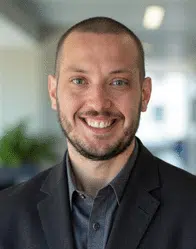
Ed Butch, Host, On Campus Podcast – CITI Program
Ed Butch is the host of the CITI Program’s higher education podcast and the Associate Director of Higher & Secondary Education at CITI Program. He focuses on developing content related to higher education policy, compliance, research, and student affairs.