




Season 3 – Episode 21 – Safety, Research, and Antarctica
This episode discusses how researchers prepare for the unexpected, manage risk in isolated environments, and build teams that can respond effectively when conditions change.
Notes
To view this episode’s notes, simply click on the “More Info” button on the player.
Podcast Chapters
Click to expand/collapse
To easily navigate through our podcast, simply click on the ☰ icon on the player. This will take you straight to the chapter timestamps, allowing you to jump to specific segments and enjoy the parts you’re most interested in.
- Research Safety in Antarctica – 00:11: The episode introduces how researchers manage safety, uncertainty, and teamwork while working in Antarctica’s extreme and rapidly changing conditions.
- Meet the Guests – 01:26: Dr. Simon Morley and Stephanie Martin describe their scientific backgrounds, roles, and paths to conducting marine research in polar environments.
- Navigating Unpredictable Conditions – 03:09: The guests explain how unpredictable weather and quickly changing field conditions make adaptability, preparation, and experienced decision-making essential.
- Supporting Remote Research – 05:04: The conversation explores the infrastructure, operational support, advance planning, and supplies required to conduct research at remote Antarctic stations.
- Assessing Risk in the Field – 07:16: Stephanie and Simon discuss how formal risk assessments combine lessons from past experience with ongoing revision as new hazards emerge.
- Preparing for the Unexpected – 09:09: Simon and Stephanie explain how redundant equipment, conservative weather limits, and reserved capacity help teams prepare for unexpected problems.
- Adapting in Real Time – 11:28: The guests share field examples involving encroaching ice and hurricane-force winds to show how preparation, calm leadership, and experience guide real-time adaptation.
- Building Field Experience – 14:51: Simon describes how researchers build specialized field skills by arriving with relevant experience, shadowing knowledgeable colleagues, and gradually mentoring others.
- Leading Through High-Risk Situations – 15:39: Stephanie explains how adaptable communication, composure, and lessons from mentors help leaders manage teams and keep people calm in dangerous situations.
- Rethinking Risk in Isolation – 18:56: The guests discuss how isolation encourages conservative choices, progressive team training, and decisive action when outside assistance or evacuation may be days away.
- Balancing Research Goals and Safety – 22:15: Simon and Stephanie describe how operational experts, flexible project goals, and transparent expectations help protect teams when research pressures conflict with field conditions.
- Creating Shared Responsibility – 25:56: The conversation highlights pre-deployment training, open safety discussions, team check-ins, and “stop the job” authority as foundations for shared responsibility.
- The Evolution of Safety Culture – 29:05: The guests reflect on how greater diversity, changing work expectations, and increased attention to well-being have shaped a more supportive safety culture.
- Applying the Lessons Beyond Antarctica – 32:23: Simon and Stephanie explain that hazard awareness, clear protocols, training, and communication are valuable in laboratories, offices, vessels, and other research settings.
- Closing Reflections and Resources – 34:28: The episode closes by connecting Antarctic safety lessons to research more broadly and directing listeners to additional CITI Program learning resources.
Episode Transcript
Click to expand/collapse
Alexa McClellan: Welcome to On Research, the podcast from CITI Program, where we explore the people, policies, and practices that shape the research enterprise.
Today, we’re discussing what it takes to conduct research safely in some of the most extreme environments on earth, from rapidly changing weather and remote field sites to the challenges of leading teams far from immediate support. Antarctica presents a unique testing ground for risk management, decision-making, and teamwork.
I’m joined by two guests from the British Antarctic Survey. First is Dr. Simon Morley, a marine biologist whose research focuses on how marine ecosystems respond to climate change, including impacts on biodiversity, ecosystem function, and marine conservation. I’m also joined by Stephanie Martin, South Georgia Whale Project Manager for the Wild Water Whales Project. Stephanie has spent more than 20 years working in remote polar and ocean environments as an expedition leader, Zodiac driver, naturalist, and conservation professional.
Together, we’ll explore how researchers prepare for the unpredictable, how isolation changes the calculus of acceptable risk, and how leaders build trust, communication, and shared responsibility for safety in the field.
Simon and Stephanie, thank you so much for joining me today.
Stephanie Martin: Hello.
Dr. Simon Morley: Hi.
Alexa McClellan: To start with, could each of you introduce yourselves and talk a bit about your role with the British Antarctic Survey, your scientific focus and experience, and what drew you to work in such extreme environment?
Dr. Simon Morley: Yeah, of course. So I’ve worked for British Antarctic Survey for 25 years now. I started off first as a fishery scientist, wintering at the South Antarctic Island of South Georgia, where I met Stephanie. And my focus has come from working on how animals cope with their environment, how they have evolved to life in that environment, and particularly through the focus of temperature.
And of course, as one of the main indicators of climate change with the atmosphere and the ocean warming, clearly that’s going to have a major effect on the animals. And if you want to work on the effects of temperature on animals, well, why not go to one of the coldest places on earth and look at how they’re going to be impacted down there? So that’s really what’s drawn me into working in the Antarctic.
Alexa McClellan: Fascinating. Stephanie?
Stephanie Martin: Hi, my name is Stephanie Martin, and I guess I first started working in isolated places with marine mammals, particularly baleen whales, when I lived on a lighthouse island, 25 miles off the coast of Maine. So I got very good at driving boats, and then that led to work on expedition cruise ships all around the world, but focusing in both the Arctic and the Antarctic. And then that’s led to my recent work, which is looking at baleen whale recovery. So, humpback whales, southern right whales, blue whales, and fin whales. After the extreme exploitation of them, they were almost extinct in the waters around South Georgia. So I spend my time now focusing on various research techniques, looking at the ways that the whales are coming back in those waters.
Alexa McClellan: Thank you so much. I’m sure you have such interesting stories, and I’d love to hear a bit more about that as we get into the podcast today. But for listeners who may not fully appreciate the conditions in Antarctica, can you describe what the day-to-day realities are like working in Antarctica and what makes it uniquely challenging from a safety perspective?
Dr. Simon Morley: Yeah, so a really important question, and I think, fundamental to everything that happens down there. And I think the answer is unpredictability. You never know what’s going to happen day to day, what the weather’s going to be like. I mean, there are periods of the year when you would expect better weather, but even with the forecast, you’ll look out the window and it’ll be different. And so it’s being adaptable, and it’s being prepared to have multiple different plans and to change your plans to suit the weather. Clearly, then you’re going to remain within your safety window, and you’ll be able to do your research when the conditions are out.
Stephanie Martin: Yeah, I agree with everything Simon says. You just need to be adaptable, flexible, and also as best prepared as possible because the weather can change in an instant. You can go from flat, calm conditions to extreme winds coming down roaring mountains, and the wind picks up, and you really have to then adapt to that environment.
And in terms of safety, especially if you’re leading a project or like I used to do on the expedition cruise ships, you’re constantly thinking ahead, and that also comes with experience. So if you’re fortunate enough to work with an experienced team, you can utilize all your different experiences together to say, “Okay, we’ve experienced this before, so what should we do to adapt to the current situation that we have?” So yeah, I mean, from the early explorers on, I guess it’s lessons learned about adapting and being flexible.
Alexa McClellan: I’m just curious, is there infrastructure built in where you’re going, or are you bringing infrastructure with you? Just the supplies you’re bringing with you, or is there a building that’s set up?
Dr. Simon Morley: Certainly, where I work mainly is at rather a research station, and it’s a very well-presented site with all the infrastructure you could possibly require. If we have a different set of experiments or a kind of different scientific requirement, we can bring down infrastructure specifically for that. But for the kind of marine research I do, the laboratory, the boat shed, the boats, the cranes for launching the boats, the people to drive and safely repair and maintain the boats are all there. And then the infrastructure around that, including the people in the communications tower who are watching you safety go out and come back, and of course the management structure, and the weather forecasters who are looking at the weather. So when we’re on station, there’s a huge amount of support, all put in place to make it as safe as possible. And the large infrastructure’s all sorted by British Antarctic Survey, and we go and slot into that.
Stephanie Martin: And I guess, just to add to that is, so Simon mainly works on the largest station that British Antarctic Survey has. He overwintered at King Edward Point, and that’s where most of my research is. So that’s on the island of South Georgia. So it’s a smaller station.
But what everyone has to consider, working in the Antarctic or in isolated places, is planning. So it’s not like you could just run to the local store and get the supplies that you need. So we have to think at six months, even a year out, of what we may need on the project, or for, say, Simon’s continuous research, what the team might need on station, because then it involves deadlines of months beforehand to get it down there. So you have enormous amount of planning and also regulations, and we have big risk assessments that we have to follow too in terms of safety. So there’s a huge amount to think ahead.
So not only do you have to plan for reacting to what the environment does, you have to plan for what you hope to do within that environment. And sometimes that has quite a long lead time.
Alexa McClellan: Stephanie, you mentioned risk assessments, and I am curious how you approach assessing risk before and during field work, when it’s such an unpredictable environment.
Stephanie Martin: Yeah, I mean, it’s interesting because in my previous work, when I was working with expedition cruise ships, we didn’t really have that as much. I think that’s been built up over time. It was much more, in the earlier days, a little bit more flying by the seat of your pants. It’s evolved now. And so I really came into that a little bit later than maybe others.
I guess for me, it’s always just been thinking ahead with experience, but then you have to formalize it with risk assessments. So I think, within BAS, again, it comes back to that experience. So there’s a lot of things that, and Simon’s really familiar with, from previous learned experience then gets incorporated in those risk assessments. And even then, it’s always a constant learning process because things might happen that you thought you thought about it, but maybe you didn’t in the way that you needed to, and then you can revise it.
But Simon can also speak that because he is a little bit more familiar with the BAS systems than I am.
Dr. Simon Morley: Yeah. I mean, after 25 years, yeah, you do become familiar with the systems, but as Stephanie said, even with the best planning possible, we have very experienced people who are coming down, who are very highly trained, who have seen lots of conditions, and we do everything conservatively. You never push the envelope. You always leave plenty in reserve because when something does happen, then you have that reserve that you can call upon.
But of course, risk assessment is about looking at what’s happened in the past, and therefore, setting your protocols to prevent those things happening, but allowing that buffer so that when the unexpected happens, you’re prepared and you have that capacity.
Alexa McClellan: Yeah. So how do you prepare for the unpredictable? So you do your risk assessment, so you’re looking at the past, anticipating what has happened then and what might happen in the future, but you also talked about leaving plenty of extra, so you’re very conservative with your approach. Can you talk a bit more about that and what it looks like to build in safety into your protocols?
Dr. Simon Morley: Yeah, sure. So at Rothera, we have very capable boats. Most of our trips are only 10 minutes, 15 minutes out to whatever site we’re working at on these boats. They’re the nearshore, the rigid hard inflatables, they’re not ocean-going vessels, so they launch from shore and come back to shore. We do slightly different research depending on where we are, but we have boats that are way more capable than we could possibly need, with twin engines. Plus, there’s always a spare boat to come out and recover the boat. The crane, it’s launched by the crane, but there is always a secondary crane in case that one breaks. And then there’s always a third crane that can come in and cover in case that. So it’s about having that level of redundancy, and that’s from a mechanical perspective.
And then in terms of weather windows, we always err on the side of caution. We don’t go out in marginal weather so that if it does get worse, we’ve got some buffer to get back in before things get beyond the point where we can cope.
Stephanie Martin: Yeah. And I guess, especially for our work, I mean, it tends to be small boat work, but even terrestrial work, there’s a lot of conservative mitigations to weather and to potentially what happens. But we’re always just also, we don’t risk ourselves in terms of pushing it to, say, get the sample or to get the science done. It’s very much drummed in from all the training that you do before you go down to the Antarctic or “going south,” it’s called.
People are kind of told it’s not worth that risk because, sadly, there has been a history of people that have been lost, both within the scientific community and other communities that work in these isolated regions. And so I think there’s also just a lot of realization that we are working on the edges, in extreme environments, so it’s better to be a little bit more conservative and just like Shackleton did, get home than not.
Alexa McClellan: Yeah, that’s good to hear. Could you share maybe a specific moment in the field when things did not go the way that you were expecting and how you managed that? How did you adapt in that situation?
Dr. Simon Morley: Yeah, okay. Yeah, so one of the ones that, in fact, is just something that cropped up today, in fact. So we normally don’t go diving more than 40 minutes away from the station because we have our recompression chamber on station. So if there was a diving incident, we would want to be able to get back to that recompression chamber within 40 minutes. We have enough oxygen to keep the diver safe during that time before they got back in the chamber.
And in fact, I did a dive very local to Rothera, just around the corner, and we came up at the end of the dive and the ice had come in. And it actually took us about an hour and a half to go less than a kilometer because of the ice. But we have very capable boats. We had lots of insulating clothing and sleeping bags and hot water bottles, and we had hot drinks. And of course, there was no problem with the divers in that scenario, so we just slowly made our way back in, with everybody working their way through the ice to make it back to station.
So again, it’s that these things happen and you don’t quite always meet the requirements, but you have enough safety equipment and comfort equipment that it actually wasn’t the problem.
Stephanie Martin: I guess, I mean, in some ways, I’ve been in more extreme examples working on the exhibition cruise ships than maybe at BAS, because BAS tends to be fairly conservative, which I agree with. But I was off of Elephant Island a while ago, many years ago now, when we had strong winds come off the mountainside. It’s called catabatic winds. We were in hurricane conditions and small boats when ice was coming in and snow and all of it. And again, we had the public, we had paying passengers with us. So to be honest, it wasn’t only managing the extremes conditions, it was managing the people because if they started to panic, that would’ve made the situation much, much worse. So it was a combination of things. And I guess it can be hard, but you have no other choice but to rely on your gut experience and to stay calm and just get through it.
I guess it’s another amazing thing of my drawing from the past, from Shackleton and Scott and others, that did, also, extreme, extreme environments, and they managed to, overall, face them and deal with them in a good way. So it’s kind of a combination of just dealing with it, what you can.
But it’s also been a good lesson afterwards, because I knew once I went through that and I got through that, I’m like, “Okay, and now now I can get through that. The boats can handle a hundred knots of wind.” I don’t want to ever go through it again, so I will try hard not to put myself in that position. But this is the thing about, still, I guess, sometimes when talking with people that haven’t been maybe in remote places with these extremes, they just don’t understand that sometimes you just, literally, you have no choice but to actually deal with it as it develops.
Dr. Simon Morley: If I can just add to that, I think Stephanie’s slightly underselling herself in terms of her experience and her expertise in that situation because there aren’t many people that you would prefer to have driving a boat in those conditions than Steph. So yeah, that experience and that kind of background and knowledge is invaluable when you’re in those kind of situations.
Alexa McClellan: How do you gain experience, though? I mean, obviously you have to start somewhere. Are you just shadowing other people who’ve done it? How did you learn those skills?
Dr. Simon Morley: Yeah, absolutely. It’s about shadowing people. I mean, okay, so in terms of boating and diving, I started that when I went to university, so a few decades ago. So by the time I arrived in the Antarctic, I already had 20 years worth of experience of boating and diving, so we take on experienced people. But when I arrived, I’d never driven anywhere where the sea could be solid, so that’s quite different when you’re driving a boat. So then of course, I was trained by the people on station who had the experience, I gained that experience, and now I’m at a point, hopefully, where I can pass that experience onto others.
But yeah, it’s the classic, as you say, shadowing other people who’ve had that experience and gaining it yourself.
Alexa McClellan: Yeah. I’m interested, Stephanie, how did you manage the people? I mean, I think working with a team is something, and we’ll talk about this a little bit later, but that’s such a big part of being an expedition leader and of having a culture of safety. If you’re working with people who are not as experienced, especially paying customers who aren’t scientists even, how did you communicate the situation with them to keep them calm?
Stephanie Martin: Yeah, it’s a lot of different ways. And also you sometimes learned how to approach each different group because that’s a big factor too. A lot of it is just by you staying calm yourself, working with the public, specifically. But also, sometimes, being a female, I’ve definitely had that kind of where being a captain of a small boat or the expedition leader, where older men definitely didn’t want to listen to a younger woman. And so sometimes I would handle it by just being extremely strong and being like, “No, I’m in charge here,” or “I’m the captain of this boat.” And other times, being a little bit more kind about it and just trying to basically find the right format that makes sure you get the best safe outcome in that particular experience.
And then a lot from learning from others. I was really fortunate. I started studying whales when I was 18, and I was a city kid. I didn’t grow up doing anything. I love the ocean, but I never driven boats until I basically started working on this lighthouse island. And I’ve got people that said, “Here you go.” And so it’s also giving people a chance to learn too, not expecting them to come in knowing everything. And a lot of times you may have experience in other parts of the world, but you don’t know Antarctica until you get there. And so it’s also being willing to learn from other people, that’s a big part of it.
So sometimes even when I was in some of those challenging leadership situations, I would think, “Okay, so-and-so that I learned from handled it this way, and I thought that worked well, so let me try that approach.” But it’s a lot of going back and forth. And you don’t get it right all the time, that’s for sure. But hopefully, if you do it long enough, you realize, “Okay, that did work, so let’s try it this way.”
And in terms of the team, it was the same sort of approach. When I used to work on the ships when I was expedition leader, it was myself and the captain in charge. And so sometimes I was managing up to 180 people total, from all nationalities, but it was my responsibility to make sure that trip went well, people were happy, and they were safe, most importantly. So it was a lot of management challenge. Not the easiest role, for sure, but I learned a lot, both about doing it and then also managing small teams. So that’s my role now as a project manager. I manage small teams in the field too. So I’ve drawn in some of those experiences for that too in a very different scenario.
Alexa McClellan: Yeah, that’s fascinating.
Daniel Smith: I hope you are enjoying this episode of On Research. If you are interested in conversations about technology ethics, join me, Daniel Smith for CITI Programs podcast, On Tech Ethics. You can subscribe wherever you listen to podcasts. Now, back to your episode.
Alexa McClellan: Simon, Stephanie mentioned that you overwintered in Antarctica, and I’m sure that involves a lot of isolation. And I’m curious, how does isolation change the calculation of acceptable risk when you know that immediate help might not be available? Does it make you tend to be more conservative, or does it sometimes mean that you have to take greater risks to make sure to keep yourself safe?
Dr. Simon Morley: Yeah, no, I overwintered at King Edward Point, so in the South Antarctic, so not the most isolated of places. And there was help because in the winter the fishery actually happens over the winter so that it doesn’t interfere with the bird breeding, and so we always had people coming back or forward. But the key is about getting your team trained and prepared for the winter. So you certainly don’t take more risks. And in fact, I think many of the risks in the winter, by the time you get to the winter, yes, you don’t have quite as much backup, but the people on station and the team will be much better trained by that point because they’ll have had the whole summer. And of course, those who were doing the training will have probably left, and it’ll be the new team. And so yeah, you would start off conservatively, and you would build up your experience.
Certainly, on the first day after the ship leaves and you’re left alone for the winter, you wouldn’t then go off and take the boat out into the middle of the Southern Ocean. You would do it gently and build towards it. But I don’t think the risk increases because of this training program and the fact that everybody would start off more conservatively and build their skills as a team.
Alexa McClellan: Yeah, that makes sense. Stephanie, how about your experiences with isolation? Did you have a strong support team or were there situations when you found yourself having to make decisions on your own in the moment?
Stephanie Martin: There was always sort of a bit of a backup with the office, in terms of when I was working on ships, but then sometimes you just had to make a decision on the ground and just deal with it. One time, we were off East Greenland, the trip was supposed to go into East Greenland, but we couldn’t get within 30 miles of it because of heavy sea ice in the summer. I mean, I think, with climate change, I don’t see that scenario happening as much anymore. So it also kind of is more of a unique experience now, sadly. And at that stage, I had no choice, but the captain and I were like, “We can’t go further.” And then, dealing with the fallout and the disappointment of people, that was quite a challenge. So I’ve experienced both, and we’ve both worked in areas where it’s only accessible by vessels, and they could be five, six, 10 days away.
So, even medevac-ing from really isolated places in the world is really challenging. So you do have that in the back of your mind. And also, BAS does make that point over and over in the training, is, well, you can’t get medevac-ed very easily. It’s not like a plane can come in, for most places we work, and get you to a safe hospital situation. So there is a part of that too that you also have to, when you work in these areas.
But I think that could apply to people working in isolation in many parts of the world. You could be working in mountainous regions where getting help… And you have to make a decision on the ground right away. And I think most people just do the best they possibly can in those scenarios.
Alexa McClellan: You mentioned having to deal with the disappointment of the public on your expedition, when you decide that it wasn’t safe to move forward. And I’m curious how that might relate with researchers as well and how you balance this drive for research success, to get the sample, to meet the grant deadline, to show the results versus protecting your team and prioritizing safety. Can you talk a bit about that?
Dr. Simon Morley: Yeah, that’s a really important point. And that’s why we have operations and the logistics and professional boating officers and professional diving officers, where I work, and they’re the people in charge of the safety. And so you, in some senses, decouple the higher level safety from this drive by us scientists to get out and get our sample. And of course, there is a drive to get the sample, but of course, none of us want to go and do anything unsafe. And so it’s a good balance. And when we’re working together as a team, with the scientists setting the priorities and the logistics people setting the realistic opportunities or capacities, then it works really well.
But it can be challenging, and it is really challenging, and Steph can talk to this as well, when you’ve got a month on station, and as you say, you’ve got a grant that requires you to collect this data, and you’ve had three weeks of poor weather, and there’s five teams wanting the same resources, it can be challenging. And you also have to go in with the view that you may not get what you want this season.
And whenever we are writing grants, we make that absolutely clear, that we will do the very best we can, but conditions can sometimes just stop you.
Stephanie Martin: Yeah. And to be honest, all sciences have their challenges, but whales, it’s just… Our motto for our project is “If it was easy, everybody would be doing it, because it truly is not.”
So I’ve spent three seasons working out of King Edward Point on various whale research projects with species focus, because that’s the way we get more funding. So in 2019, we were working on southern right whales. We didn’t see a single one, and we were hoping to satellite tag them, which is incredibly challenging. You need very experienced personnel, ideal conditions, and whales. So we tagged two humpback whales because those are the whales we had. In ’24 and ’25 seasons, we were supposed to tag humpback whales, and in ’24, a lot of ice came in. And we had no considerations for an iceberg to break up to the north. That was completely unexpected.
And because of my experience working in Antarctica, I was very conservative about how we could work because I know how truly dangerous ice can be. So that was a situation where I didn’t have it in a risk assessment. The team didn’t anticipate it, but again, given my experience and one other’s, we were very conservative around what we did, and so we were still safe. So we tagged a southern right whale because we found one of those.
So sometimes, not only do you have to have flexibility in your surroundings, your planning, and all of that, you have to have flexibility about the data that you collect and then how you translate that into reports back to the funders to say, “We’re still achieving some of our project aims and goals, just doing it a little bit differently because we responded to conditions that we had during the time that we were in the field.” And that’s a big part of it too.
Alexa McClellan: Yeah, that’s great. And I know that you said earlier that you feel like the British Antarctic Survey understands that and supports that as well and seems to be very aware of the fact that they don’t want to push the scientists, push the science too hard, if it will risk safety of the team. So that’s good.
So it sounds like both of you have led teams, Stephanie, as a expedition leader, Simon, in a scientific role, but how do you intentionally build trust, communication, and a sense of shared responsibility for safety within your field team? Do you talk about this a lot? Do you encourage communication about it? I’d like to hear a bit more about how the team dynamics work.
Dr. Simon Morley: Yeah, so it starts at day one when you get together. And so, when we recruit people, they have a period of training before they head down to the Antarctic, and all of that training is based around them getting the skills they need to be safe. And then, a lot of the conversations are about how we maintain that safety.
So by the time people get to station, they’re aware of the parameters, the constraints, if you like, of what can and can’t be done, so everybody’s on the same page. But then, absolutely, there’s always conversations, and there’s a culture where if there’s any issue in terms of safety or equipment or anything, that everybody is open to that discussion, and we will talk it through and make sure that we either stop what that activity is or understand it differently so that that risk is reduced.
Stephanie Martin: Yeah, I would say the same for both of my areas that I’ve worked in. So, on the expedition ships, we would always say that if you don’t feel comfortable driving or you don’t feel comfortable doing this today for whatever reason, you just say it. And there’s no repercussions, there’s no shaming whatsoever, because it’s just not worth it. And when I was leading, I would constantly be checking in with the team going, “Is this what you want to do? Are you happy doing this? Do you feel you can do this? If you can’t, that’s fine. We’ll figure it out. Someone else can do it, and then you can learn from them, so if you want to do it in the future, you can.”
And then BAS has also developed this thing called “stop the job.” Literally, before we go out in the boats, whoever’s working that day gets together, we go through where we’re going, what the weather conditions are, what we hope to achieve. Everyone has to sign a piece of paper to agree to that. And if they don’t, we call it “stop the job. “And that’s a part of our risk assessments, and then it’s on record of… Just to make sure everyone’s happy.
But even I, because again, my experience with the leading, if I noticed someone was not doing great or getting cold, because we would be out, for our teams, eight hours a day, because we had to maximize our weather conditions. But if someone was flagging, I’m like, “If you don’t feel right, we go in.” And it truly doesn’t matter. We’re not going to let the cost or the time or anything else impact what each individual needs for that day. And that’s also been an evolution because I know, definitely, when I first started working in this area, no one talked about those things. It was very much you did the job that you needed to do. And being a woman, it meant I had to push even harder and almost kill myself sometimes to prove myself first, to be accepted, and then it was fine.
When I first started doing whale research, that’s definitely the way it was, because there wasn’t as many female scientists working in the field. So that’s changed and evolved for the better, I think, for everybody.
Alexa McClellan: That’s interesting. What do you think changed the culture to focus more on safety?
Stephanie Martin: I think it’s a combination of things. I think as more women came into the more field experience, that changed things a little bit. I think younger women aren’t having to prove themselves as much. I mean, I think there’s still a component of that, but also, it’s been interesting because Simon and I are sort of not early career researchers, and we’re working with them, and their approach to things is a little bit different too. And they’re also saying, “Well, we may not work this amount anymore. We want to have more balance.”
I’m seeing that both in the fields and, say, in the office, and that’s good, overall, but in terms of being a scientist, sometimes that can be a bit frustrating because you’re trying to balance the needs of getting the project done, because you’re under pressure for your commitments and the amount of money you’ve raised and all of that. So sometimes that’s also been a bit of learning curve for me, just realizing that the culture of that is changing also, but it will have impacts on science.
So I think that’s where we’re in this spot where we’re trying to figure out where that balance is as an organization overall, because we are expected to have really high outputs and targets for our science. And BAS is one of the leading Antarctic science research groups in the world, which is fantastic, but that has also come at where, as a scientist, you work, you just work. And that may be shifting. And so we’re kind of adjusting to that too, but we’re also, the students that I work with, I’m like, “Well, at some point, though, if you don’t at least show that you want to work, then you may not get hired, because that’s what’s expected.” So it’s going to be an interesting time in the next few years, I think, for this area.
But at the end of the day, I think everyone would draw the line at safety. If anyone ever pulls a safety card, I mean, that sounds derogatory, but that’s just the wording. If anyone ever said, “I feel unsafe,” it stops. And there’s no repercussions for that. It never has been in my career. I don’t know, Simon, about you.
Dr. Simon Morley: Yeah, no, no, absolutely agree. Yeah. So, I mean, it’s great that the culture is changing. It absolutely had to. In my 25 years with BAS, it’s a much more diverse culture on stations now than it was when I first started, which is brilliant. It’s so much more fun, where the idea generation… The whole thing. We all know the benefits of multicultural and diversity everywhere, and it’s fabulous. It makes such a difference.
And yeah, to Stephanie’s point about work ethic or better work-life balance, I’m not a very good person to talk to that really, because I’m a bit of a geeky scientist and I just love getting involved with the science. And if I’ve got time off, well, I’ll probably do a little bit more science. But we do understand that’s not there for everybody, and we need to look after people. Particularly if someone’s on station for 18 months, you don’t want them to burn out, because then potentially that’s a safety issue. So you need to make sure people get a proper kind of work-life balance, proper rest, and they still can muster that energy to get out there and get excited about the science and what’s going on.
Alexa McClellan: I’d like to hear, in conclusion, just how you think that these lessons that you’ve learned working in extreme environments might translate to research in less extreme environments. And if you think that those skills and those safety protocols are something that still are important for researchers to think about, who are working in a more moderate climate.
Dr. Simon Morley: Very much so. Very much so. I mean, if you are working on a research vessel, even if it’s in the Caribbean, the same requirement to do the toolbox talks, to go through each bit of equipment, to make sure everyone on the team is aware of what’s happening, of where the risks are so you can mitigate against it. I mean, whatever.
I mean, you could say the same for somebody just walking down a busy street in a city. They need to be aware of where the cars are coming from, where the buses are, all of these potential dangers. It’s exactly the same. Just because of where we are and the consequences if something goes wrong, we haven’t got that backup, it is more in our awareness, more at the forefront of our thinking than maybe it would be for people elsewhere. But I think we could all be a bit safer if we looked around us a bit more and took notice of what’s going on.
Stephanie Martin: Yeah, I think that’s the key. I mean, whether you’re researching in the lab, I mean, even these days, there’s all sorts of protocols for being safer at work, ergonomics and things like that, because people have learned over time that certain practices can impact your own health, no matter where you happen to be. So I think it’s good that if just people have that awareness in their own jobs, whether it’s in an office or you’re working in the field.
I mean, we do lab inductions in our labs here in Cambridge, also in the field, so we have to do trainings in the office, just as much as we do whether we’re working in the remote research stations. So like Simon said, working in these extreme environments brings that awareness level to you, but I think there are impacts, no matter where you happen to be. So it just depends upon your own individual awareness level.
Alexa McClellan: Yeah, that’s great. Well, thank you guys so much. Simon and Stephanie, it’s been really interesting talking to you, and I’m so appreciative of your perspective of working in these extreme environments. Thank you so much.
Stephanie Martin: Thank you.
Dr. Simon Morley: Yeah. Pleasure.
Alexa McClellan: CITI Program offers self-paced courses in research compliance, including human subjects research, responsible conduct of research, research security, and research ethics.
Throughout this episode, we’ve heard how researchers working in some of the most remote and unpredictable environments on earth rely on careful planning, clear communication, teamwork, and a strong culture of safety to navigate uncertainty and accomplish their goals.
While most researchers won’t find themselves conducting field work in Antarctica, the lessons Simon and Stephanie shared are relevant across the research enterprise. Whether you’re working in a laboratory, a clinical setting, a field, or an office, creating a safe research environment requires awareness, preparation, and a shared commitment to looking out for one another.
If you’d like to learn more, consider CITI Program’s Safe Research Environments course. The course explores practical approaches to recognizing and addressing risks, fostering respectful and supportive research settings, and building a culture where research can be conducted safely and effectively. It’s a chance to think more deeply about how safety supports both people and the quality of the research they produce. Check out the link in this episode’s description to learn more.
Enhance your skills, deepen your expertise, and lead with integrity across research settings. If you’re not currently affiliated with a subscribing organization, you can sign up as an independent learner and access CITI Program’s full course catalog.
As a reminder, I want to quickly note that this podcast is for educational purposes only. It is not designed to provide legal advice or legal guidance. You should consult with your organization’s attorneys if you have questions or concerns about the relevant laws and regulations that may be discussed in this podcast. In addition, the views expressed in this podcast are solely those of our guests.
Evelyn Fornell is our line producer, and production and distribution support are provided by Raymond Longaray and Megan Stuart.
Thanks for listening.
How to Listen and Subscribe to the Podcast
You can find On Research with CITI Program available from several of the most popular podcast services. Subscribe on your favorite platform to receive updates when episodes are newly released. You can also subscribe to this podcast, by pasting “https://feeds.buzzsprout.com/2112707.rss” into your your podcast apps.



Recent Episodes
-
- Season 3 – Episode 20: Research Ethics for All: Expanding Access to Research Ethics Education
- Season 3 – Episode 19: The Belmont Report at Belmont: Voices of Research Ethics
- Season 3 – Episode 18: Beyond Persistence: How Early-Career Scientists Can Thrive
- Season 3 – Episode 17: Hope, Uncertainty, and the Future of Science
Meet the Guests
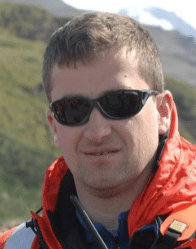
Simon Morley, BSc (Hons), MSc, PhD – British Antarctic Survey
Simon is a marine biologist who investigates how marine ecosystems have evolved and how they will cope with climate change.
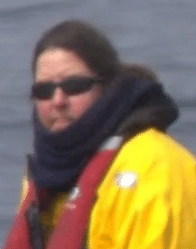
Stephanie Martin, MMP – British Antarctic Survey
Stephanie Martin is the South Georgia Whale Project Manager for the Wild Water Whales project studying humpback whale recovery at BAS. She has spent more than two decades working aboard expedition vessels as an expedition leader, Zodiac driver, and naturalist in some of the most remote corners of the world.
Meet the Host
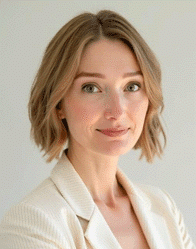
Alexa McClellan, MA, Host, On Research Podcast – CITI Program
Alexa McClellan is the host of CITI Program’s On Research Podcast. She is the Associate Director of Research Foundations at CITI Program. Alexa focuses on developing content related to academic and clinical research compliance, including human subjects research, animal care and use, responsible conduct of research, and conflict of interests. She has over 17 years of experience working in research administration in higher education.